


Latest News

Student Life

The history of Black History Month

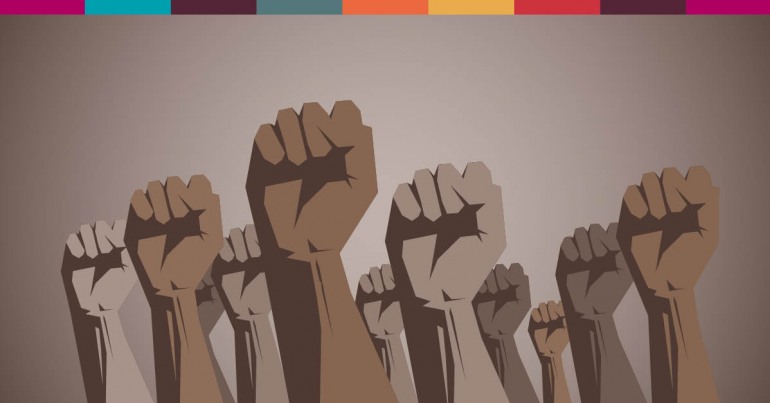
Every February, Canadians are called to reflect upon the nation’s history from the perspective of Black Canadians. While Black History Month began in the U.S. in the 1920s, it is now observed in other countries including Canada, the U.K., and the Netherlands. The McGill Tribune examines how this celebration came to be. 

The origins of Black History Month can be traced back to 1926 and to Carter G. Woodson, an eminent African American historian. Woodson, who believed that Black history had long been neglected in academia, designated the second week of February to celebrate the accomplishments and history of African Americans. Woodson selected February to commemorate the birth month of two influential figures in Black American history: Frederick Douglass, a formerly enslaved abolitionist, and Abraham Lincoln, 16th president of the U.S., who issued the Emancipation Proclamation. By 1976, President Gerald Ford officially recognized Black History Month, making a call to action for Americans to honor the overlooked accomplishments of Black Americans. 

Black History Month was adopted in Canada in 1955, following a motion introduced by Jean Augustine, the first Black Canadian woman elected to Parliament. Although 1955 marks the official recognition of Black History Month by the Canadian government, it did not mark the first time that Black history was celebrated in Canada. Similarly, while 2021 marks the fifth year of institutional celebration of Black History Month at McGill, Black community members have organized during and outside of Black History Month for decades. When considering Black History Month, it is important to always acknowledge the labour and legacy of all those that came before, as their contributions are often erased. 

In an interview with the Tribune, Senior Advisor of Anti-Racism and Equity Education Shanice Yarde discussed the importance of Black history when reflecting on Black History Month. 

“Every place creates its own narrative about itself […], but it’s important that we challenge these narratives to make sure that they tell the fullness and richness of the story,” Yarde said. “[There is] denial and dismissal of oppression here [in Canada] and we compare to the U.S. to deflect. When honouring and celebrating Black History Month, it is important to have a global perspective but it is also critical to focus on the local context. Black history here is incredible, but overlooked.”

Many people do not recognize the vastness that exists when it comes to Black history in Canada. Yarde explained that due to the censorship in history textbooks, many Canadians are not aware that Black people were once enslaved in Canada. 

“[There is a] narrative that Black people don’t exist or face violence here,” Yarde said. “There is a particular way in which Blackness gets erased from a space based on what narratives are perpetuated and challenged and which ones are not [….] Every single year I learned about Rosa Parks and [Martin Luther King], and not to discredit the incredible contributions that they have made, but there are so many other important and notable people. ”

While February is a month to learn and celebrate Black history, students should continue this work and dialogue year round. 

“[It is] also important for people to continue and push this work beyond February,” Yarde said. “[There are] all of these events that happen in February, but once March 1 arrives, it’s just crickets. There is a role for people to continue these dialogues and education beyond February. How are we creating spaces outside the designated time period? What work are we doing when the cameras are off and the spotlight is no longer on?”

Furthermore, Black History Month is often used as an opportunity to talk almost exclusively about racism and oppression, perpetuating a narrative that Blackness is only connected to trauma and violence. It is clear that understanding Black history transcends learning about oppression Black people have endured: It is also about the ways they have fought to survive and thrive in Canada. 

Visit Equity at McGill for resources to educate yourself on anti-racism and allyship as well as ways to honour Black History Month.

 

Student Life

‘Love in the Time of…’ allows history students to cozy up

The Classics Students’ Association (CSA) and History Students’ Association (HSA) teamed up on Feb. 11 to host the Love in the Time of… lecture series remotely. As they did for their Haunted Histories Halloween event earlier this academic year on Oct. 27, each student association invited two professors from their respective departments to give a short lecture, this time centred around the theme of Valentine’s Day and romance.

Under normal conditions, students would pass around sweetheart candies or heart-shaped lollipops. Even without such traditions, HSA President Dalton Liggett, U3 Arts, still fervently believes in the event’s power to bring students together.

“My favourite thing about organizing HSA events is definitely being able to meet and converse with History students,” Liggett wrote in an email to The McGill Tribune. “Amidst these ongoing circumstances, it’s rare for History majors to be able to gather together safely, even if virtually, so I cherish that.”

CSA President Taryn Power, U2 Arts, also sees these events as crucial for facilitating student connection in spite of remote learning.

“My favourite part about events this year is getting to see everyone in my program, even virtually, and we’ve had a lot of really good attendance for events,” Power wrote in an email to the Tribune. “It’s nice to be able to see that the community in the department is still pretty close knit. Plus, it’s always nice to get to learn something new for fun, outside of class, and the lecture series always deliver on that,”

For this event, the History department was represented by Brian Lewis, professor of modern British history, and Rachel Sandwell, who studies the history of women’s movements. Classics was represented by Lynn Kozak, who teaches epics and classical performance texts, and Naomi Kaloudis, who researches performance theory.

First to speak was Kozak, who spoke about her research on the NBC television series “Hannibal.” She discussed the queer subtext of “Hannibal” and its many same-gender relationships that contain romantic and sexual undertones, transcending traditional definitions of friendship. Kozak also talked about the parallels between the characters in “Hannibal” and Achilles and Patroclus from The Iliad. By looking at modern entertainment through the lens of classical literature, Kozak gained a more in-depth understanding of the forces that shaped the hit series’ plot.

Sandwell then discussed love between South African revolutionaries. Movement organizers believed that romantic and sexual relationships made young people weaker and less trustworthy. As a result, organizers dictated how young people in exile conducted relationships, thereby shaping the way young people interacted with South African politics.

After that, Kaloudis talked about pastoral poems in classical history, which are defined by their descriptions of a male figure’s unrequited love. In Theocritus’s Idylls, a goatherd falls in love with a woman named Amaryllis. Rather than casting Amaryllis as primarily the object of male fantasy, both parties possess equal agency in their relationship—a deviation from typical genre conventions of the time. 

Last to speak was Lewis, who covered the history of perception regarding sexuality. Traditionally, most considered there to be a sexual binary between a heterosexual majority and a homosexual minority that was deemed deviant. In reality, throughout history, sexual attraction between people of the same gender has existed across cultures. 

Given their varied academic backgrounds, the featured Classics and History professors all contributed unique perspectives to the time of love. Seeing students’ faces light up on screen when lecturers made jokes spoke to the event’s success. 

“I’m really happy with what the CSA has been able to do so far, and proud of my team for doing so well adjusting to the online format,” Power wrote. “I’m just hoping that, whether I’m organizing or not, we will slowly (and safely!) get to see some of our normal traditions start back up in the coming year, but if not, it’s nice to know after this year, getting together virtually can still work so well.”

Student Life

‘Black Mental Health Matters’ unpacks systemic racism in healthcare

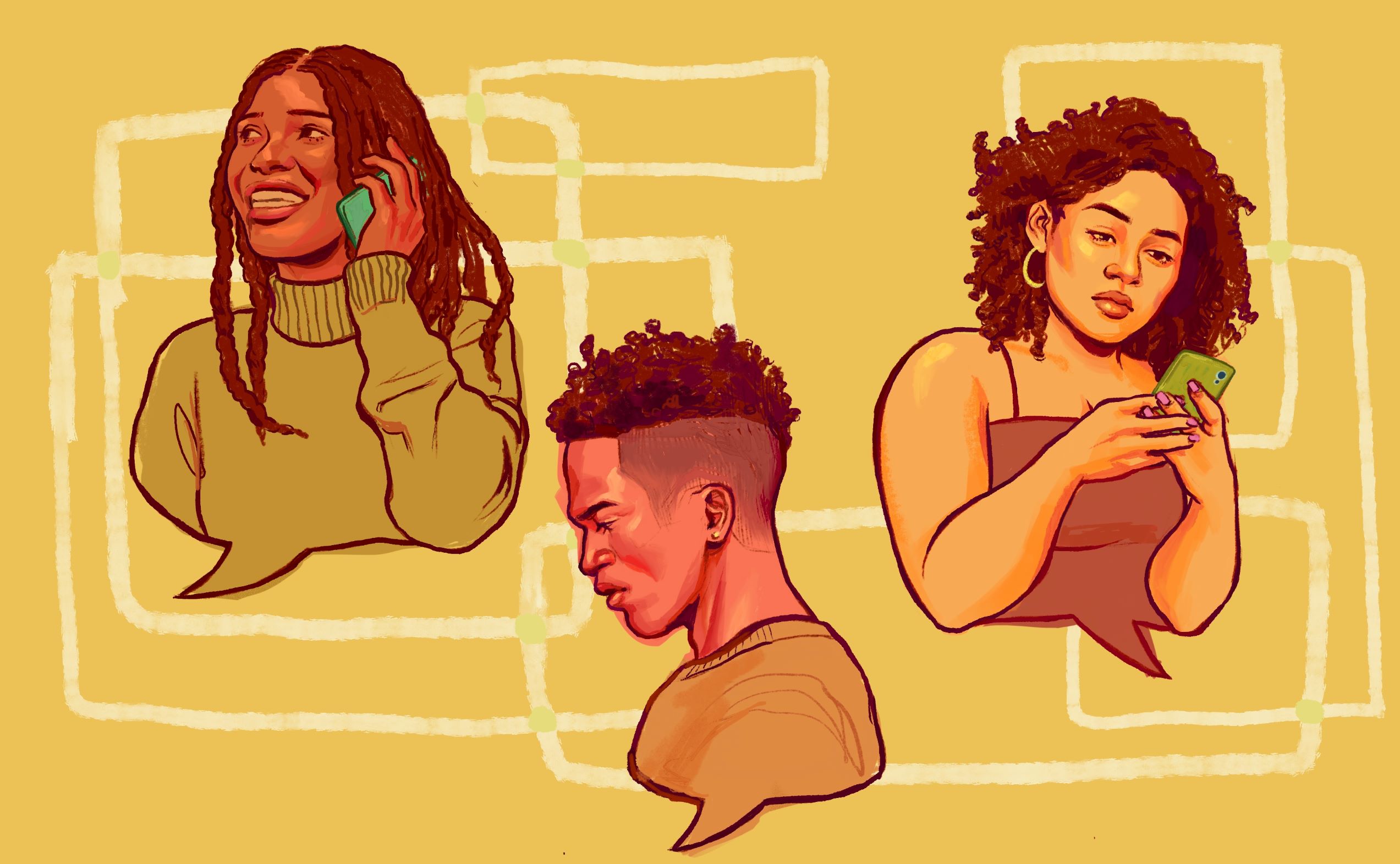
The Office of the Provost and Vice-Principal (Academic), the Social Accountability and Community Engagement Office (SACE) in the Faculty of Medicine and Health Sciences, and the McGill initiative Supporting Young Black Students (SYBS) hosted “Black Mental Health Matters,” held virtually on Feb. 10. As part of McGill’s Black History Month 2021, the event consisted of a presentation on mental health, a panel discussion, and a conversation centered around mental health in the Black community. 

The presentation was given by Maureen Owino, who resides in Toronto, but joined the Zoom event from Nairobi. Owino is a first generation immigrant who is currently a PhD student at York University studying the impact of the HIV/AIDS and COVID-19 pandemics on Black communities in Canada. Owino is also a program coordinator for the Committee for Accessible AIDS Treatment in Toronto. 

In her presentation, Owino discussed the history of racism in Canada, transgenerational trauma, and the way in which anti-Black racism impacts mental health. 

“Racism and anti-Black racism are policies and practices rooted in Canadian institutions,” Owino said. “This can be understood through education, health care, and justice that mirror and reinforce beliefs, attitudes, prejudice, stereotyping, and discimination towards people of Black-African descent.”  

Owino continued by speaking about her traumas of experiencing systematic racism. She shared several first-hand experiences as a Black immigrant in Canada navigating the Canadian health care system while facing mental health challenges, despite legislation intended to protect individuals facing these issues such as the Canadian mental health acts.

“I have witnessed and experienced through my work how Black men and women, when they are in crisis, are sent to prison instead of receiving help,” Owino said. “It just shows how the Canadian mental health acts do not protect Black Canadians.” 

The second part of the night consisted of a panel moderated by Leatitia Mbassegue, SYBS member and McGill first-year medical student. Speakers included Owino, Khan Bouba-Dalambaye, a councellor at Openspace Clinic, Melissa Cobbler, wellness advisor for the Faculty of Science, and Aishah Seivwright, external coordinator for Black Mental Health Connections. 

The panel members spoke about their lines of work, personal experiences with mental health and racism, and how these encounters negatively affect mental health.

Throughout the talk, panelists emphasized the lack of mental health resources available to the Black community in Montreal, and more broadly in Canada, offered by Black practitioners. According to Bouba-Dalambaye and Cobbler, understanding the demographics of the mental health workers in Montreal is just one way to comprehend the disparity of Black practitioners. 

Shanice Yarde, Senior Advisor: Anti-Racism and Equity Education at the Office of the Provost and Vice-Principal (Academic) played a large role in planning the event. Yarde spoke with The McGill Tribune about the evidence of systemic inequity in Montreal. 

“Khan is one of two Black Anglophone male counsellors that I know of in Montreal,” Yarde said. “The lack of Black practitioners has nothing to do with a lack of knowledge, interest, or capacity, but in part, the barriers to entry to those programs that make it possible for people to be in those roles.”

The panel and community conversation also highlighted the ways that non-Black students can better support their Black peers’ mental health. Mbassegue underscored the importance of allyship in an interview with the Tribune

“An ally stands up with no fear,” Mbassegue said. “So messaging us in private and saying ‘I am so sorry about what is happening in the world’ or ‘it must be tough’ does not help much [….] Somebody else standing up and not making us be the only one to call something out is a way to start being an ally.” 

As Seivwright and Owino discussed, Black students have dealt with having their hair touched and being called names for too long. 

“I think an important takeaway from this conversation for non-Black students is being willing to listen first and believe in Black people’s self determination abilities,” Mbassegue said. “We are the experts of our own experiences so we can tell you what we need, and then you can help us from there.” 

For information on Black History Month 2021, check out this website.

Erratum: A previous version of this article stated that Shanice Yarde’s title is equity education advisor (anti-oppression and anti-racism). In fact, her title is Senior Advisor: Anti-Racism and Equity Education. The Tribune regrets this error. 

Erratum: A previous version of this article misquoted Shanice Yarde when discussing Black mental health practitioners in Montreal. The quote has been updated. The Tribune regrets this error.

Montreal, News

Black Healing Fund receives first round of applications for mental health care funding

The Black Healing Fund, established in Oct. 2020, offers resources to Black people in the Montreal area who are looking for mental health services. Kat Charles, a queer Haitian writer, playwright, performer, therapist-in-training, and community organizer, created the fund with the belief that Black people should not have to pay for their own healing in a system that harms them. Since then, the fund has been managed entirely by volunteers who collect donations through sites such as PayPal, Patreon, and GoFundMe.

In order to apply for funding, individuals seeking financial support are required to provide their name, location, and requested total amount. From there, recipients will be randomly selected. Those who do not receive funding during the most recent round, for which applications closed on Feb. 6, will be placed on a waitlist.

Naïka Champaïgne, a Concordia student, is one of six team members. As coordinator for the fund’s communications, Champaïgne emphasized the importance of the organization’s mandate.

“There is a huge community of Black people in Montreal, and a constant lack of acknowledgement that systemic racism exists in Quebec,” Champaïgne said. “For example, over the summer [during the Black Lives Matter protests] there was a much larger police presence in Montreal Nord where there are more Black people. There needs to be active support for Black people in Montreal.”

Maya Willard-Stepan, U2 Sciences, is the McGill Students Chapter of Jack.org‘s Equity and Sustainability Officer, and recognizes that the Black community is disadvantaged when it comes to accessing mental health resources.

“BIPOC youth are 26 per cent less likely to receive sufficient treatment if struggling with their mental health,” Willard-Stepan wrote. “It is crucial to the health and wellbeing of BIPOC youth to create supportive communities with meaningful mental health dialogue and provide affordable access to professionals who will assist without discrimination or bias.”

The Black Healing Fund does not bar anyone from requesting help, but they do remind people to be considerate when applying.

“We remind people to be mindful of social positionality, colorism, and socioeconomic status when applying,” Champaïgne said. “This fund is really intended for low-income Black people.”

The fund does not require recipients to spend the money on any particular practice, but provides a list of recommendations for potential healers whom they have vetted and linked on a page of the fund’s website. 

While the Black Healing Fund is not directly affiliated with McGill organizations, campus mental health groups have voiced their support for the initiative. 

Pratik Mahajan, U2 Arts, Vice-President External of McGill Students’ Nightline, and recognizes the importance of mental health resources from personal experience as a student from India who juggled several responsibilities.

“Every low income Black student faces unique barriers,” Mahajan wrote in an email to The McGill Tribune. “But the tallest one of them all is the one that keeps them away from seeking the support they need to overcome the mental toll of trying to overcome barriers every single day.” 

Julia Caddy, U3 Arts and Students’ Society of McGill University (SSMU) Mental Health Commissioner and Chloe Holmquist, U4 Arts, Co-President of Students in Mind, and the chair of the Peer Support Center recognize that free mental health services are in high demand during the pandemic, which has disproportionately harmed Black and Indigenous communities.

“Through financial support to Black people seeking mental health resources [with the Black Healing Fund], there’s an opportunity for not only timely support but for culturally appropriate support,” Caddy wrote in an email to the Tribune.

Holmquist commented on the barriers facing Black people as they look for mental health support. 

“Mental health services can often be both financially inaccessible as well as feel unsafe due to the limited number of Black mental health professionals available,” Holmquist wrote.

The fund hopes to open a second round of applications later this year, and regularly posts updates on its Instagram profile and Facebook page.

News, The Tribune Explains

Tribune Explains: Montreal’s snow removal system

Every year, Montrealers are left in the dark about the ways snow removal is managed throughout the region. As the winter drags on, so do the unyielding sirens of the snow ploughs that roam the city. To gain a more comprehensive understanding of how municipal snow removal is done, The McGill Tribune looked into how the City of Montreal organizes its snow removal during the winter.

How does the snow removal system work?

In the 19th century, the city of Montreal called upon ordinary citizens to shovel snow away from sidewalks and streets. With the arrival of automated vehicles, however, snow removal could be completed in a fraction of the time needed, changing the landscape of snow maintenance forever.

Today, there are three levels of snow removal operations in Montreal which are carried out depending on the weather conditions. As stated by the City of Montreal, the first stage of snow removal occurs with the distribution of gravel and salt when sidewalks and roads become icy and slippery. The second stage of snow maintenance, snow ploughing, is implemented when there is over 2.5 cm of snow on the ground. The third stage of snow removal, undertaken when the snow exceeds a measurement of 10 cm on the ground, involves snow loading. Snow loading is done using a snowblower, which was invented by Montrealer Arthur Sicard.

Interestingly, roads, pedestrian sidewalks, and bike paths are all maintained with different types of machines. Oftentimes, bike paths are cleared sooner than sidewalks and roads because there is simply less ground for the snow removal crew to cover.

In the majority of Montreal’s boroughs, private snow removal is prohibited if snow is moved on to public sidewalks and streets. Accordingly, snow must be kept on the property if shovelled.

Why are some areas prioritized over others?

Main roadslike Sherbrooke, René-Lévesque, Henri-Bourassathat are connected to healthcare institutions, schools, prioritized bus routes, and major shopping areas are usually cleared first. Main streets that are narrower also get priority to ensure that emergency response vehicles can move through them. On some occasions, snow is only cleared on one side of main roads. This irregularity in snow removal is influenced by traffic patterns as crews avoid clearing snow during rush hour and wait until the traffic moves to the other direction before moving to clear it.

Next on the priority list are medium-sized “collector” streetslike Cadillac, Bernard, and Villerayor those that are connected to non-priority bus routes and schools. After the collector and main roads are cleared, snow maintenance crews then begin work clearing local, industrial, and residential streets. Snow removal operations also clear paved alleys that are connected to commercial areas.

Are there any restrictions on residential parking during snow removal?

Montreal officials place orange temporary “no parking” signs if there has been heavy snowfall, or if one is expected in the coming days. These signs are put up before 3:00 p.m. and snow maintenance is carried out between the hours of 7:00 a.m. to 7:00 p.m., only after which residents can move their vehicles back to their original spots. Recently, however, in response to Quebec’s curfew, the City of Montreal has allotted “incentive parking lots” to help drivers find free parking before curfew.

Where does all the snow go?

Up until the latter half of the 1980s, loaded snow would simply be dumped into the St. Lawrence River. Public outrage over the rising pollution levels caused by salt, gravel, and garbage pressured the city to seek alternative dumping sites. Today, the city moves approximately 60 per cent of the snow to one of 29 dumping sites off the Island of Montreal. The remaining third of the snow is treated in the Montreal sewage system before being released into the St. Lawrence River.

McGill, News

Panel highlights Canada’s failure to meet Indigenous communities’ needs

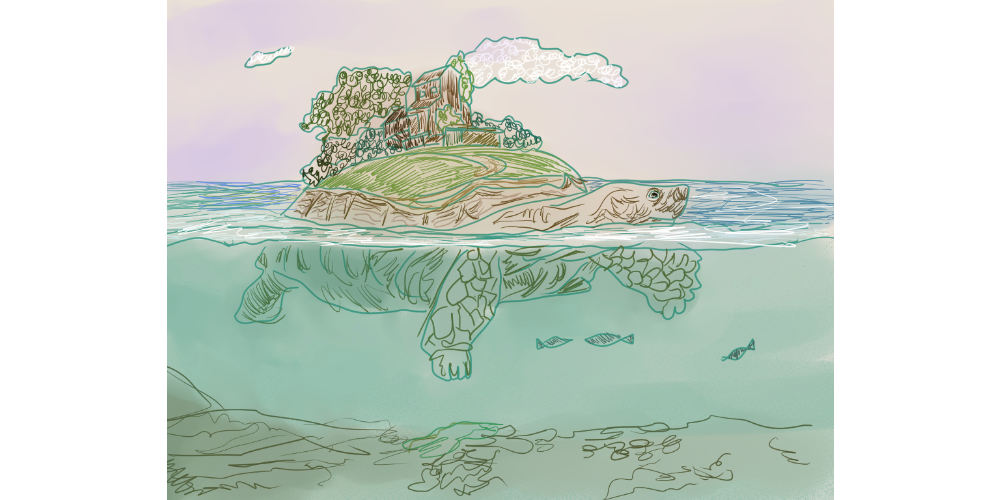
Kicking off McGill Sustainability Systems Initiative’s (MSSI) first annual Sustainable Development Goals Week, McGill’s International Development Studies Student Association (IDSSA), McGill Sustainable Development Goals Student Hub (SDG), and McGill Students for Amnesty International hosted a panel titled “Basic Needs of Indigenous Communities on Turtle Island” on Feb. 13. Panelists Jessica Quijano, a feminist activist working for the Native Women’s Shelter of Montreal and Tom Deerhouse, an elder facilitator at the First Peoples Justice Centre in Montreal, discussed housing shortages, COVID-19’s impact on pre-existing inequities, and the realities of advocacy work. 

The panel framed the conversation around the United Nations (UN) Sustainable Development Goals—a list of 17 goals adopted in 2015. Speakers specifically highlighted four goals that are far from being met in certain Indigenous communities in Canada: Eliminating poverty and hunger, ensuring good health and well-being, and facilitating access to clean water and sanitation. 

Quijano felt that the Canadian government has neglected to make Indigenous communities a priority and believes that more must be done more in pursuit of these goals.

“I think that we’re failing, frankly,” Quijano said. “We must always remember that these systems are put into place intentionally because we are not post-colonization. We have seen how our governments could respond. I don’t think that if we had a water boil advisory in Montreal that would have lasted for 25 years [like it did in some Indigenous communities] [….] If kids couldn’t breathe in certain areas that would be fixed right away.” 

Quijano described challenges that Indigenous activists face when raising awareness on issues affecting their communities—identifying ingrained colonial practices and bureaucracy as barriers to their advocacy. Specific to Quebec, Quijano cited language barriers as a particular setback to maintaining clear communication between the provincial government and Indigenous communities, with many communities requiring English services.

“There is […] a lot of room for decolonization in the ways [the government] approaches communities,” Quijano said. “I don’t know how many times I have to tell [the Quebec government] that if they send emails to everyone in French, a lot of people won’t be able to understand it. It definitely is a touchy issue here in Quebec with the languages [….] I think it can be very complicated to work with these colonial systems, but you have to, you don’t really have a choice.” 

The discussion emphasized the importance of making accessible, affordable housing available for Indigenous people, whom Quijiano noted are overrepresented in Montreal’s unhoused population. 

Quijano believes that the housing crisis has persisted not because of a deficit of proven solutions or financial resources, but because of a lack of political will from local governments to address the issue. 

Tom Deerhouse stressed the importance of resisting the colonial system by pursuing advocacy through legal avenues. 

“It’s a constant fight,” Deerhouse said. “We’re fighting a big system […], but we have to pick our battles and whittle that down to something more manageable for the benefit of Indigenous people everywhere.”  

During the question period, an audience member raised the question of vaccine hesitancy within Indigenous communities, citing the Canadian healthcare system’s historic and ongoing mistreatment of Indigenous Peoples.

“I’m trusting in the process,” Deerhouse said. “[We’re relying] on a community-wide public relations communication strategy.” 

In Deerhouse’s community, support groups and Facebook live streams that feature medical professionals and community leaders are used to provide information on the vaccination process in Canada.

Geneva Yang, the panel’s host and SDG Campus Coordinator at McGill highlighted the importance of student allyship and recognition of Indigenous lands and territories. 

“It is important for all of us to keep this constantly in our minds so that we can move forward, actively resisting neo-colonialism in all of its forms and manifestations,” Yang said. 

News, SSMU

Legislative Council approves question on SSMU Membership Fee increase

The Students’ Society of McGill University (SSMU) held its biweekly Legislative Council meeting on Feb. 11, where councillors approved a motion to implement a policy for McGill to transition out of the research and use of harmful military technologies, and a referendum question requesting an increase of $1.20 to the SSMU Membership Fee. 

Vice-President (VP) External Affairs Ayo Ogunremi moved the policy regarding harmful military research at McGill. The proposal advocates for increased transparency with respect to such research on campus, with an end goal of transitioning away from supporting the development of military technologies. Ogunremi specified that the aim of the motion was to explicitly define and distinguish between terms like “military research” and “technologies” to clarify which forms of academic work would fall under the scope of the motion.

“It’s recognized that research that is not intended to be used for harmful purposes […] can nonetheless lead to […] harmful military technology,” Ogunremi said. “The policy is specifically trying to target harmful military research [….] By virtue of that specificity, it enables actionable items [against harmful military technology].”

After Council passed Ogunremi’s motion, it approved a motion regarding their stance on institutions of public safety. As a result, SSMU can now publicly recognize the systemic oppression embedded within the criminal justice system and its acting bodies, such as police forces, and can advocate for institutional overhauls such as defunding and the replacement of punitive justice with restorative and transformative approaches.

Next, VP University Affairs Brooklyn Frizzle proposed a motion concerning a referendum question to increase SSMU’s Membership Fee by $1.20—a non–opt-outable fee that all members of SSMU must pay. If passed, the funds from the increase will go towards creating hourly wages for SSMU Councillors and student Senators. Frizzle spoke about the decision to specifically increase the fee—rather than seek faculty funding for its representatives or allocate funds from a separate new fee—in order to create student wages. 

“I’ve been talking about this particular project […] for as long as I’ve been on Council,” Frizzle said. “After due consultations with the finance and accounting departments and the [SSMU] general manager, we came to the conclusion that the best solution would be to increase the society’s membership fee.”

Councillors were divided on the topic of the fee’s increase. Some, such as Management Representative Noah Gundermann, argued that the motion would erroneously incentivize students to run for representative positions solely for their monetary imbursements, while others, including Music Senator Addy Parsons, asserted that the positions’ current unpaid standings constitute labour theft. 

Engineering Representative Jake Reed added that paid employment was a matter of accessibility. 

“Paying elected members of SSMU is actually something that increases the number of people that are able to run,” Reed said. “Not only are there members who are elected officials who have to face anxiety because they’re unpaid for their work, but there are also certainly other members of SSMU who would happily run for a position were it financially feasible for them.”

Soundbite:

“I can speak directly to the fact that […] every time we have to campaign for our fee renewals [for services], it takes up a significant portion of our resources and energy. It is entirely standard for fees to be renewed every five years [….] Should it have to be renewed within a year, then that would cause undue effort placed upon Drive Safe, MSERT, SACOMSS, and Walk Safe [….] Asking them to have to campaign for their continued existence two years in a row seriously takes away from the ability for them to actually provide these services.”

—Mo Rajji Courtney, SSMU mental health advocacy coordinator, on the need to keep the renewal of Safety Service Fees in 2026, instead of the proposed 2022. 

Moment of the meeting:

Senators Addy Parsons and Alex Karasick, and Arts Councillor Chip Smith congratulated SSMU President Jemark Earle on his creation of the acronym, “SSAMMOSAthe name for the committee overseeing the implementation of Earle’s five-year Master Plan.

Science & Technology

A future with 100 per cent green energy

In 2015, all United Nations (UN) member states adopted the Agenda for Sustainable Development, which comprises 17 goals that address the social, political, and economic aspects of sustainability to be achieved by 2030. 

On Feb. 9, a panel discussion titled “Can We Ever Achieve 100% Green Energy?” was held as part of the McGill Sustainable Development Goals week to raise awareness about the UN’s sustainability goals. A recording of the event can be viewed online.

The panel featured McGill associate professors David Wachsmuth from the School of Urban Planning, Ismael Vaccaro from the McGill School of Environment and Department of Anthropology, Chris Barrington-Leigh from the Institute for Health and Social Policy and the Bieler School of Environment, and Jeffrey Berthorson in the Department of Mechanical Engineering.

In their discussions, the panellists spoke about the ambitious vision of a global transition to 100 per cent green energy, including challenges and strategies to achieve it. Indeed, the speakers were confident in the feasibility of sustainable energy use. 

“From a technological perspective, I think it’s clear that we have most of the technologies needed,” Bergthorson said.

Barrington-Leigh mentioned that in one year, humans use approximately the same amount of power as what hits the Earth in solar energy. He argued that the green transition is not a physical impossibility but rather a matter of choosing a trajectory and coordinating efforts within a short enough time scale.

Speaking to the challenges associated with implementing sustainable approaches, Wachsmuth remarked that some systems which appear sustainable at a local level become more questionable when examined through a holistic lens. For example, cities that invest in green initiatives such as urban transit and cycling infrastructure tend to attract wealthier demographics, which impacts affordability and leads to gentrification

“Cities [such as Vancouver] that are understood to be leaders in green transition [are] de-materializing their local economies,” Wachsmuth said. “They redistribute a lot of their environmental impact to, say, China, which is producing the stuff that we consume in supposedly green cities.”

Vaccaro raised similar concerns and stressed the importance of learning from history to avoid repeating the trend of displacing the costs of innovation onto disadvantaged regions. For instance, waste and recycling are largely handled by private industry in Canada and much of it ends up being shipped to Southeast Asian countries.

“If you look at history, every single energy revolution [such as] Hydropower, coal […], nuclear energy, [was] designed to respond to the needs of the cities,” Vaccaro said. “The cities become the centres […] and all the rural areas around them feed them. And many of the problems, including landfills, are things that the city exports.”

The speakers emphasized the complexities of coordinating global efforts as well as persuading influential institutions to invest in sustainable long-term solutions over shortsighted conveniences. 

Barrington-Leigh argued that ambitious economic investments in green energy by governments are nonetheless justified, citing the pandemic as an example that has incurred large costs but will pay dividends in the future.

“When the costs are so large to not doing anything, […] once we have these big-picture, well-coordinated plans, we’re allowed to spend a lot on [them],” Barrington-Leigh said. 

Bergthorson suggested that corporations are often the slowest to make green changes and will not shift towards sustainable practices without incentivizing drivers. 

Wachsmuth further argued that environmental concerns are often interrelated with social issues. Social justice movements, such as activism for affordable housing or improved transit development, are also directing political energy towards sustainability.

Barrington-Leigh stated that helping individuals come on board with sustainable changes must go beyond apocalyptic narratives or reciting statistics. Instead, people should be encouraged with positive reassurances of a better world within new sustainability parameters.

We [must] really give ourselves the liberty to think freshly about how life could be and what we want,” Barrington-Leigh said. “ It’s only fair to the large segment of the population which is more interested in the end of the week than the end of the world.”

Sports

Racism is all too prevalent in professional sports

Content warning: Racial discrimination and hate speech

When thinking of sports, many people like to remember the epic highlights and the feel-good comeback stories. What is often overlooked is the systematic oppression that underrepresented groups have faced in sports over the years. Black people in particular have faced significant racial barriers in sports, and the fight is still ongoing. 

Baseball is one of numerous sports with a deep-rooted legacy of racial segregation. Although Jackie Robinson was the first Black player in Major League Baseball, Moses Fleetwood Walker was actually the first Black professional player in the sport. Fleetwood Walker was the catcher for the Toledo Blue Stockings in the American Association of professional baseball. He played minor league baseball until 1889 when the “Color Line” was enforced and would remain in effect until the arrival of Jackie Robinson in 1946. The Color Line excluded Black players from Major League Baseball and its affiliated Minor Leagues. 

Jackie Robinson would break the colour barrier permanently, although racism in baseball was still rampant. In 1946, Robinson joined the Montreal Royals, the Brooklyn Dodgers’ second team. He was promoted to the Dodgers in 1947 and became the first Black player in the MLB. 

Despite Robinson’s exceptional talents, he received anonymous letters threatening his life, violence against his wife, and abduction of his son. The senders of these hateful messages were not limited, however, to baseball fans. The Philadelphia Phillies’ manager and players shouted racial slurs at him when he was at bat and the St. Louis Cardinals threatened to go on strike if a Black player was allowed to play in the major leagues. Even Robinson’s own team rejected him at first until his achievements and attitude forced them to rethink their racism. He was named National League MVP in 1949 after leading the league in hitting with a .342 average, 37 stolen bases, and a career-high 124 RBI. 

Robinson was forced to prove to the professional baseball community that he belonged there. He had to be the best in order to overcome the prejudices held by most players and non-Black fans. 

Today, only eight per cent of Major League players are Black. Derek Jeter, the manager of the Miami Marlins and former shortstop for the Yankees, is the only Black manager in the MLB. This issue of representation is not just prevalent in the MLB—numerous professional sports leagues are seriously lacking representation. 

The NHL runs a campaign called “Hockey is for Everyone,” yet the league has a history of racial exclusion and violent ridicule from fans. In 1958, when Willie O’Ree stepped on the ice for the Boston Bruins in a game against the Montreal Canadiens, he became the first Black player in NHL history, over 40 years after the league’s founding. Throughout his career, he faced racial abuse from fans, players, and coaches. He detailed his experiences in an interview during the 22nd Anti-Defamation League conference in Boston. 

“Every time I went to the ice, I was faced with racial slurs because of my colour, and my brother taught me names will never hurt you unless you let them,” O’Ree said. “I had black cats thrown on the ice and told me to [go] back to the cotton fields and pick cotton.”

Racial abuse in the NHL is not just an issue of the past. In 2011, when Wayne Simmonds was playing for the Philadelphia Flyers, he had a banana thrown at him by a Detroit Red Wings fan in an exhibition game in London, Ontario. In 2012, after Washington Capitals forward Joel Ward scored an overtime winner, knocking the Bruins out of the playoffs, he was bombarded with racist abuse from Boston fans on social media. Even this year, when New York Rangers prospect K’Andre Miller participated in a question and answer session with fans on Zoom, he was repeatedly harassed with racist taunts. As much as the NHL wants to believe that “hockey is for everyone,” they continue to facilitate anti-Black racism, proving that professional hockey, even today, does not have the best interest of racialized players in mind.

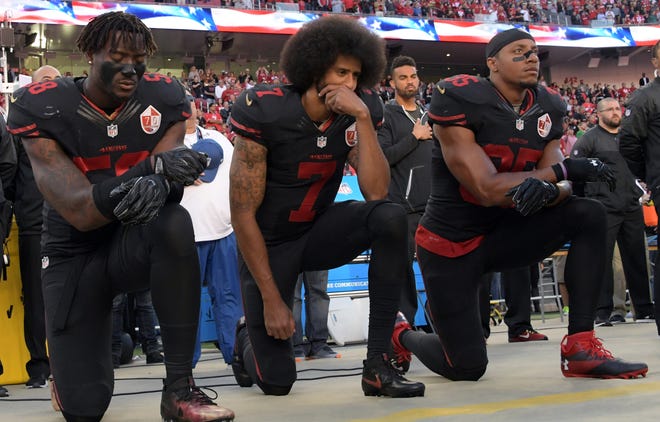
The NFL has had perhaps the most public recent protests regarding police brutality and the oppression of BIPOC. In 2016, 49ers quarterback and activist Colin Kaepernick knelt during the national anthem in solidarity with marginalized communities that did not have a platform to speak out about racial oppression. This came after Kaepernick was seen sitting during the anthem in the preseason games. When confronted by the media, he explained that he would not stand until the anthem represented something to be proud of. 

“This stand wasn’t for me,” Kaepernick said. “This is because I’m seeing things happen to people that don’t have a voice, people that don’t have a platform to talk and have their voices heard, and effect change. So I’m in the position where I can do that and I’m going to do that for people that can’t.”

Needless to say, Kaepernick’s resistance was met with criticism from every corner of the sporting world. In an interview with ESPN, Saints quarterback Drew Brees expressed his discontent with Kaepernick’s actions. 

“[T]here’s plenty of other ways that you can [speak on important issues] in a peaceful manner that doesn’t involve being disrespectful to the American flag,” Brees said.

Indeed, Kaepernick’s actions resulted in comments about him being unpatriotic, anti-American, or anti-military. NFL Commissioner Roger Goodell also disagreed with Kaepernick’s kneeling during the anthem, deeming the flag to be sacred and kneeling to be unpatriotic. 

The backlash due to Kaepernick kneeling and his subsequent explanations stems from the avoidance of racial discussions when political protests take place in sports. In a 2019 study that explored the responses of students to the NFL anthem protests, researchers found that some white students’ responses demonstrated an avoidance of race in political discussion, even when discussing racially-charged political protests. 

Even the NBA, widely considered one of the world’s most progressive professional sports leagues, can do better to address racism and discrimination. 

Ever since its founding in 1946, players in the NBA have faced racial injustice. In 1950, when Chuck Cooper became the first Black player to be drafted into the NBA, fans believed that Cooper should not play in the NBA. In 1956, the Celtics drafted Bill Russell, who would be the first Black NBA superstar, winning 11 NBA Championships in his 13 year career. Throughout his career, however, Russell’s house was vandalized with graffiti of racial slurs, a burning cross, and defecation. 

More recently, Marcus Smart, a point guard for the Boston Celtics, wrote an article in the playerstrib detailing the hate he has received from basketball fans, including a specific incident where a woman called Smart a racial slur in front of her young son. 

Smart is not the only player to face racial violence and discrimination. Utah Jazz fans are known for using racial hate speech against Black players. One fan told Russell Westbrook to “get down on [his] knees like he used to,” while another fan repeatedly shouted derogatory terms at Westbrook before a playoff game in 2018. 

Black representation in the NBA front-office is also severely lacking. While Black players make up 74.2 per cent of the NBA, there are only four Black head coaches and eight Black managers in the entire league of 30 teams. Although the NBA may be the most progressive league in the world in terms of player activism, Black representation is still desperately needed amongst team management.

Arts & Entertainment, Film and TV

Framing Britney Spears, again

In 2008, the L.A. Superior Court granted Britney Spears’ father, Jamie Spears, financial conservatorship over Britney, allowing him to control her finances. Thirteen years later, Jamie remains Britney’s conservator. Framing Britney Spears is a New York Times documentary following Spears’ tumultuous life and her fight to end her father’s conservatorship. Despite being the focal point of the film, Spears herself is not part of it. 

As mainstream media slowly but surely begins to embrace feminist values, with it comes increasing sympathy for Spears. Although many viewers are treating this film as her redemption, it should not be. It is her story, but it’s not told in her own words. Spears responded to the film on Instagram.

“No matter what we think we know about a person’s life it is nothing compared to the actual person living behind the lens,” Spears wrote.

It is unclear whether Spears is referring to the lens belonging to the paparazzi, or the New York Times. Perhaps it’s both, because the irony is this: At the end of the day, the public is still talking about Spears and is endlessly fascinated with her personal life, and yet, she still has no voice on the trauma she has faced throughout her career. 

Spears has expressed gratitude for the #FreeBritney movement, but it is difficult to see how this documentary helps Spears in her fight against her father’s conservatorship. More sympathy from the public might mean more sympathy from a judge, but #FreeBritney activists were already applying pressure on the L.A. Superior court to relinquish Jamie Spears’s conservatorship before the Times aired the film.

However, there are a number of reasons why this documentary does not belong on the let’s-speculate-about-Britney-Spears’-personal-life shelf.

For one, Framing Britney Spears is building some much-needed sympathy for Spears. Fans are currently demanding celebrities who mistreated Britney to apologize. 

Further, it lays bare how toxic paparazzi culture was, and still is. In one clip, paparazzi are seen packed into a gas station waiting for Spears to exit the bathroom. In another, she is seen crying in a restaurant as onlookers press on. An interviewer asks Daniel Ramos, an active member of the paparazzi, if their work affected Spears at all. 

“Working on her for so many years, she never gave a clue or information that [said] ‘I don’t appreciate you guys,’ or ‘leave me alone,’” Ramos says. 

Additionally, the film serves as a reminder that Spears faced harassment from not only the paparazzi, but also from the general public. Within the last decade, the public refused to view a woman in control of her sexuality as none other than a threat to their children. In a clip of Diane Sawyer interviewing Spears, Sawyer justifies a mother’s claim that she would shoot Britney if given the chance because of how hard it is to be a parent. From all angles, Spears was a target for criticism and hatred. 

Although the film has the power to sway public opinion in favour of Spears, it still inadvertently forces Spears—a woman who has suffered incessant public scrutiny—back into the limelight. One thing is for sure: Any piece of media with Britney Spears in the title will always do well because it satiates the public’s obsession with her private life. It’s clear that the filmmakers respect Britney—they are careful not to speculate about her life too much—but if their goal, truly, was to humanize Spears, they should have waited until she is ready and able to tell her own story.

Britney’s friend, chaperone, and former assistant Felicia Culotta alludes to the fact that this film is not Britney’s redemption. Culotta guides the filmmakers around her Mississippi home, the walls plastered with framed records and photos of her and Britney.

“One reason I agreed to do this interview is so we can remind people of why we fell in love with her in the first place,” Culotta says. “I’m excited for the time she’ll get to share her story [….] Everything will fall into place.”

Read the latest issue

Read the latest issue