


Latest News

All Things Academic, Student Life

Office hours: More than an option, a must

Office hours are an essential part of any college curriculum. Amid the hustle of lectures, conferences, and assignments, these hours provide flexible opportunities for students to ask their professors or teaching assistants (TAs) any questions that come up throughout the semester. They offer a safe space for those who might be afraid to ask questions in front of the entire lecture hall, allowing one-on-one time to raise concerns and explore more in-depth questions. Information about professors’ and TAs’ office hours can usually be found on each course’s syllabus. 

Some professors’ office hours only occur once or twice a week, making it difficult for students whose schedules overlap with these times to seek help. Luckily, for larger lectures, there are conferences run by TAs, most of whom have their own individual office hours that any student is welcome to attend. For instance, in LING 201, there are five TAs, all of whom host one to two hours a week in person or on Zoom. This flexibility allows students to get their burning questions answered by someone knowledgeable.

Zlata Odribets, a graduate student pursuing a degree in Syntax, is currently one of the five TAs for LING 201. She hosts office hours twice during the semester. Her last session, just before the midterm, welcomed five students with questions about recent assignments. 

“I think some students appreciate communication that is private, that their classmates can’t overhear. Often office hours provide me the opportunity to answer a question more in-depth when I’m not rushing from one class to another,” Odribets said. “When I was an undergraduate student I asked similar questions [to professors and TAs].”

Although it can be nice to have a direct line to the professor, having additional office hours with TAs allows both students and instructors more flexibility. 

As Ruby Czeban, U0 Arts, explained, office hours also provide a time and space for students to build relationships with their TAs and professors outside of lectures. 

“I think that it can be very helpful sometimes, especially when you have a specific question,” Czeban said. 

The class had posed some challenges to Czeban, so just before a big test, she attended office hours with the professor to clarify questions about the problem set that had been assigned beforehand. Specific homework questions can be overwhelming or simply inconvenient to ask in a class with over 300 students. Additionally, an issue with a specific problem may not be universally applicable, which is why chatting with the professor or TA after class is often the best way to go. 

Alejandra (Sandra) Barriales Bouche, a professor in McGill’s Hispanic Studies department who instructs HISP 219, explained her experience with students who came to office hours. 

“After an exam, students come more often. Usually, they come to ask questions about the exam or doubts about the material. Sometimes they come for future plans, [such as] which courses they should take,” Barriales Bouche explained. “I feel that some of them feel there is a barrier in class. I feel like there is a different atmosphere [during office hours]. It’s an opportunity for the student and me to establish a conversation about how they are doing in the course.” 

More importantly, she added that she hopes students will take advantage of office hours at all times, and not only when they are struggling—which seems to be a pattern among students.

“Don’t come only when you have a problem. Come to let me know that things are going okay, and things that you like in the course,” Barriales Bouche said.

Office hours are not only an option in times of need; they’re a must throughout the entire semester. Professors’ and TAs’ doors are also opened for a simple chat.


All Things Academic, McGill Recommendations, Student Life

How do we escape our phone during midterms?

While the end of October highlights the traditional joys of the fall season, such as Halloween and pumpkin-spice lattes, it also stands as a gruelling reminder of midterm season. Given the anxiety and stress that can easily wash over us during exams, we tend to gravitate to our phones as a temporary distraction from these negative emotions. Yet when we browse through feeds, messages, or media platforms, we’re all aware—whether we admit it or not—that doomscrolling only digs us deeper into a hole.

Fortunately, this shared experience has inspired many students around campus to find different approaches to staying focused. Olive Bohdanowycz, U1 Arts, discussed how she manages her school work while being mindful of her screen time, sharing her personal strategies for different study locations. 

“When I’m at Schulich or McLennan, I normally use the phone lock machines to completely remove myself from my phone’s distractions. When I’m at home though, I just rely on DND [do-not-disturb] to silence everything,” Bohdanowycz said. 

In addition to the basic do-not-disturb function, many phones now have versatile personal, work, and sleep modes allowing you to customize which specific apps you receive notifications from. Setting these precise restrictions on your phone can improve self-discipline and help prevent procrastination.  

Daphne Barrett, U1 Arts, also found success with limiting access to her phone. Along with adopting similar do-not-disturb approaches to Bohdanowycz, she used strategies that relied on other people to get involved with her personal screen time limitations. 

“I’ll either have one of my friends or housemates take my phone away, or set timers so I can see how much work I’ve done without my phone,” she explained. “It’s motivating to see my time and track my hours of studying.” 

Through methods like this, Barrett was able to balance effective studying habits with a feeling of satisfaction and progress, specifically through her timer strategy. This approach of transforming screen time restrictions into a motivating process seemed to be effective and popular with many other students as well. 

Juan Garnica, U2 Desautels, mentioned apps that use similar tactics as a motivating tool. For instance, Flora is an app that plants a virtual tree for a set duration of study time. When the timer runs out, the tree appears fully grown in your virtual garden. He explained how closing the Flora app kills your tree, forcing you to restart the process. 

“Seeing that I’ll kill my tree makes me think twice if I really want to go on my screen. It is a way to make me realize my priorities,” Garnica said.

Like Barrett, Garnica uses this app to stay focused on his work by reducing distractions and using the virtual trees as a motivating reward. Turning focused work and studying into a game is an ideal way to get through difficult tasks. 

On the other hand, Shirley Tu, U2 Arts, tries to avoid their phone entirely whenever possible.  

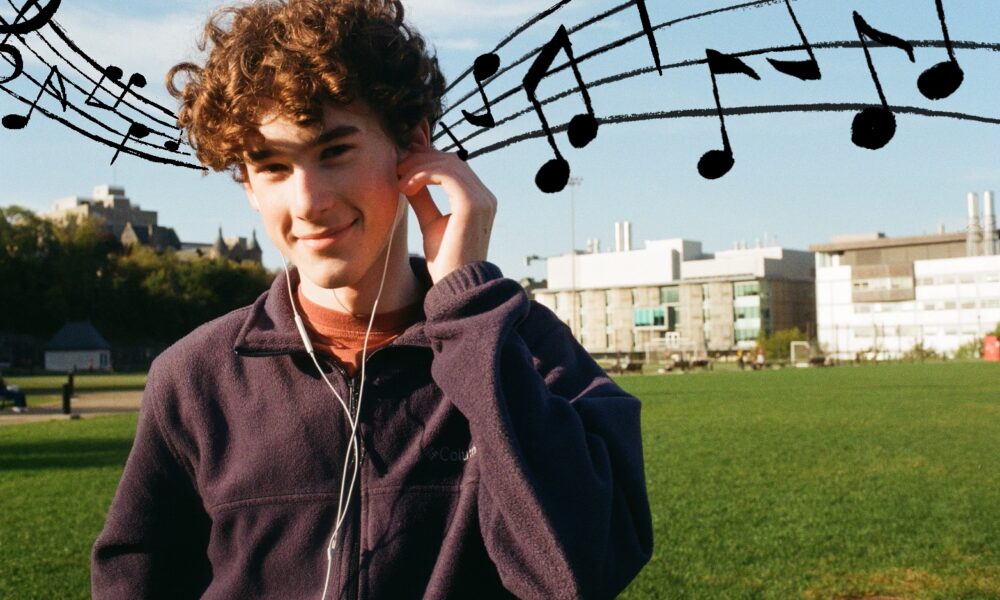
“Usually when I’m listening to music, I try to always connect my headphones to my laptop instead of my phone so if I’m changing the song or volume, I’m not distracted by any notifications or feel the need to look at other apps,” Tu said. 

Using an alternative device like a computer, which lacks the disruptive qualities of phones such as constant sporadic alerts and the ease of getting lost in distractions, can be effective for staying on task. While we may try to justify constantly having our phones close by to listen to music or keep up with text messages or other vital alerts, Shirley’s method shows that it is possible to do these things without a phone. 

While simply silencing their phone may be enough for some, others might need to find alternatives to fight the urge to scroll and keep themselves focused on school. Whether you use a screen time regulation app or completely remove your phone from the equation, these insights can help us develop strategies for balancing work and phone usage. By locking up our phones, we can unlock our full study potential to achieve a successful midterm season.

McGill, News

QPIRG Radical Walking Tour explores Milton-Parc and McGill through a critical lens

On Oct. 21, organizers with the Quebec Public Interest Research Group at McGill (QPIRG) hosted a Radical Walking Tour, stopping multiple times along Avenue du Parc, Avenue des Pins, and on McGill campus to offer a critical presentation of both the university and the Milton-Parc neighbourhood. QPIRG is a student-run collective that seeks to engage students with the Montreal community and with social justice issues.

The Radical Walking Tour is one of the many events of Culture Shock, QPIRG’s annual free fall programming series on “anti-racism, migrant justice, and Indigenous solidarity.” The Students’ Society of McGill University (SSMU) also provides organizational support for the event series.

The tour began at QPIRG McGill’s Office and Alternative Library, which shares a space with the headquarters of the Milton-Parc Citizens’ Committee, a grassroots collective working to preserve the neighbourhood’s spaces and its residents’ rights. Carl Bystram, Working Groups and Community Research Coordinator at QPIRG, spoke to the importance of showing McGill community members the history of the neighbourhood.

“We find that situating people in the wider community around Milton-Parc and explaining the struggles that have happened here, as well as the broader struggles around McGill […] really fits in well within the Culture Shock agenda,” they said.

This site of intergenerational community and collaboration set the stage for the first half of the walking tour, which focused on the activist history and ongoing projects in the Milton-Parc community. The tour’s speakers described Communauté Milton Parc (CMP), the largest co-operative development (co-op) in North America, housing over 1,000 low- and moderate-income individuals in its 616 residential units. The tour guides explained how the CMP substitutes the conventional system of landlords charging rent for profit with a participatory housing arrangement, where residents support building maintenance and governance to cut down on rent-related costs for tenants. Further, the tour stopped at Co-op Bar Milton-Parc, a separate co-op that occupies commercial space from the CMP and acts as a bar and a solidarity space for community events.

Other Milton Parc resources spotlighted throughout the tour included food bank programs such as St. John’s Lutheran Church, Santropol Roulant, the Climate Justice Hub, and independent social-justice publisher Black Rose Books. The tour then moved onto McGill campus, starting at the Sylvan Adams Sports Science Institute (SASSI)—a construction project commenced in 2022 upon a donation of $29 million CAD from billionaire Sylvan Adams.  

Speakers on the tour criticized McGill’s choice to partner with Tel Aviv University on the SASSI project due to its development of Israel’s genocidal killing of Palestinians and the Dahiya doctrine for bombing civilian infrastructure. 

McGill’s Media Relations Office (MRO) did not provide comment to The Tribune on McGill’s partnership with Tel Aviv University.

The Radical Walking Tour continued by passing the New Vic Project site. There, speakers discussed the MK-ULTRA experiments which took place at the site in the 1950s and 1960s—a project where the CIA performed research on mind control and brainwashing techniques on unconsenting patients, many of whom were Indigenous. Speakers went on to highlight McGill’s ongoing legal battle with the Kanien’kehá:ka Kahnistensera (Mohawk Mothers) to search for unmarked graves they believe are on the grounds.

The tour concluded by pointing out sites on campus where student demonstrations have transpired, including the Bronfman Building—which students blocked on Feb. 22 to call for McGill to cut ties with Israel—and the spot where a statue of James McGill stood until July 2021, which students had long demanded to be removed.

The MRO affirmed the university’s commitment to social justice in light of founder James McGill’s enslavement of Black and Indigenous peoples and participation in the transatlantic slave trade.

“In the 200 years since its establishment, McGill University has evolved to become a world-class institution of higher education marked by pluralism and diversity,” the MRO wrote in a statement to The Tribune.

For SSMU Vice-President External Affairs Hugo-Victor Solomon, the tour’s focus on lived experiences beyond McGill promotes important avenues for community development.
“By participating in Culture Shock, we’re extending the invitation to SSMU membership at large to […] make connections that they wouldn’t otherwise make, and to be sensitized to issues that may really resonate with them that they haven’t had the chance to learn about yet,” Solomon said in an interview with The Tribune.

Off the Board, Opinion

Cross-section pollination enriches our writers and our paper

My first article for The Tribune was not for News, the section for which I’m now an editor, but for the Arts and Entertainment (A&E) section. 

This is not an uncommon story. A&E is one of our most popular sections, and it attracts writers eager to share their takes on music, film, theatre, and television every week. It was this same love for the arts that compelled me to write a review of the show Human Resources in 2022 and to continue contributing to the section. 

The first time I sat in on a meeting for the Sports section, I had originally been planning on attending a Tuesday night A&E pitch meeting. That evening, I peered into The Tribune’s office to find that there was a particularly large group of contributors excited for the A&E editors to get started. Feeling a sudden rush of stress at the thought of joining the crowd, I sat down with the only other section meeting at the same time. This group was mercifully—sorry Sports, it’s just the truth—much smaller. 

I walked out of the University Centre that night having picked up a pitch not on celebrity drama or a local poetry slam, but on Varsity Basketball. I attended the game, loved it, and covered another the following week. A couple of months later, I found myself a Staff Writer for Sports. 

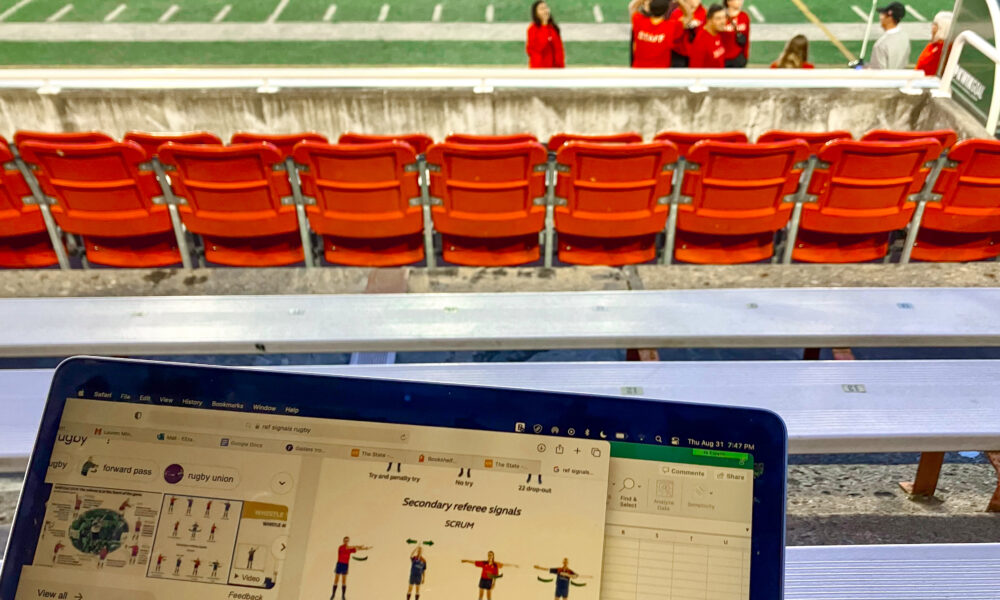
At this time, I had little prior knowledge of many sports that the section covered. I tried my best to arrive at games prepared, but there were moments during play when I had to split the screen of my laptop into two embarrassing halves: My notes on the left side, a diagram explaining rugby referee hand signals on the right. 

I recount this to highlight that complete beginners are welcome in all sections at The Tribune. Our paper seeks to not only produce high-quality articles that carry out our mandate and commitment to anti-oppressive journalism, but to foster a learning environment where students have the chance to grow as writers and reporters. Although I started as a beginner, the guidance of then-Sports Editors Tillie Burlock and Sarah Farnand helped me improve and gain confidence in my coverage.

Picking up the style and method of a new section also led me to unexpected skills and interests that I would have otherwise not discovered. Navigating post-game conversations with coaches and athletes taught me the basics of interviewing. From writing recaps of games, I learned how to summarize events and organize an article around the most crucial details. What started as a kernel of interest for sports coverage grew into a broader passion for reporting. Without Sports, I would have never started writing regularly for News.

I’m far from the only writer to venture beyond my go-to section. By contract stipulation, every editor at The Trib must pen a feature, a governance piece for News, and, uh, an Off the Board for Opinion. Though the paper has a central style guide, each section has its own motivating questions, types of articles, and approaches to reporting that make it unique. To me, this means that when writers venture beyond their typical page of the paper, it’s a chance for them to bring different ways of writing and thinking about university life to other sections. Cross-section pollination enriches the hive as well as the bees.

To any contributors, staff writers, and editors who feel a spark of interest to write for a new section, I recommend following it—especially if it’s telling you to write for News! These days, our pitch meetings are looking very inviting to those afraid of crowds! That curiosity yields multifaceted approaches to student journalism that strengthen our paper, and for me, it led me to the section I now call home.

Split your screen into two embarrassing halves and see where it takes you.

Behind the Bench, Soccer, Sports

FIFA accused of “sportswashing” by women’s soccer stars over Saudi deal

This past April, soccer’s governing body, FIFA, announced a landmark partnership and sponsorship deal with the Saudi Arabian Oil Group, Aramco. Owned almost entirely by the Saudi Arabian government and the country’s Public Investment Fund (PIF), this collaboration between FIFA and Aramco marks another milestone in FIFA’s continued relationship with the nation. Saudi Arabia is also set to host the men’s FIFA World Cup in 2034, solidifying the country’s growing presence in global soccer.

Women’s soccer’s biggest names fought back against the deal in the wake of the Saudi government’s continued mistreatment and repression of women and minority groups, such as the male guardianship system, imprisonment of women’s rights activists, and criminalization of the 2SLGBTQ+ community. 

These players claim that FIFA is continuing to assist Saudi Arabia in “sportswashing,” a tactic used by repressive governments and corporations, which aims to distract the eyes of the public from controversies through the promotion of sport. 

In a letter to FIFA, 130 players, including Canadian legend Jessie Fleming and the Netherlands’ all-time leading scorer Vivianne Miedema came out strongly against the partnership. They expressed feeling let down by people who were supposed to be looking out for the players’ best interest, and that the sponsorship with Aramco went directly against many causes that women’s football players were passionate about. The players cited Aramco’s massive levels of emissions, the continued oppression of the 2SLGBTQ+ community, and the state-sponsored restrictions against Saudi Arabian women as reasons why this sponsorship is antithetical to the continued growth of women’s soccer.

In an era where the growth of women’s soccer outpaces many other sports, fans and players see the Saudi deal as a step in the wrong direction. The letter rightly points out the deal was made by 37 decision-makers, of which only eight are women. Male decision-makers are not at risk of being affected by the Saudi government’s regressive policies, and some of the main stakeholders—women—are typically excluded from the decision-making process. It is an indictment on FIFA and its leadership that the requests of their players are not being heard or acted on. It would be in the sport’s best interest for FIFA to cease relationships with a government that is antithetical to the best part of soccer: Inclusivity. From the No Room for Racism campaign to the Rainbow Laces project, players and fans frequently stand up for marginalized communities. Soccer’s leaders, however, show no such inclination, to the detriment of the sport and its players.

Aramco CEO and President Amin H. Nasser explained in a press release that the partnership with FIFA attempts to use the power of sport to make global impacts and develop the game of soccer. This has been a trend not just in world soccer, but also in many other international and well-recognized sports. The controversial PIF-owned LIV Golf League aims to compete with the PGA Tour to be the foremost golf competition in the world, while a PIF-led financial takeover of Newcastle United F.C. in the English Premier League sparked outrage from fans. Additionally, one would be hard-pressed to watch a Formula 1 race without spotting Aramco advertisements scattered throughout the circuit. In fact, Aramco is the main title sponsor of the Aston Martin F1 Team.

When Nasser speaks of “harnessing the power of sport,” he is not being disingenuous. The end goal of this sportswashing is to use the global adoration of sports to continue to normalize the behaviours of the Saudi Arabian government by injecting its finances and advertising into the sports and teams fans hold so dearly. Normalization will continue as eyes are pulled away from domestic issues within Saudi Arabia. FIFA has made the decision that abuses against the 2SLGBTQ+ community, oppression of women, and poisoning the planet are acceptable in the name of financial gain and brand recognition. They simultaneously profit off of the popularity of women’s soccer and the oil money of a nation whose laws oppress women daily. By pointing out the hypocrisy of this decision, players are taking a brave stand against financial interests, and hopefully FIFA will follow suit.

McGill, News

Recap: Queerness and AI roundtable

McGill community members gathered for a roundtable discussion on Queerness and AI organized by Web Services and Equity at McGill as part of Queer History Month (QHM) on Oct. 23. Three panellists—McGill’s Associate Director of Inclusive Excellence Kit Malo, Senior Employment Equity Advisor Ande Clegg, and Digital Communications Manager Joyce Peralta—led the talk alongside the roundtable’s emcee, Digital Communications Associate Jaylen Gordon. The goal of the event was to interact with and spread awareness about those AI misrepresents and discriminates.

The panellists led guests in an exercise, prompting Microsoft Copilot to generate an image of “Queer McGill University community members for a McGill website.” The resulting picture showed a large group of people holding rainbow pride flags, many with the colours in the wrong order. Attendees observing the image were quick to point out the lack of diversity with Microsoft Copilot depicting the figures in the image as uniform in body type, ability, style, and identity. Throughout the discussion, many participants expressed feeling offended, but not surprised, by the stereotypical depictions of queer communities by Microsoft Copilot. 

The theme of this year’s QHM is visibility, with events and programming slated throughout the month of October. The roundtable also discussed journalist Reece Rogers’s Wired article “Here’s How Generative AI Depicts Queer People.” In it, Rogers discusses how AI’s depiction of queerness relies on and amplifies stereotypes around lesbian, gay, and bisexual individuals while mischaracterizing the transgender community completely.  

McGill offers a “secure version” of Microsoft Copilot to its student body with the disclaimer that “Human biases may skew the data that was used to train an AI tool […] resulting in content that reflects or amplifies those biases” in its general guidelines

The group acknowledged that issues in AI’s depiction of queerness reflect society’s historic and present mischaracterization of 2SLGBTQ+ people. Panel members argued that for AI to begin generating fair representations of the queer community, it must be trained to reject biased and discriminatory images of queerness while embracing fair representation of the 2SLGBTQ+ community. 

Science & Technology

Mindfulness: A potential solution for depression and anxiety in seniors

In Canada, up to 20 per cent of older adults experience symptoms of depression, and these rates increase to up to 40 per cent for those in hospitals and long-term care homes.

Depression and anxiety disproportionately affect older adults and are associated with adverse health outcomes, reduced quality of life, and increased healthcare costs. Traditional treatments such as one-on-one psychotherapy and medication use may often be inconvenient for older adults due to low accessibility and negative side effects. Therefore, alternative therapies that provide a non-pharmacological, safe, and more accessible option would be beneficial.

Mindfulness-based cognitive therapy (MBCT), a type of psychotherapy that combines elements of cognitive therapy and mindfulness, usually includes eight weekly two-hour sessions, typically delivered in a group format. It has become widely used and has shown to be effective in the treatment of depression and anxiety, particularly among older adults. However, studies regarding the psychological pathways through which MBCT improves psychological outcomes, including depression and anxiety, are scarce.

In a recent paper, Soham Rej, associate professor in McGill’s Department of Psychiatry and Principal Investigator at the Lady Davis Institute for Medical Research (LDI), and his team investigated whether MBCT influenced mindfulness and psychodynamic defense mechanisms.

“Defense mechanisms are ways that we cope with reality and the ways we react to difficulties in life,” Rej said in an interview with The Tribune.

Namely, these mechanisms are unconscious psychological responses that protect people from feelings of anxiety and threats to self-esteem. In addition, Rej’s team also looked for changes in depression and anxiety symptoms.

The three defensive categories, from the least to the most adaptive, are “immature,” “neurotic,” and “mature” defenses.

Immature mechanisms are counterproductive and can involve using projection or passive-aggressive behaviours, while the neurotic category includes the repression and detachment of emotions. These behaviours still aren’t ideal, but they are generally considered more adaptive than immature mechanisms. Rej underscored how immature and neurotic defenses can lead to psychological distress and worse health. 

On the other hand, mature defenses are considered adaptive and involve using humour or rationalization to cope with challenging emotions or situations. According to Rej, mature defense mechanisms are usually more socially acceptable and help promote better mental health outcomes. 

“We found that MBCT improved mature defenses and reduced neurotic and immature defense mechanisms,” Rej said. “In addition, MBCT improved mindfulness as self-reported by the patients, and this improvement was statistically significantly associated with improvements in anxiety.”

These findings emphasize the potential for short interventions, such as MBCT, to change defense mechanisms, suggesting that treating depression and anxiety can lead to healthier ways of coping.

“If somebody is depressed and has certain immature defense mechanisms, we shouldn’t have any prejudice against such people and should try to treat their depression,” Rej said.

Rej’s study is the first to evaluate the effects of MBCT on defense mechanisms and their relationship with depression and anxiety symptoms. 

Although Rej’s team observed a trend of change toward increased mature defense mechanisms and decreased neurotic and immature defense styles, larger studies are necessary to confirm the role of MBCT in promoting psychodynamic defense mechanisms. 

Moving forward, Rej would like to see future studies continue exploring different psychological and biological mechanisms underlying various types of psychotherapies. He also points to the need to increase access to psychotherapy. 

“In Quebec, you can be waiting 12 months, or even longer, to get psychotherapy, so access needs to be improved. Ways to do that include giving consultations via Zoom and offering group therapies,” Rej said. “The future is about increasing access by scaling up access to these interventions using new technologies.”

Rej highlights the potential application of MBCT in preventing mental disorders before their onset.

“We need to have low-cost, highly scalable ways of preventing depression and anxiety through exercise, diet, and programs like MBCT targeted at people at risk of anxiety or depression,” Rej said.

Science & Technology

Finding sonic serenity in the big city

Imagine strolling through the bustling streets of downtown Montreal, where the air is thick with the rumble of traffic and the screeching of construction. It’s not exactly the most relaxing experience, is it? Could urban planners transform these soundscapes into something more pleasant? 

Valérian Fraisse, a PhD student in Music Technology at McGill, is devoted to applying science to music. His research focuses on urban soundscapes—the overlapping environmental sounds that make up our auditory experiences in urban settings—by investigating how to improve environments through sound installations and perceptive evaluations.

In a recent study, Fraisse and colleagues from the Sounds in the City research partnership, led by Professor Catherine Guastavino, explored the transformation of Fleurs-de-Macadam Square. This community space, created from a vacant lot in the Plateau-Mont-Royal, became the site for sound installations designed by the artist collective Audiotopie. Over two summers, sound artists from Audiotopie created and installed four sound pieces: Woodland sounds, voices, synthesizers, and sounds of the sea. 

“Sound artists play an important role in contributing to providing better sound experiments, especially because they are experts in what they do […] they are sonic experts that know what kind of sound could be done to improve or alter the perception of a given space,” Fraisse said in an interview with The Tribune.

While using sound to mask unwanted noise isn’t new, the study reveals these installations can do more than just cover up unpleasant sounds. Through the analysis of over 800 questionnaires and sound level measurements, the researchers found that all four sound installations positively impacted people’s perception of the soundscapes. 

Key findings showed that despite their compositional differences, the sound pieces all contributed to a calmer soundscape. This universal impact suggests that installations that utilize peaceful sounds enhance the tranquillity of public spaces.

However, specially tailored compositions can go beyond making an environment calmer, and actually achieve specific desired effects. For instance, the woodlands installation, which incorporated natural sounds, increased the sense of “being away” from the business of the city. On the other hand, the synthesizer installation, using abstract sounds, created a more coherent and less chaotic soundscape, highlighting how different sonic approaches achieve distinct perceptual outcomes.

“I would say also that the goal of this installation is never to strongly alter the sound environment,” Fraisse explained. “So it’s a very subtle kind of ambient sound. The goal is for it to be nondisruptive, so it can bring a more pleasant atmosphere without deterring people from staying there.”

The sound installations went beyond masking unwanted noise; they promoted “attentional masking” by shifting listeners’ focus to less prominent sounds in the environment. For example, instead of being overwhelmed by traffic noise, listeners become more aware of the quieter nearby construction. The installations effectively helped people tune into the quieter elements of the environment.  

The research also highlights the significance of temporal and spatial variables. A sound installation’s effect can vary depending on the time of day and where people are within the space. Further research is needed to explore these implications and the long-term considerations, such as habituation and changing community needs. 

Fraisse believes that sound installations offer a valuable tool for public urban planners seeking to improve public spaces. 

“In [urban] areas that don’t have a lot of variety, for instance, that are pretty dominated by traffic or noises that are not specifically restorative or interesting, [sound installations] can play a great role by bringing sonic diversity, but also just fostering cultural and social interactions, so there can be many benefits,” Fraisse said. 

In addition to these advantages, the installations are relatively inexpensive, adaptable to various spaces, and versatile in the types of sound content they can incorporate. By adding soundscapes to the urban planning toolkit, they offer a creative and effective way to enhance the enjoyment and restoration of urban environments. 

The study contributes to growing research on the importance of sound in our urban experience. As cities become increasingly noisy, creating oases of calm and tranquillity is essential. In the grand orchestra of urban living, soundscapes can be the key to making a city sing—not just shout. This project is part of the Sound in the City team’s ongoing inquiry, aimed at bridging research and practice to develop improved approaches for urban noise management and soundscapes in Montreal.

Arts & Entertainment, Film and TV

(Non-scary!) Halloween media

Howl’s Moving Castle

In this Studio Ghibli film, young hatmaker Sophie encounters a mysterious wizard named Howl. The Witch of the Waste curses her by turning her into an old woman. Sophie then meets a mysterious anthropomorphic scarecrow who leads her to Howl’s castle. There, she takes up residence as a live-in cleaning lady, hoping to break free from her curse with the help of the wizard’s magic. The world of the film is filled with sorcery, curses, a magical castle, and an animated flame, making it perfect for Halloween while never being scary. Along with the world and plot of the film, the relationships between the characters and the romance between Sophie and Howl create a captivating story. Not only does this story follow Sophie’s journey of independence and self-discovery, but the film explores anti-war themes with Howl’s critique of the war between two neighbouring kingdoms. The stellar cast of voice actors for the English dub of the film, consisting of Christian Bale, Billy Crystal, and Josh Hutcherson, is the cherry on top. 

Over the Garden Wall

In this animated show, half-brothers Wirt (Elijah Wood) and Greg (Collin Dean) find themselves lost in a spooky forest (for reasons unknown until later in the series), desperately trying to return home. In each episode, the two boys discover a new cast of characters who travel across time and space, while the woods and a few recurring characters connect each new adventure to the next. This critically acclaimed show has adorable and quintessential autumnal visuals, a great original soundtrack, and clever and hilarious dialogue. Over the Garden Wall is also filled to the brim with references and connections to other media, like the plot’s similarities to Dante’s Inferno and 19th- and 20th-century Americana culture. This take on a story about folklore has the perfect amount of spooky vibes while never being overly scary. Interspersed with humour, this show makes for a tremendous non-scary watch for Halloween. 

Agatha All Along

In this new Marvel miniseries, Agatha Harkness (Kathryn Hahn), who first appeared in WandaVision (2021), gets her moment in the limelight. This series returns to the fictional town of Westview three years after the events of WandaVision, with Agatha still trapped under the Scarlet Witch’s (Elizabeth Olsen) spell. After finally being released from the spell thanks to the help of Teen (Joe Locke), Agatha creates a coven consisting of Lilia Calderu (Patti LuPone), a divination witch, Jennifer Kale (Sasheer Zamata), a witch gifted at potion-making, Alice Wu-Gulliver (Ali Ahn), a blood witch (a child of a witch), and Mrs. Hart (Debra Jo Rupp), Agatha’s neighbour and their “green witch,” to embark on a journey through the trials of the Witches’ Road in hopes of regaining her lost powers. Similarly to WandaVision, this series explores different genres and time periods, as each trial of the road takes them to a different place and transforms their costumes to match, like when they were transformed into the 70s for one of the trials. Agatha All Along has a great cast of characters, and the sapphic tension between Agatha and Rio Vidal (Aubrey Plaza), a romantic figure from Agatha’s past, is immaculate. The final two episodes will be released on Oct. 30, just in time for Halloween, making this the perfect binge-worthy show for the spooky holiday! 

A Discovery of Witches 

A Discovery of Witches is a series based on Deborah Harkness’ All Souls Trilogy of novels. The story starts in Oxford, where the non-practicing witch and history of science professor Diana Bishop (Teresa Palmer) discovers a centuries-missing bewitched manuscript at the university’s famous Bodleian Library. This discovery leads to Diana meeting Matthew Clairmont (Matthew Goode), a vampire and professor of biochemistry, who work together to uncover the mystery behind this enchanted manuscript. This show is the scariest on this list, as it does get violent and suspenseful at times, but since I could handle it despite my extremely low tolerance for frightening things, it merits its place on this list. This time last year, I became obsessed with this show; the autumnal dark-academic aesthetic of Oxford, the magic, the mystery, and the romance entrap the viewer into this fantastical reality, making it an excellent watch for Halloween!

McGill, News, SSMU

SSMU VP Student Life Chloé Muñoz resigns

The Students’ Society of McGill University (SSMU) Vice-President (VP) Student Life, Chloé Muñoz, announced her resignation from the role at the Oct. 24 Legislative Council meeting. Her resignation is effective Oct. 29. SSMU will run a by-election to fill the position and the remaining executives will share the responsibilities of the Student Life portfolio in the interim. 

In an interview with The Tribune, Muñoz explained that her resignation was due partly to personal reasons and internal restructuring in SSMU which made her portfolio as VP Student Life particularly difficult. 

“These roles take on a huge managerial role, which I don’t think I personally was prepared for, and I think the year-to-year transition makes it at times unfair for the permanent and casual staff that remain,” Muñoz said. “I just think there needs to be a remodelling of what is expected of executives, so that there is more support for people entering the role. The model right now makes the position very overwhelming and difficult for any real progress to be made in a way that can support student groups and students better.” 

Muñoz also mentioned that the bureaucratic nature of SSMU was ultimately at odds with the action that she wanted to enact within the union.

“There were also a lot of structural pushbacks that made it really difficult to uphold the communication and transparency that students deserve, and I no longer wanted to be a part of that dynamic,” Muñoz said.

While she is stepping down from the position, she expressed support to the remaining executives. 

“Ultimately this was a personal decision and I recognize that SSMU just might not be the place for me at the moment and I wish all the remaining executives the best of luck in all that they […] are doing,” she said.

The VP Student Life portfolio covers three main pillars: Student groups, mental health, and family care. As the process for a by-election gets underway, SSMU President Dymetri Taylor explained that he will take on responsibilities regarding services and family care, VP Operations and Sustainability Meg Baltes will take on the clubs, and mental health responsibilities will go to VP University Affairs Abe Berglas.

Susan Aloudat, VP Events for the Arab Student Network, told  The Tribune she is concerned that the lack of a VP Student Life might pose a challenge to student clubs and services.

“It can be really hard working on a service with SSMU when they’re transitioning between execs because it makes already slow processing times go slower and then we can’t provide certain deliverables […] on time,” Aloudat wrote. “It would be nice if SSMU removed a lot of the unnecessary communication that happened between services and SSMU execs, for example room bookings and financial affairs, because the wait and the back-and-forth is what makes it hardest to do our job.” 

The two-week nomination period for the by-election will begin on Monday, Nov. 4 and will be followed by a week-long campaign period. This timeline will be extended if there are no candidates for the role. In the event no one runs in the by-election, the executives will either continue to share the responsibilities, or SSMU will hire staff to help fulfill the tasks. Taylor estimates that if someone is elected, they will likely fully take on the role in January 2025.

To Taylor, this resignation is indicative of a broader issue of a lack of student engagement with SSMU.

“In the past, the SSMU didn’t see as much resignation as it does now, and that is due to an abundance of reasons. One is simply just due to waning interest in the SSMU, which is predictable based on how things have gone for the past few years,” Taylor told The Tribune. “Things remain relevant if they are […] doing things for the student body. They don’t remain relevant when they’re doing things that aren’t really out there and engaging with the student body.”

Read the latest issue

Read the latest issue