


Latest News

Science & Technology

McGill at COP15: A future for biodiversity?

2020 was a year that marked the start of the COVID-19 pandemic, the public health crisis that spurred unprecedented timelines for vaccine development. However, 2020 should be infamous for another reason—it was one of the hottest years in history. Adding insult to injury, this was not some statistical outlier: The last eight years have all been categorized as the hottest on record. The average temperature has risen by 0.08 degrees Celsius—0.14 Fahrenheit—each decade since 1880, and since 1980, that rate has more than doubled to 0.18 Celsius.

Last month, while the Qatar World Cup engrossed millions, here in Montreal, an even more momentous event occurred: The 2022 United Nations Biodiversity Summit. Also known as COP15, the event concluded on Dec. 19 and saw almost 200 countries agree to the goal of halting and reversing biodiversity loss. With a “30 by 30” target, nations pledged to conserve 30 per cent of the world’s lands, seas, and inland waters by 2030. 

The targets put forth by the attending nations were grand in scope, with goals like cutting global food waste in half, reducing harmful pesticide usage, and acquiring $200 billion by 2030 dedicated to protecting biodiversity. Held at the Palais des congrès in downtown Montreal, the summit came two weeks after the United Nations Climate Change Conference, known as COP27, in Sharm El Sheikh, Egypt. In contrast, COP27 focused entirely on climate-related issues such as curbing carbon emissions and adapting to climate impacts. 

The fight for climate action has been difficult, with repeated setbacks like missing the 1.5 degrees Celsius world temperature target and nations’ failures to stick to emissions pledges. In many ways, biodiversity protection is as important as meeting climate targets because biodiversity upholds the world’s ecosystems—an environment with diverse species is more stable than a homogeneous one. The overharvesting of a couple of key species of marine life was a central discussion because of how it can break down ecosystems in unpredictable ways, along with the small-scale communities dependent on them.

Kristen Lalla, BSc ‘18, MSc ‘21, and current Physical Science Officer at Environment and Climate Change Canada (ECCC), was a speaker at the conference. In an interview with The McGill Tribune, Lalla discussed her and the ECCC’s research after participating in the “Conservation Exchange: An innovative new approach to financing conservation” panel at COP15.  

“We’re working on developing a biodiversity indicator that will hopefully be able to quantify the biodiversity benefits of conservation projects,” Lalla said. “[The development] has involved a lot of reading, a lot of thinking and discussions both within the team and with others, and a lot of trying things out to figure out what works and what doesn’t [….] It’s not a super straightforward process.”

However, quantifying biodiversity efforts can be challenging because there are so many aspects to consider—population, habitat size, invasive species, and pollution. If these were left unchecked, species endangerment is a possibility.

“Species at risk are a priority in Canada […] and so those species at risk have legislative population distribution goals, and we can actually use those goals to estimate the benefits relative to those goals,” Lalla explained. 

By comparing the initial populations of at-risk species to post-conservation populations, a numerical value is generated to gauge the impact of preservation efforts. This initiative, known as the Conservation Exchange, will allow the Canadian government to dole out biodiversity certificates—something similar to carbon credits—to benefit entities who work on promoting preservation efforts. 

In addition to Lalla’s research, Kyle Elliot, a professor in the Department of Natural Resource Sciences and Canada Research Chair in Arctic Ecology, researches Arctic avian predator ecology. Professor Elliot’s research focuses on Arctic seabird migration—one of the many avian species that are impacted by biodiversity loss.

“We’re measuring the energetics—the energy expenditure and intake of arctic seabirds—and you can imagine them as being tiny little sampling devices for us,” Elliot said. “The traditional way of studying the Arctic would be with an icebreaker which does one track—$100,000 a day–and covers some small section of the arctic [….] They’re telling us something about what is happening in the ocean, and if they have to expend a lot more energy, then things may not be as good.”

Since seabirds, such as the thick-billed murre and ivory gull, are perched at one of the highest positions on the Arctic food chain, one can determine how well an ecosystem is doing by tracking the way these predators interact with their environment. Suppose a seabird population has to go a few kilometres further to get the same amount of calories as they did a decade prior. This would indicate a substantial drop in the birds’ prey population or in their prey’s habitat size.

Currently, ECCC has over 20 initiatives ranging from the ecological gifts program, which offers tax breaks for whoever donates the rights to ecologically sensitive land; the Aboriginal Fund for Species at Risk, which supports Indigenous leadership in wildlife conservation efforts; and the Habitat Stewardship Program, which funds projects that directly contribute to the fulfillment of recovery objectives and population goals for species that fall under the Species at Risk Act (SARA).

In COP meetings, governments arrive at conferences with their own objectives in mind, so reaching a consensus often requires considerable effort and involves stripping the final resolutions of many strong commitments. 

COP15’s plenary sessions saw negotiators continuously weakening proposed goals to get everyone on board. The United Kingdom delegates, for example, asked that criteria remain flexible and open to change, with other nations parroting the same complaint about the proposal’s perceived stringency.

As some wealthy countries pushed for ambitious new targets, representatives from the Global South, responsible for the world’s most biodiversity-rich ecosystems, focused on securing the funding needed to meet such goals. Toward the meeting’s end, several representatives from developing nations walked out to protest the lack of funding their countries were receiving. A prominent figure in this protest was the lead climate negotiator for Brazil, Leonardo Cleaver de Athayde. Representing the nation that arguably holds the most biodiverse forest on the planet, he was frustrated with a lack of genuine engagement from the other side of the table.

Despite these complications, the final result not only included the 30 by 30 agreement but also some commitments to fund different forms of biodiversity protection, such as promoting environmental awareness or reducing consumer waste. The European Union (EU) promised to double its international biodiversity financing to seven billion Euros for the 2021-2027 period, calling on other donors to match this effort. Countries also committed to mobilizing $200 billion USD per year in domestic and international biodiversity-related funding by 2030, with $30 billion USD per year in international finance (public and private) from “developed to developing states.” 

Though these are steep figures, the impact of these policies will only be felt if countries actually stick to the agreements reached. For instance, concerns surrounding the “30 per cent restoration of land and sea” goal stem from the fact that no baseline year was established for reference. 

The funding mechanism also remains vague regarding where the capital will come from and sounds eerily similar to past financing commitments that were never met. At the 2009 climate COP, countries agreed to raise $100 billion USD annually for climate action in developing countries by 2020. But this target has been missed every year so far.

All commitments to protect biodiversity still remain entirely dependent on the assumption that global warming will not decimate our environment. 

“It’s fantastic to have this agreement […] these types of aspirational goals are fantastic,” Elliot said. “It’s great to create national parks and protected areas in the Arctic, but it’s not going to do anything if climate change means there’s no Arctic left.” 

The enticing ambition of COP15 should be treated with caution and will require consistent pressure for meaningful success. If governments do not detail how to achieve such goals, reaching them will be nearly impossible. 
Commentary, Opinion

McGill’s new library must provide students with better, more affordable food

McGill has a food problem. The provision of affordable campus food is a myth.

But this time next year, one of the main campus food sources and perhaps the epicentre of the problem, Redpath Café, will be torn down along with the McLennan and Redpath libraries to make way for McGill’s new $140 million Fiat Lux Library Project.

And aside from where we will study or what will happen to food provision in the meantime, my question is: How will McGill improve campus food options with this new library?

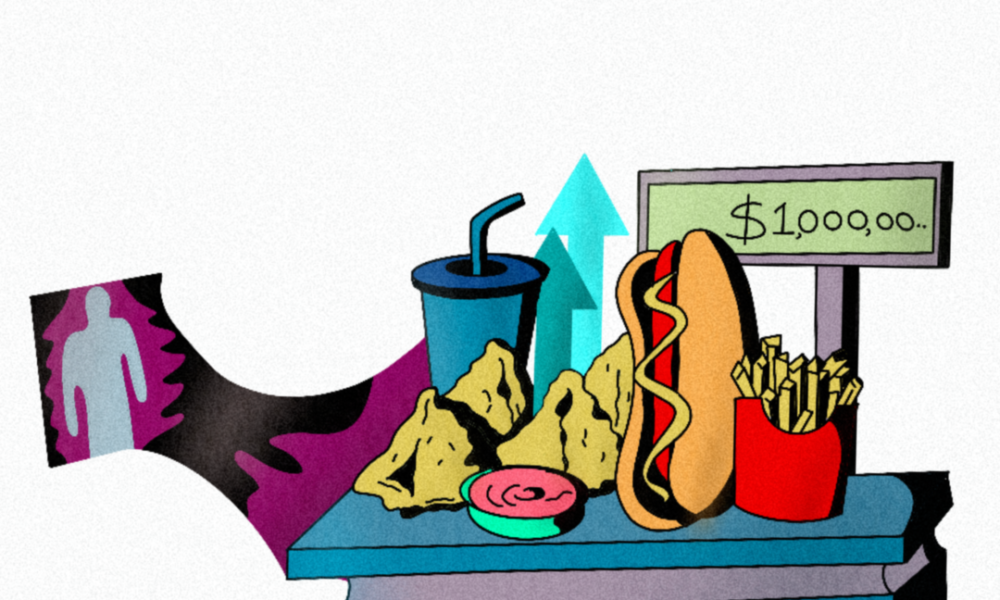
I occasionally venture down into the sterile underpass that is the café in Redpath library. And when I do, I buy myself a Kit Kat and a Coke (the liquid kind), which comes to about $6. Actually, as my friends may testify, I do this most days. It’s my brunch. 

Why Kit Kats instead of, say, poké bowls? Or sandwiches? Or sushi? Because the price of the Kit Kat at the till doesn’t fill me with an overwhelming sense of dread. 

The fact that Redpath Café, a university caféteria with as much pizzazz as a border-control waiting room, charges similar prices as nearby restaurants is ridiculous.

Sésame, a nearby Montreal poké chain, offers a mini-salmon poké bowl for $9.50, which is basically what you get with Redpath’s salmon poké bowl. Except, Sésame’s after tax and tip will still be on the right side of $16, and Redpath’s won’t. And Sésame’s isn’t bland to the point of being totally regrettable, like Redpath’s.  

Or take the sandwiches. I think we can all agree that Super Sandwich’s taste better, yet Redpath’s are still more expensive.

The other campus food options don’t solve the problems, either. Dispatch Café and Gerts, both as a café and a bar, are also overpriced. And lest I remind everyone, Gerts is student-run by the Students’ Society of McGill University (SSMU). 

The problem of price goes hand in hand with quality, and Redpath Café hasn’t found the salt. 

Let’s imagine if Redpath Café was a high-quality restaurant, “The Grill at Redpath,” if you will. On the menu, beef burgers from Canada’s finest, grass-fed cattle, and vegan burgers that are so good you don’t have to pretend to enjoy them. Maybe—just maybe, I’d think about forking out 16 bucks on lunch. That is, if I didn’t want a Kit Kat.

Unfortunately, this isn’t “The Grill at Redpath,” and we’re not a bunch of bankers looking for an extravagant midday blowout, despite the Desautels kids’ better judgment. We’re students that need a bit of grub in between classes, and McGill’s provision of accessible, affordable food on campus is inadequate. Period.

The new library offers an opportunity to address this. But from the details given so far, I’m skeptical that they will.

Reading through the project proposal online, I couldn’t find a single mention of food, drinks, or cafés. In the most recent feedback from the 97-page 2019 Lib Qual survey, which uses student feedback to analyze the libraries, there’s no mention of food services either. And, to my knowledge, in terms of reaching out to students to find out their needs for a campus café, there’s been zilch.  

This is despite recent calls for more affordable campus food, previous surveys conducted by SSMU, and the highest food inflation in Canada since 1981. 

Of course, improving the provision of affordable campus food is no easy feat. And even with improvements, students will no doubt still complain—I’m afraid that’s just what we’re like. 

But, make no mistake, when this new library opens in 2027, it won’t matter how many new computers, fancy chairs, or great big glass walls there are—if students can’t find a decent bite to eat, the complaints will pile up and pile high. 

Providing affordable food on campus is too important to be forgotten about. It must be prioritized.  

And it starts with asking students two questions. What do you want on the menu? And how much are you willing to pay?

Fact or Fiction, Science & Technology

Fact or Fiction: Do word games really keep your brain healthier?

Over the past few years, word puzzles and brain games have exploded in popularity. Most of us are familiar with the green, yellow, and grey squares of Wordle, acquired by The New York Times in January 2022, or have attempted to organize letters on a Scrabble board to no avail. This increased engagement with word puzzles has not gone unnoticed among scientists. Many now wonder whether the mental gymnastics we do to solve word puzzles have any particular benefits on cognitive ability or overall brain health. 

At first glance, we would expect the answer to be “yes.” Logically, we assume that anything that makes our brains exercise a little harder will be beneficial to our health in the long term. But what does the science say?

Well, there are some conflicting accounts. In 2019, a study was conducted on people between the ages of 50 and 93 to understand what kind of effects online word games had on the cognitive abilities of older people. The researchers found that people who did not play any games consistently performed worse on measures of cognitive ability than those who played regularly. This idea, however, contradicts what researchers say about the drawbacks of spending too much time in front of a screen.

A wide body of research has concluded that increased screen time negatively affects the cognitive development of children and adolescents. In some instances, too much screen time has hindered children’s ability to develop strong psychophysiological resilience, or one’s ability to withstand psychological, physiological, and emotional violence. 

So, maybe word games are good for your brain, but only if you play the ones in a physical newspaper or print out the ones online. Unfortunately, this might mean cutting back on your Wordle time—something The New York Times would not like.

In 2022, the word games market value was estimated at $2.47 billion USD—due in part to the sheer number of such games. There are hundreds of different types: Sexaginta-Quattuorlde is a game where you play 64 Wordle squares at once; SpellTower is a mashup of Tetris and Scrabble where you use adjacent letters to form words; and The Sunday Times regularly publishes a cryptic crossword where you have to decipher a clue to get a second clue that leads you to the word that fits into a traditional crossword grid. 

Most researchers have concluded that whether you play word games online or on paper, the benefits of such mental exercise outweigh the negative effects of too much screen time. Daily mental stimulation through word games, and even other challenging mental tasks, help maintain and improve cognitive abilities such as memory and plasticity. 

There is one more benefit of completing word puzzles—it’s what experts call the “a-ha” moment, and it’s arguably the best part. The “a-ha” moment is that feeling you get right after you have finished a crossword or secured a triple-word score square in Scrabble. When the brain completes a difficult task, it is flooded with endorphins, reducing feelings of stress and pain—mental pain, in this case.

A study conducted in Vienna in 2018 used functional magnetic resonance imaging (fMRI) to evaluate how the human brain reacts when a person completes a mentally challenging puzzle. Scans showed that the nucleus accumbens—an important structure in the brain that helps manage emotions—is activated at the “a-ha” moment. This region is also linked to the dopaminergic reward system, leading researchers to link the “a-ha” moment with positive reinforcement.


While crosswords, the Wordle, and Scrabble may be hard, they are worth dedicating time to. Your brain benefits from the exercise and thanks you for the workout with endorphins. So, fact or fiction: Do word games and puzzles really keep your brain healthy? The McGill Tribune says yes.

Arts & Entertainment, Film and TV

‘Kaleidoscope’ is Netflix’s shiny new toy

Anyone who has ever taken a creative writing class is likely familiar with the lipogram: A piece of writing that entirely omits one or more letters. A poem without es or a vignette with no as, it forces the writer to experiment and to think outside of the box as an exercise in creative restraint. Episodic chronology is the screenwriter’s letter e. Take away the function of an episode, or distort a poet’s alphabet, and you can expect the making of something you’ve never seen before. The new Netflix original Kaleidoscope aims to do just that. 

Released on Jan. 1, Kaleidoscope is an eight-episode heist story spanning the 25 years leading up to the theft of  $70 billion and its aftermath. The appeal of the show is that the episodes can be watched regardless of order. Netflix randomizes the episodes for each viewer, who are dropped into the story unfettered by chronology. As a concept, Kaleidoscope is exciting and promises a new way of consuming stories. But when it comes to the viewing experience, very little is gained from the scrambled viewing order. 

As streaming platforms compete to provide the largest quantity of content possible, quality inevitably takes its leave. Showrunners are now challenged to have their projects stand out amid an ocean of mediocrity. In turn, viewers have seen a recent rise in experimental television that bends the structure of a show to the viewer’s whim. Black Mirror’s choose-your-own-adventure style special, Bandersnatch, premiered on Netflix in 2018 and allowed viewers to alter an episode’s outcome by directly interacting with the plot. Bandersnatch found relative success and certainly tested the boundaries of what television is capable of. Similarly, Kaleidoscope pushes the envelope of narrative structure, specifically with the help of Netflix, which has been facilitating these new ways of consuming stories.

Overall, Kaleidoscope is not a bad show. It’s marginally entertaining, with solid performances from the cast and a snappy script. But I was disillusioned with the show’s experimentalism upon realizing that its only remarkable quality is the mixed-up timeline. To accommodate the lack of intentional episode order, the writers limit themselves significantly. Heist stories typically promise intricate, high-pressure plots, which are mostly relinquished in Kaleidoscope, since each episode needs to wrap up very neatly to avoid confusing the viewer. Character arcs become disjointed as their progression cannot rely on the show’s timeline. In terms of storytelling, these aspects of the show would have been strengthened with a traditional narrative structure. The fatal flaw, however, is that the intrigue of the format falls away almost immediately. I sincerely doubt that any viewer spends all eight episodes musing on how cool it is that they are watching it in a different order than someone else. All this begs the question of why the show even needed to be formatted this way. 

The show’s preview, a 52-second opening clip explaining the concept and previewing the season, answers this almost instantly. The clip boasts the ‘epicness” of the show in a melodramatic tone that is inconsistent with what Kaleidoscope actually delivers. If the creators intended the preview to build anticipation, its effect is something more akin to a light-up applause sign. Right from the start, Netflix eagerly overcompensates for a lack of substance. The non-chronological concept of Kaleidoscope was pitched by creator Eric Garcia before the heist plot even came to be, so it’s no wonder that the story itself falls into the traps of Netflix’s marketing. Such a transparently desperate prelude, urging the viewer to appreciate the ultimately inconsequential format of the show, reveals an overreliance on gimmicks as a marketing tactic. 

The creators of Kaleidoscope sacrifice good storytelling to create a shiny, money-grubbing trinket. They place too much emphasis on a concept that doesn’t hold up over the course of the show, becoming entirely irrelevant as the plot plays out. It’s cool, like a poem without e is cool. But what is cool for a show that is otherwise indiscernible from the mediocrity that already fills Netflix’s catalogue?

Student Life

Resolving forward, for the year, and for more

The leap into the new year brings with it not only the start of the winter semester but the invocation behind your resolution: Ask not what 2023 can do for you, but what you can do for 2023. 

How do we make material promises, and start fresh from the ruins, the grounds of a year prior? 

Resolutions notoriously disappear, becoming ephemeral, fleeting promises we make to ourselves over champagne or a kiss from a loved one at the stroke of midnight. They might fade away quietly, like autumn colours, or slink away like inglorious scrawlings on a post-it note in a dumpster across the city. How do we imagine otherwise? How do you illuminate the hope that you had in your life? The McGill Tribune offers ways to improve your resolutions so you can hold yourself not only accountable but also with love.

Where are you going, where have you been?

A resolution begins and ends with a desire for something outside yourself—a change that might make you into what you could be and should have been. Starting from that core message troubles the stakes of some promises to ourselves. Though jokes about abandoning that healthy diet or that membership at Econofitness pervasively attack any chance to look inward as doomed to fail, do they ring true for you? For example, are you resolving to eat more carefully, work out more often, or change your appearance because you think these are acceptable resolutions or will make you (or someone else) love you more? Instead of critiquing promises that might fail, we should look at what our responses reveal about ourselves. There is no better time than the present for getting real with yourself in a quiet expanse, holding gentle the parts of your experience that require care and softness. Remember that self-love doesn’t come into form with one practice or with more or less on your schedule. 

Ambition and self-transformation

In March, you look back at yourself in January and regret what you thought would be a welcoming space for change in your life. You were going to finally re-learn how to play guitar (you loved learning as a kid!), you were going to be more spontaneous with your friends (you miss the freedom of first year!), you were going to stop when you felt overwhelmed and breathe deeply, with intention. 

You thought you failed. It doesn’t have to be this way. Sure, setting your standards not only high but in a different way may make them harder to achieve, but the only judge lives in your brain. Progress doesn’t work like time, the seemingly silky, causal moves from day to night, month to month. We bend and wade flexibly in times when our past mistakes fold into present mistakes. We get way in over our heads and we deflate, but we still stand. To look at those weeks where you felt isolated, buried by your classes, overwhelmed by your extracurriculars or by the moments that flesh out into what feels like infinity, and say “I don’t want this anymore” can create a path and shift the surface of your life. Beginning with the principle that progress works differently can be ambitious. The traces of a shallow pool, the guardrails, might vanish. Set benchmarks and dates to check in, regroup and rethink. Your year starts when you can.

We should all be resolutionists

We set resolutions at the places we sit. These places cut across lines of difference and touch others. You might want to give back more, you might be longing to practice refusal in your work or in your education. You might be needing to set boundaries with exploitative friends, teachers, bosses, co-workers, or people in your life. Remember to keep asking questions of yourself, and tie your changes to whom and what make you want to transform. Find what distorts your progress and prevents you from making a community, a home for those striving like you. Lift up your voice and others’ too, on this new, difficult, and contested route.

News, PGSS, SSMU

PGSS executives report unsustainable workloads

Executives and commissioners working at the Post-Graduate Students’ Society of McGill University (PGSS) have reported an intense workload and excessive hours. On several occasions, executives have had to work nearly double the hours required of their positions without overtime pay. Inadequate graduate funding, staff shortages, and limited  time-frames for recruiting students for governance committee roles have all contributed to executives being overworked.  

In a November 2022 executive report presented to the PGSS Council, PGSS Secretary-General Kristi Kouchakji detailed that between Oct. 12 and Nov. 12, she logged a total of over 80 hours of work. She is paid to work 12 hours per week yet often works 15 to 18 hours, leaving Kouchakji feeling burnt out. She also believes that a culture of overwork has been ingrained at McGill, leading to higher expectations for those filling positions like that of Secretary General.

“Sec-Gens have leaned so hard into doing as much as they can of everything that the structural issues have gone unaddressed, and in the process, it has trained certain university committee chairs and admins to straight up expect Sec-Gens and [University Affairs Officers] to work unlimited hours, to sit on all the committees, and meet every last-minute demand thrown at them, which has made the problem worse,” Kouchakji wrote in an email to The McGill Tribune

According to Kouchakji, McGill’s overall lack of graduate funding has exacerbated labour issues at PGSS. Because many graduate students have to take on additional external employment so that they can afford to live, they have less time to sit on different PGSS committees for no pay. The responsibility for sitting on committees is thus left to PGSS executives. 

“[Graduate students are] understandably more selective about how they do use any small bits of time they might have,” Kouchakji wrote. “You’re not going to take on a bunch of volunteer work for the institution that put you in that position.” 

Hossein Poorhemati, PGSS’s University Affairs Officer, also believes the lack of volunteers is putting more strain on executives. He told the Tribune that the issue is compounded because McGill gives PGSS a narrow window of time to recruit. 

“We need people to represent us, but we don’t have enough students stepping up as volunteers, and we don’t have enough time to recruit. It takes us four to six weeks to process applications, yet often we receive emails from admins announcing a position that needs to be filled in two weeks,” Poorhemati said. “As a result, we have had to look around to see if any of our executives and commissioners can go and attend these meetings. That is where the problem starts.”

Poorhemati feels that earlier notices from the administration about recruiting committee representatives and additional information on what each position entails would help alleviate some of the burden faced by executives.  

Overwork is also a problem at the Students’ Society of McGill University (SSMU). Kerry Yang, SSMU’s vice-president University Affairs, told the Tribune that executives often work overtime. Yang explained that balancing  schoolwork with a full-time job is challenging and often unsustainable in the long run, especially for international students who are required to take a full course load.  

“Executives work from 9 a.m. to 5 p.m., but because many casual staff and students have classes during that time, we often have to schedule meetings or host events outside working hours, which can really stack up the hours,” Yang wrote in an email to the Tribune.

This overwork has taken a significant toll on both the personal and academic lives of SSMU and PGSS executives. According to Kouchakji, PGSS has lost several executives due to the pressures that come with the job and their inability to keep up with coursework and research commitments. 

Science & Technology, Science Rewind

Top five scientific discoveries at McGill in 2022

This past year was a remarkable one in scientific research, especially when you add McGill researchers to the mix. The McGill Tribune is pleased to bring you the impressive advancements in science made at McGill over the past 12 months.

Forging a better treatment path for triple-negative breast cancer 

Every year, approximately 5,500 women pass away from breast cancer, representing 14 per cent of all cancer-related deaths. Triple negative breast cancer (TNBC) is considered one of the worst types of breast cancers because of how quickly it spreads throughout one’s body and how it cannot be detected through the three “entrance” hormones for breast cancer treatment (estrogen, progesterone, and HER2). So, it was encouraging when scientists Dr. Meiou Dai and Dr. Jean-Jacques Lebrun of the Research Institute of the McGill University Health Centre (RI-MUHC) discovered a new targeted combination therapy to combat TNBC.

Both doctors are confident that their gene-editing approach will lead to breakthroughs in human clinical trials, as their team identified 150 types of tumour-inducing genes in prior tests. 

Cooks and scientists aren’t so different after all: Cooking techniques inspire new brain implant

Neural implants are widely used to treat brain diseases such as epilepsy and Parkinson’s. However, such implants trigger the brain’s foreign body response because the implant is more rigid than the surrounding brain tissue. To circumvent this rigidity problem, a team of researchers from the Montreal Neurological-Institute Hospital and McGill’s Biomedical Engineering department devised a solution—using silicon polymers, they created the softest brain implant ever, which goes undetected by the human immune system. The researchers  achieved this by adapting cooking techniques like caramelization and sugar melting to the medical field, as the implant is made out of hardened sugar. Unorthodox inspiration is not an unknown phenomenon, so it is natural to see this tradition persist in the sciences at McGill.

Feeling ugly? There might be a reason for that: McGill researchers discover why plants produce “unattractive” flowers

Cleistogamy is a type of self-fertilization in small, closed flowers that was first noted by Charles Darwin. Although Darwin could not study these flowers in full  due to poor sample size, this changed when biology professor Daniel Schoen, among others, studied what Darwin had first observed.

Schoen gathered over 2,500 species of flowering plants to analyze the cleistogamy phenomenon, finding that bilaterally-symmetric flowers produce half the number of offspring compared to radially-symmetric flowers. The production of both open and closed flowers is favoured in areas where pollination can vary, thus safeguarding reproduction while preventing inbreeding. 

A sustainable way of producing industrial chemicals

Nanocrystals are clusters of particles that are less than one micrometre in size and are widely used in many areas, like the cosmetic or pharmaceutical industries. They are the lifeblood of many devices, from solar panels to semiconductors. Professor Audrey Moores and her team in the Department of Chemistry developed a novel and environmentally-friendly way to produce nanocrystals through a process called high-humidity shaker aging. This method is groundbreaking because it uses fewer resources, is more cost-efficient, does not require solvents, and produces a higher yield of nanocrystals. 

Moores’ work contributes to research about transitioning to solvent-free chemical reactions, as solvents are often toxic and harmful to the environment. In a consumerist world, learning to prevent waste will be instrumental for future generations.

Water pollutants may now be detected at a glance 

Over 70 per cent of the Earth’s surface consists of saltwater oceans, so McGill researchers are right to turn to saltwater to see what it can do for us. Professor Parisa Ariya and her team developed a dynamic technique involving artificial intelligence to detect spills like oil, heavy metals, or other biological agents. The real-time sensor that they developed may eventually be mounted on satellites to detect pollutants in all of Earth’s oceans down to the nanometre level, allowing organizations to act quickly in order to prevent aquatic ecosystem destruction.

Ask Ainsley, Student Life

Ask Ainsley: Managing the winter blues

Dear Ainsley, 

I am back at school, mid-January, and here I find myself in the bleak midwinter. I feel more and more sluggish and unmotivated as the days grow shorter. With the sun setting before 5 p.m. and school routines returning, many McGill students, including myself, are experiencing depressive moods, and I am worried things will only get worse. My guess is most of us are affected by seasonal affective disorder. How do I combat these winter blues and regain motivation?   

Sincerely, 

Managing Seasonal Affective Disorder (MSAD)

Dear MSAD, 

From what I understand, the seasonal affective disorder (SAD) you, and the students around you, may be experiencing is a form of depression triggered by a lack of sunlight during the fall and winter months. Symptoms of SAD can include changes in mood, disruptions in sleep, alterations in appetite, and a loss of interest in activities that once brought you joy. 

However, I want you to know that these symptoms are not just a result of the gloomy weather, but rather the interruption of your body’s internal clock—also known as the circadian rhythm. The circadian rhythm is regulated by the hypothalamus, a part of the brain stimulated by sunlight. When the daylight hours are limited during the fall and winter, the hypothalamus no longer receives enough stimulation. This leads to an imbalance in your body’s production of certain hormones such as melatonin, which can make you sleepy and lethargic, and serotonin, which regulates mood, leading to feelings of depression and low energy levels. 

Nevertheless, there’s hope. There are ways to combat SAD. So, if you are feeling the effects of the winter blues, listen closely. Here’s how to get through Montreal’s dismal winter. 

Light therapy

You will want to practice light therapy, which can be as easy as spending more time in the sun or beside a sunlamp. Try going outside as much as possible to take advantage of the natural sunlight. Around noon, when the sun is brightest, bundle up in your warmest winter coat, hat, and scarf, and stroll around the block or to a nearby park to soak up the sun. When you’re indoors, keep your blinds open to let in as much natural light as possible. Using a sunlamp on darker days, when sunlight is scarce, is a great way to combat SAD. Whether it stems from a lamp or natural sunshine, the light will help balance your melatonin and serotonin levels, elevating your mood and combating the winter blues. 

Exercise

Exercise is beneficial for anyone who suffers from depression, as it releases endorphins—hormones that reduce pain and increase feelings of well-being. Exercise also increases your metabolism, which helps improve your energy levels. Low-impact aerobic activities, such as walking or dancing, are exercises well suited to treating seasonal affective disorder. Try gentle stretching, yoga, swimming (the McGill pool is free to students, so no need to spend money!), or running. The McGill recreation centre offers a wide variety of group fitness classes and access to the gym for a relatively low price to help you maintain regular physical activity. So grab a friend, book a class, and get moving!

Get enough Vitamin D

Vitamin D is known as the “sunshine vitamin” because our body produces it when our skin is exposed to UV light, and it is crucial to maintaining overall well-being and happiness. Incorporating vitamin D-rich foods into your diet may also help combat seasonal affective disorder. These foods include salmon, turkey, eggs, mushrooms, leafy greens, walnuts, oatmeal, bananas, and berries. Try to incorporate a few new recipes into your toolkit that promote bringing the sunshine back to your palate.

Spend time with friends and family

Although one of the symptoms of seasonal affective disorder is social withdrawal, it’s important to avoid isolating yourself and maintain a healthy level of social interaction outside of classes. This can help lift your mood and keep the depressive thoughts at bay. So, take part in activities like sledding, dinner parties, and winter walks that get you out of your comfort zone and allow you to spend more time with your loved ones. 

Formula One, Sports

Formula 1 neutrality legislation is anything but neutral

On Dec. 20, the Féderation Internationale de l’Automobile (FIA) updated the International Sporting Code––a set of common regulations that apply to all Formula racing series––to ban drivers from making personal, political, and religious statements without permission from the FIA. 

The FIA attempted to justify the ban by citing the organization’s commitment to upholding a principle of neutrality––the principle of political neutrality that is enshrined in the International Olympic Committee Code of Ethics. With this ban comes the threat that all drivers who do not maintain a “neutral” stance on personal, political, or religious matters risk breaching FIA regulations. Punishments for breaching the International Sporting Code regulations vary from fines to not being able to compete in a race.

The FIA’s ban comes after drivers such as Sebastian Vettel and Lewis Hamilton have begun to use their platform on race weekends to make political statements and speak out about social injustices. In 2020, after winning the Tuscan Grand Prix, Hamilton wore a shirt on the podium that read, “Arrest the cops who killed Breonna Taylor.” Following Hamilton’s statement, the FIA cracked down on acts of protest, ordering drivers to keep their race suits zipped up for the entirety of the podium ceremony and post-race interviews. 

By defining the confines within which drivers can share their political, religious, or personal views, the FIA is anything but neutral. The organization limits drivers’ freedom of speech and obliges them to comply with the FIA’s own political agenda. 

This move by the FIA reveals the organization’s hypocrisy. The new regulations serve to further muzzle racers, already a common practice within the FIA. In 2020, the FIA launched the #WeRaceAsOne initiative in an effort to denounce global inequalities. However, #WeRaceAsOne ceremonies were called off in 2022 as the FIA decided to “gesture towards action.” 

Predictably, the FIA has failed to implement any direct action to meaningfully increase diversity within the sport. While silencing the voices of its own racers, the implementation and subsequent eradication of the #WeRaceAsOne initiative only demonstrates the organization’s refusal to commit to actual change. Rather than supporting their athletes’ fights against the global inequalities the organization claims to stand against, the FIA repeatedly chooses to condemn their actions and silence their voices. 

The FIA’s position on political statements is unsurprising as the sport’s dedication to promoting neutrality is regularly weaponized as a tool to silence the voices of its racers, such as Vettel or in Hungary or Hamilton in Tuscany. By imposing silence through new regulations, the FIA is strengthening its stance regarding the separation of sports and politics. 

Moreover, the ban allows the FIA to continue to allow races in countries with widespread human rights violations without backlash from its drivers. For example, Sebastian Vettel and others were reprimanded by the FIA for wearing a shirt with the message “Same Love” at the Hungarian Grand Prix to protest Hungarian anti-LBTQIA+ laws

Several Grand Prix host countries accused of human rights violations also partake in sportswashing—or hosting important sporting events solely to improve their international reputation. In the case of Bahrain, the country signed a contract with Formula 1 that guarantees races will be held there until 2036 despite the reported ongoing human rights abuses. Thus, the FIA prefers to uphold the principle of “neutrality” rather than promoting the protection of human rights as enshrined in Article 1.2 of the Sporting Code.

But in practice, the FIA’s new legislation serves to prevent drivers from publicly denouncing the organization’s agenda. By slashing freedom of speech, the FIA makes it clear that their “efforts” towards equality and inclusivity are a smoke screen, washing out the dark practices that continue within the sport.

Basketball, Sports

Martlets basketball triumphs in tight game against UQÀM

The Martlets (1–7) faced off against the UQÀM Citadins (5–3) on Jan. 14 at McGill’s Love Competition Hall in a thrilling match-up. Though the score remained close throughout the game, the Martlets pulled ahead in the final seconds to secure a 57-55 victory—their first of the RSEQ season. 

The first quarter saw a slightly rough start for the Martlets, with the Citadins scoring seven free throws and establishing an early lead. But McGill successfully incorporated three-point shots into their game strategy, racking up 18 points from six three-pointers throughout the match-up. Both teams put up solid defences, intercepting passes and recovering rebounds to gain possession. The plays intensified as the game went on, with both Martlets and Citadins fighting hard for each point to bring them closer to stealing the lead. 

By the fourth quarter’s end, the score was tied at 55-55. After a brief McGill time-out with just nine seconds left on the clock, a layup by first-year guard Stephy Tchoukuiegno awarded the team the two-point lead needed to secure the win. 

In an interview with The McGill Tribune, Tchoukuiegno explained that two falls she took early in the game presented a challenge, but she remained focused on performing her best. 

“I was just in the mindset of ‘play your game, don’t be stressed, and do what you’ve gotta do,’” Tchoukuiegno said. She also noted the importance of lively spectators in tight games like this one.“It feels good to have our crowd here supporting us.”

The win was especially meaningful for the team, as they lost both of their previous games against UQÀM this season, with the most recent loss being only two days prior. 

According to the team’s head coach, Rikki Bowles, the Martlets went into the rematch with a driven mindset in light of the previous losses. 

“Our expectation—what I told the athletes in the locker room—was to win this game,” Bowles told the Tribune. “I know it has been a struggle at times, but I thought we came in more confident than in the past, more prepared, we knew what [the other team was] going to do, and it was just about going and getting it done.”

Martlet fourth-year guard Jessica Salanon mentioned that the team’s performance reflected what they had learned from playing UQÀM in the past.

“All the games we’ve got against them [were] tight games and we felt like we gave them the games,” Salanon explained. “We made mistakes and that led them to win. So we knew that today, if we wanted to win, we [would] win.”

The Martlets will play next on Jan. 19 against the Laval Rouge et Or for their “Shoot for the Cure” game––a USports initiative to raise money for breast cancer research. 

Moment of the Game

Midway through the third period, Daniella Mbengo intercepted a UQÀM pass and made a fastbreak play, out-running the Citadin defence and scoring a swift layup to ecstatic cheering from the crowd.

Quotable

“[We’re] just going to appreciate it [….] The athletes work so hard, and this has been a long time coming. I will never take a win for granted, so we’re just going to enjoy this one.”

–– Head coach Rikki Bowles, on how the team will celebrate their win

Stat Corner

The top-scoring players for McGill were Mbengo, with 11 points, alongside Kristy Awikeh and Tchoukuiegno, who both scored eight points.

Read the latest issue

Read the latest issue