Latest News

McGill, News

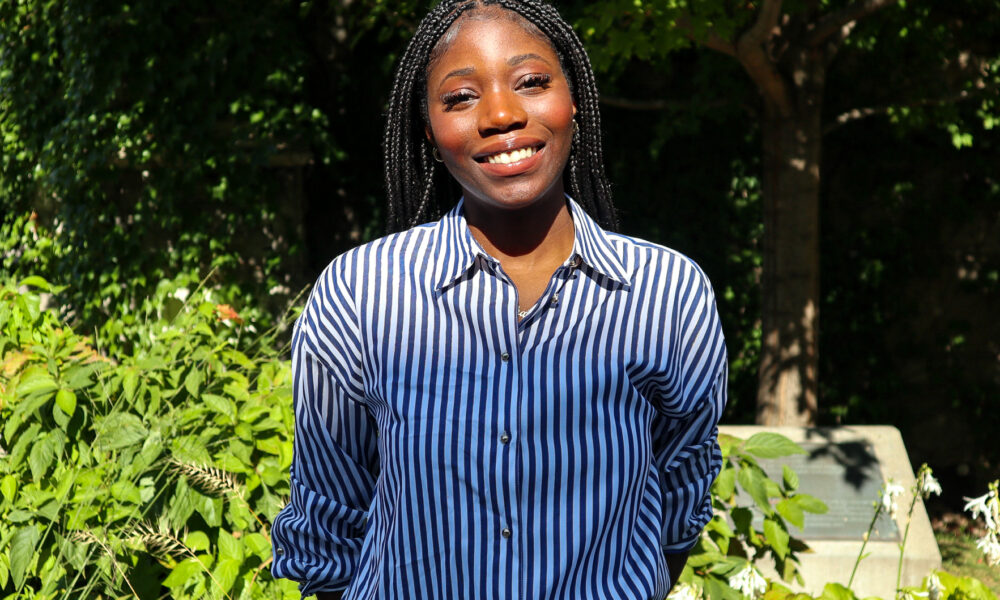
Alum Kai Cheng Thom speaks at McGill’s annual Queer History Month keynote 

Attendees shed tears of queer solidarity on the evening of Oct. 22 as author and somatics teacher, Kai Cheng Thom, addressed McGill during the university’s annual keynote speech for Queer History Month. The event, ‘Remembering Resilience: Embodying the Queer Legacies in Uncertain Times,’ opened with a land acknowledgement appreciating the night’s rain and emphasizing that humans are not superior to the land they inhabit. 

Tynan Jarrett, director of the Equity Team in McGill’s Office of the Provost and Executive Vice-President Academic, then introduced Thom as his previous student at McGill, briefly describing Thom’s activities on campus before commenting on the importance of Queer History Month. 

“Queer History Month is more than a celebration. It is a call to honour the lives, struggles, and triumphs [of] those who came before, to connect our struggle to theirs, and to move forward stronger,” Jarrett noted. 

Director of McGill’s School of Social Work, Nicole Ives, continued the introduction, outlining Thom’s impressive accomplishments since graduating from McGill. 

“[Kai] is [an] award-winning writer, performer, and creative arts facilitator, whose work delves deeply into the themes of revolutionary love, transformative justice, spirituality, and healing from collective trauma,” Ives said. “I know I speak for my colleagues who are here from the School of Social Work, and I speak for myself, saying how thankful we are that she is here to share her vision for how we can transform society into a more socially just and humanist world.” 

As Ives concluded the introduction, Thom approached the stage and shared a hug with Ives before addressing the crowd. She began with a prayer centring love: “Love that heals, love that speaks, love that tells the truth, the whole truth, the ugly truth, nothing but the truth, love that sees it all and yet keeps moving anyway.” 

Shortly thereafter, Thom admitted her complicated relationship with McGill while offering gratitude for the opportunity to speak at the university. She described the mix of emotions she feels as a trans woman and as a changemaker who has evolved from admiring veteran activists to //becoming// one of those veteran activists, despite few corresponding societal improvements for the trans community. 

Demonstrating her expertise, Thom then led a short somatic practice, instructing the group to find their length, find their width, and find their depth physically within their bodies. She then encouraged attendees to take a moment, breathe, and orient themselves within what they have been noticing about their social landscape. She concluded the somatic practice, with many participants crying silent tears and loud cries of relief, before continuing to speak on resilience and resistance for queer activists. 

“The resilient edge of resistance is a term that comes to us from somatic trauma therapy. It refers to the ability to feel stress and even distress, while remaining grounded, centred, connected, crucially connected,” she described. “And my offer to you about this term resilience, […] is that it can be about resistance having more emotion, actually having more sensation, more feeling, but not in a way that fragments, that leaves us feeling despair, […] [but] in a way that leaves us feeling more connected […] to ourselves. Resilience is not about toughness or being superior to others, and I believe that the great mothers of queer and trans history knew this.” 

As her speech concluded, Thom spoke to the feeling of hopelessness common to lifelong activists who fail to see results from their advocacy, quoting Ursula K. Le Guin, who stated that when living under capitalism, its power seems unescapable. But, Le Guin said, so did the divine right of kings. Thom urged the crowd to remember that human power goes both ways: Any human system can be resisted and changed by human beings. And for human beings to stand strong under pressure and see the change they want to make, she emphasized, they must work together. 

“Love survives, love revives, love redeems, love forgives,” she finished.

Science & Technology

There are not plenty more fish in the river: A story on endangered Quebec fish

Copper redhorses, a kind of freshwater fish, are the only vertebrates found exclusively in Quebec. However, their population is declining. Recent evidence suggests that the ‘recruitment’—a measure similar to birth rate—has dropped in the past few years.

Hugo Marchand, a postdoctoral researcher in Jessica Head’s ecotoxicology laboratory at McGill’s Department of Natural Resource Sciences, recently collaborated on a paper examining the threats facing young copper redhorses.

Copper redhorses have only two spawning sites, and both are in the Richelieu River. Since most of the watershed is occupied by agricultural land, the researchers hypothesized that pesticide runoff contributes to the mortality of young fish.

“Pesticides, which are often applied during or just before the breeding season, are washed off in the river every time there is heavy rain,” Marchand said in an interview with The Tribune.

In a previous study, the researchers exposed fish embryos to two treatments: River water and laboratory water. Embryos raised in river water had a 15 per cent lower survival rate during their first two weeks of life, which is significant given that copper redhorses typically have a lifespan of up to 30 years.

In the team’s most recent study, they collected daily water samples from the two spawning sites and from two tributaries—rivers that join a larger river rather than flowing directly to the ocean—to determine whether the pesticide concentration during the breeding season could explain the low recruitment rate. The researchers used an additional long-term sampling method to assess how contaminant levels change over time.

The laboratory analyses revealed a cocktail of contaminants in the Richelieu River.

“There are obviously a lot of pesticides,” Marchand noted. “There are also a lot of pharmaceutical and personal care products because [the Richelieu River watershed] is also an inhabited area. Even though the wastewater is filtered, filtration is not the best, and the [wastewater treatment] plants in the area are known to overflow.”

Some pesticide concentrations exceeded the water quality guideline thresholds set by the Canadian Council of Ministers of the Environment. The researchers even detected chemicals that were banned around 30 years ago, showing how persistent these compounds are in the environment.

Marchand emphasized the need for ongoing water monitoring to track changes in the river’s chemical composition. New pesticides and new regulations can influence what compounds are found in the river, and so can natural changes in river flow from year to year, both factors that contribute to the river’s contamination.

Beyond assessing water quality, the team tested the toxicity of four individual pesticides on early-life-stage fish. None of them had an impact on survival.

“It does not mean that these pesticides in the [river] mixture are not causing the effect, but individually, we cannot pinpoint which one caused the effect that we observe [in the river],” Marchand said.

Moreover, contaminants may have indirect effects on copper redhorses.

“Even though we measured the effects [of pesticides] on the fish, we did not measure the effects on their food,” Marchand said. “[Their food] is all invertebrates, which are most likely going to be much more vulnerable to pesticides.”

Moving forward, Marchand aims to establish the lowest concentrations of river contaminants that induce changes in gene expression in young fish, thereby helping policymakers set more precise safety thresholds.

He also expressed concern about the expansion of the Contrecœur Port Terminal. If the Major Projects Office, established by Mark Carney to accelerate the approval of major projects in Canada, approves the construction project, it will inevitably destroy aquatic vegetation beds—the habitat of copper redhorses. Although the Species at Risk Act prohibits the destruction of an endangered species’ habitat, the Major Projects Office may still propel the project forward. The Canadian Parks and Wilderness Society has launched a petition opposing the project. To protect copper redhorses, the organization COVABAR is raising awareness in communities along the watershed. Marchand also recommends vegetating the riverbanks, restoring natural riverbanks to improve water quality, and implementing agricultural practices that reduce pesticide use. Through a combination of conservation strategies, the currently endangered copper redhorse may persist for generations to come.

Off the Board

Why local politics matters

Getting my driver’s license a few years ago was the highlight of my teenage years. I finally felt like I had the keys to freedom—able to go wherever I wanted, whenever I wanted—and, most importantly, to venture downtown to hang out with friends. But driving in Montreal quickly humbled me. Construction cones seem to multiply overnight, and finding parking is a literal nightmare. My friends and I always complain about how overpriced parking is, and joke that it’s easier to get a parking ticket than to find a free spot.

But it turns out, small frustrations like these are not random. Instead, they are shaped by one thing that rarely crosses most students’ minds: Municipal elections. Many, like myself, tend to fixate on the federal and provincial elections that dominate the headlines. Federal elections determine national leadership, while provincial elections shape healthcare, education, property and civil rights, and more. However, the decisions that affect our daily lives and community—including parking spots—are made at the municipal level. And yet, very few vote. 

In Montreal, the last municipal election in 2021 saw a turnout of a mere one-third of Montrealers, with younger constituents dragging this number down. Among those aged 18 to 35, only 29 per cent voted, and among those aged 18 to 24, only two out of 10. These numbers are shocking considering how municipalities are our closest level of government. City-wide administrations maintain more than 60 per cent of infrastructure and are responsible for a wide range of services, including road maintenance, community programs, waste management, land use, environmental protection, law enforcement, social services, local public safety, and what we love most in winter—snow removal. 

Many young people don’t vote because they believe their vote will not make a difference, and others simply ignore the importance of municipal politics. However, choosing not to vote cedes power to others, leaving decisions about your city’s priorities, your environment, and your quality of life in the hands of people you did not elect. 

Exercising your right to vote is what sustains a truly representative democracy. It gives you the leverage to advocate for issues you care about, while also holding leaders accountable to push for policies that reflect your community’s needs. Concerns about bike lanes versus parking spots, rising populations of unhoused people in the city, food insecurity, and housing initiatives, among many others, fall under municipal responsibility. While complaining about the inadequacies of Montreal’s city government is easy, voting is the first and most important step towards actually addressing them.

Moreover, voting is a civic duty that must not be taken for granted. In many countries, individuals are still fighting for the right to vote and participate in free and fair elections, often risking their lives to have a say in how they are governed. Right now, 38 per cent of the global population lives in countries classified as democratically ‘not free.’ And though Canada may now have free and fair elections, this critical democratic structure came only after decades of advocating for women’s suffrage, voting rights for non-property owners, suffrage for the incarcerated, and the abolition of race-based limitations on electoral participation. By voting, you honour the efforts of those who fought for democratic rights and ensure that decisions affecting your city, community, and daily life reflect your voice.

This year, municipal elections are on Nov. 2nd, and voting will take place at your local polling stations. The date to register for voting has already passed, so if you are eligible and on the list, go vote. Especially given that municipal voter turnout is alarmingly low, it is more true than ever that every vote counts. If you haven’t had the chance to register for these municipal elections, take this as a reminder for next time—whether it’s in Montreal or your own city—to use your voice and help shape your community for the better. Complaining won’t fix the city, but voting just might.

Conference Reviews, Science & Technology

Can Canada uplift AI innovation while keeping Canadians’ data safe?

Canadians helped pioneer the field of artificial intelligence (AI). Researchers like Geoffrey Hinton of the University of Toronto and Yoshua Bengio of Université de Montréal, known as the ‘godfathers of AI,’ laid the groundwork for technologies now reshaping economies and geopolitics. Yet as AI and the race for data become the new frontier of national power, Canada finds itself fighting to keep pace.

At the ALL IN 2025 Conference, government officials, researchers, and tech leaders gathered to confront a pressing question: Can Canada reclaim its AI edge while keeping its data and its values under Canadian control? The conclusion: Probably not.

It is no secret that the United States leads by wide margins in AI industry research, notable models, compute capacity, and capital. While participating in a panel at the conference, Aiden Gomez, co-founder and CEO at Cohere, commented that Canada’s contributions to the field were notable nonetheless.

“Canada led the development of this technology. We were the first ones to invest in the research when no one else believed in it. There was Geoff, there was Yoshua,” Gomez said. 

In a press conference at ALL IN, Evan Solomon, Minister of Artificial Intelligence and Digital Innovation, preached about the current needs for innovation and turning ideas into businesses. Solomon specifically referred to Martha White, a University of Alberta machine-learning professor who raised 7 million CAD in her first round using AI for global water treatment solutions. Is this enough to compete with the American AI industry?

Other countries have already begun implementing AI to make government processes more efficient. In a keynote speech, His Excellency Mohamed Bin Taliah, Chief of Government Services of the United Arab Emirates (UAE)—the country of honour of the conference—explained how his government is making the most of AI. 

“94 per cent of our court proceedings are all done online. People do not need to visit courts. [….] We use artificial intelligence here to summarize the proceedings between all parties and simplify the process on the judge to get the information and make a decision on the spot,” he said. “We have reduced 33 percent of the time taken to complete court proceedings by using artificial intelligence in courts.” 

Bin Taliah also explained how the UAE government employs biometric scanning in their airports. 

“People travelling through the UAE airports can get through the airport without even getting their passports out of their pockets.” 

The Canadian government’s implementation to make AI more efficient looks a bit different. Lucy Hargreaves, co-founder and CEO of Build Canada, announced the release of its first “AI member of parliament.” It ingests bills that are introduced in the House of Commons as well as the Senate and analyzes them. Given that this AI MP just makes OpenAI GPT-5 calls, Canada has essentially announced employing ChatGPT in parliament to help parse bills. Minister Solomon referred to models from Cohere, a Canadian company, as “our strategically important LLM[s]” during the Canada AI Strong panel, emphasizing the need to use sovereign models and to support Canadian innovation. This is surprising given that the AI MP uses an American company’s model.

Canada also recently signed a memorandum of understanding with Canadian AI company Cohere to explore deploying their technologies within the government, aiming to expedite public service operations and build Canada’s commercial capabilities for domestic use and export. 

Beyond internal governmental implementations, what is more economically relevant is the need to compete with both AI products and AI-powered products, while also maintaining data as a resource. At the Canada AI Strong panel, Minister Solomon emphasized the demand for tools to keep up with the shifting times, as well as the need for Canadians to trust the new tools being developed. He also referred to the idea of  “Sovereign compute”, which would keep Canadian data under Canadian Law. 

Computational sovereignty emerged as a recurring theme during the conference. Canadian companies and individuals often outsource cloud computing to American servers. For example, if someone wanted to train a model they designed but did not have the computational resources to do it, the task would often be outsourced to servers with graphics processing units (GPUs) in the United States. If compute resources in Canada were used instead, data would not need to flow across Canadian borders, making it less vulnerable to international security risks. 

Minister Solomon was one of the most prominent voices on this topic, supporting innovation while implying the need for data protection. However, in some cases, innovation comes at the cost of weaker data security.

“Data is king. Whoever controls it, whoever uses it, whoever governs it will determine our collective prosperity and our security and sometimes our values. [….] The EU, a couple years ago went ahead and they tried to regulate, and they have found and they’re quite open about it that it’s done some good things, but it’s constrained a lot of innovation,” Solomon said.

Canadians are concerned about cybersecurity risks, and loss of privacy and intellectual property when it comes to AI; however, distrust in how the government uses Canadians’ data could be misplaced in comparison to how data is being used by companies abroad. During Minister Solomon’s press conference, he was asked what qualifies as sensitive personal data that must be protected versus non-sensitive personal data that can be exported as a resource and sold. While not explicitly drawing the line between sensitive and non-sensitive data, Solomon mentioned the need to make Canadians feel safe and protected. 

“[It is important to make] sure that Canadians have control over their, you know, on privacy issues and our data,” Solomon said. “That doesn’t mean restricting data flows across borders. People need that.” 

While Canadians’ concerns about the government’s use of their data are valid, this mistrust ignores how their data is already being employed by companies abroad. Most Canadian data already flows freely across borders—with Canadians’ consent. Every day, Canadians willingly supply personal and behavioural data to foreign platforms that train and deploy AI models at scales far beyond government oversight. 

For example, Facebook’s privacy policy indicates the routine extraction of less frequently considered data for a variety of purposes, such as personalizing user experiences. It tracks created content, time spent on their products, friends/followers/connections, device characteristics and information, content users interact with and how, ‘device signals,’ location-related data, among other information. This data is transferred globally to their data centres and externally to Meta’s partners, third parties, and service providers. The average person does not think twice about accepting the user agreement and consenting to supply this data; with Canadians already having such low AI literacy, this is quite concerning. 

After 2018 reports showed Cambridge Analytica used Facebook user information to build systems that profiled individual American voters, targeting them with political advertisements, Mark Zuckerberg testified at a U.S. congressional hearing. This led the Privacy Commissioner of Canada to investigate Facebook’s compliance with the Personal Information Protection and Electronic Documents Act (PIPEDA). The Commissioner concluded that simply clicking agree to lengthy terms and conditions does not imply that the average reasonable person would understand the nature and consequences of data collection. 

This remains true today. It is unlikely that the average Canadian takes the time to understand how their data is being essentially fracked for use by foreign app providers with the click of an agree button. Moreover, it is unlikely that the government will control data that Canadians freely sign away as a condition of the foreign services they rely on. It is also unclear what security risks it imposes on the nation as a whole. 

Ultimately, Canadians helped invent modern artificial intelligence, but now Canadian industries struggle to compete in the international market. At the same time, while policymakers emphasize sovereign data and safe innovation, Canadians continue to export their data daily through foreign platforms that operate beyond the jurisdiction of the government. 

Canada’s next chapter in AI will hinge on more than regulation—it will depend on whether the country can cultivate literacy and the technical backbone to achieve independence. The challenge is reconciling the vision of digital sovereignty with the truth that accepted privacy policies do not respect borders.


Research Briefs, Science & Technology

Stop-and-go: How male and female hockey players move differently

Hockey is a key component of Canadian culture, as it is our national sport and a great source of joy and pride. Whether played competitively, in gym class, or just for fun on a frozen lake, hockey unites players across the country. Yet despite its importance to many across various ages and identities, variances in the mechanics of skating between males and females remain largely understudied.

Female participation in ice hockey has been increasing steadily, with a 34 per cent increase in registered players from 2007 to 2018, according to the International Ice Hockey Federation. While there is ample research on male player movements, female players remain underrepresented in the scientific literature, despite fundamental anatomical differences that impact the way they move, play, and train.

Shawn Robbin, associate professor in the school of Physical and Occupational Therapy, leads a lab working to develop this knowledge base, diving into the science of movement in ice hockey and exploring how equipment and player traits influence performance on the ice. The lab partners with Bauer Hockey and uses federal funding to help athletes move efficiently and reduce their risk of injury, with McGill students playing a key role in the research.

In a recent paper published in the International Journal of Performance Analysis in Sport, Robbins explored the kinematic differences between male and female athletes who participated in a stop-and-go task.

McGill varsity hockey players were asked to perform traditional hockey stops, then take a few strides in the opposite direction at different speeds. The researchers then used motion capture technology to study how males and females differ in stop and start movements on the ice. The researchers found that females tend to stay more upright relative to their starting position, while males get much lower to the ice when they stop.

“We found that male players tend to lower themselves faster and have more flexion in their hip and knee joints, which helps them absorb and explode out of stops,” Robbins said in an interview with The Tribune.

Another study found that female ice hockey players reported proportionately more soft tissue injuries, strains, and sprains, while males experienced more fractures. 

Although sex-specific injury types were not the focus of this study, Robbins noted that several factors contribute to differences between sexes. However, it is difficult to parse exactly how much each factor contributes. 

“It’s a bit more clear, in other sports like soccer, that movement plays a role in injury, especially in female athletes. That’s not as clear in hockey,” Robbins said. “Obviously, there’s other differences as well, in terms of hormone levels [and] muscle strength. I think that biomechanics may have a piece in injuries, […] [and] how players move will have a piece in terms of injury, but it’s [related to] the other factors too.” 

Robbins emphasized that the study requires a collaborative effort. While his role during the experiment was mostly to process and analyze raw data on the computer, McGill students at the lab, such as master’s student Aiden Hallihan, conducted many of the actual tests under professors’ supervision. In other words, successful research requires a dedicated community of scientists, including everyone from undergraduate research assistants to lab directors.

Moving forward, the lab will continue to test new and advanced motion capture systems to expand its research. While this study focused exclusively on elite varsity-level players, their current research is aimed at younger and recreational players. 

“With the data from elite players, [we] can compare it to recreational players and see if there are similar [sex] differences and how [players] can improve their game,” Robbins said.

Overall, Robbins’ research challenges traditional gender bias in sports research. His work advances player development and safety across genders, making the world of hockey research more equitable.

Arts & Entertainment, Film and TV

‘Le Train’ is a dream-filled Quebecois coming-of-age film 

This October, Festival du Nouveau Cinéma wrapped up its 54th edition, featuring a robust program of 200 films over 12 days. The Montreal-based film festival prides itself on showcasing diverse international features and short films, while spotlighting a strong selection of Canadian films. This edition’s closing film, Le Train, is a mesmerizing debut from renowned Quebecois playwright and actress, Marie Brassard

Le Train follows Agathe, a young girl in 1960s Quebec, who dreams of a fantastical world where she is not plagued by severe asthma. As she grows into adolescence, she meets a man who shares her same longing for something more than their reality. Rising stars Thalie Rhainds and Electra Codina Morelli, who play Agathe at various ages, deliver captivating performances that hint at promising careers ahead. The exquisite Larissa Corriveau, who plays Thérèse, Agathe’s eccentric mother, shines in her portrayal of a woman balancing professional life, single motherhood, and creative pursuits. 

In an interview with The Tribune, Brassard reflected on the experience of writing and directing her first feature film, noting how it differs from theatre. She described theatre as ephemeral: An experience that creates unique experiences each time. It lives only in our memories because it takes place in the ‘real’ world with ‘real’ people, as opposed to cinema. 

“Cinema is different. At one point, you have to stop [adding on] for it to exist as an object, and from that moment on, it’s gonna be that. You have to let it go,” Brassard said. “And at the same time, what’s beautiful is that you can look at it again and again, and eventually have a different experience as well, but the thing is that it will persist in time.”

Inspired by her own childhood experiences with asthma in the Quebec suburbs and her coming-of-age in 1970s Montreal, Brassard sought to recreate the feeling of hope she felt at that time, contrary to today’s cynicism and increased isolation. 

“I wanted to make a film that would state that there was a time [in Quebec] where people were dreaming. People were dreaming of a better world, a more equal world,” Brassard said.

As someone who admires the aesthetics of the 1970s, I found the visuals of Agathe’s teenage years a feast for the eyes. Brassard mentioned that she remembers the aftermath of Montreal’s Expo 67, a world’s fair in which there was a liberating spirit in the air, both politically and creatively. Le Train recreates these artistic communities and countercultures that she found in the city, where intellectual and creative thoughts were freely exchanged. 

Brassard grew up listening to the sound of trains running through her town, dreaming of the places they would go. In Le Train, these dreams recur and contrast the rest of the film in their black-and-white stylization, as Agathe tries to figure out both their meaning and the other world that intrigues her. Brassard used these childhood dreams as the starting point of her script.

“I imagined that it was a lumberjack there [by the train], who was cutting trees and protecting our world, and that he was standing at the frontier between us and the world that we don’t know,” Brassard said.

The themes of identity, dreams, and a blend of fantasy run through much of Brassard’s work. 

“There’s something fundamental that is part of you that you cannot escape from. And I think that for me, it is a very thin layer between dream and reality, or between the imagined and reality,” Brassard said. “And somehow, it intersects with [the] science worlds. When we think of quantum realities, where scientists reflect on the possibility of parallel worlds that we cannot perceive.” 

As Le Train rolled its final frames, it left audiences with a resonant message that speaks to both nostalgia and hope, reminding viewers of a time, and perhaps a place, where dreaming of a better world still felt possible.

Student Life

All you think about is how you look

Many women are preoccupied with how they look, not because they’re shallow, but because that’s what they’ve been taught to value. From a young age, girls are celebrated as ‘cute’ or ‘pretty’ before they’re praised for being smart or brave. Those comments add up, shaping the belief that their value lies in their appearance rather than their minds and personalities

“I think this pressure tends to affect women more because they’re held to a higher standard by society than men. There are certain clothes men and women can both wear, yet a woman is more likely to get criticized for it,” explained Abby George, U2 Arts, in a written statement to The Tribune. The awareness of how women look starts early, and for many, it never goes away.

“I definitely think there is some kind of ‘look’ for students, mostly to be dressed relatively well and less just whatever you can find in your drawers,” George added. 

Her comment captures a shared understanding: On campus, effort is expected to look effortless. It’s not about dressing up, exactly; it’s more about looking like you belong here. That awareness extends beyond clothing. Small insecurities can become constant background noise.

Sukaina Haider, U1 Science, shared in a written statement to The Tribune that when her skin breaks out, it makes it harder for her to focus on anything else. “[My acne] honestly distracts me from paying attention to a lecture. Not the end of the world, but it does affect me to a certain extent.”

Even something as common as acne can impact a student’s focus. And while it can be inspiring to be surrounded by people who take pride in how they carry themselves, it can also pressure you to do the same, even on days you just want to show up in crocs or sweatpants.

“There is definitely a social media impact, especially in our generation,” Mihade Mastour, U2 Science, shared in an interview with The Tribune. 

That illusion of effortlessness becomes its own kind of work, one that seeps quietly into daily life. You scroll through social media and see a constant stream of ‘must-have’ skincare routines, outfit ideas, the next thing you apparently need to feel complete. Trends circulate so quickly that it’s almost impossible to keep up.

George explained that fleeting viral trends add another layer of stress to self-presentation on campus.

“I feel like these trends definitely do affect students, and probably those at McGill. I find I do see it in certain students—there are actually many that wear sweatpants and sweatshirt combos, but they have the clean girl hair and makeup to make it seem like they did this effortlessly but actually put a lot of care into their outfit.”

Still, students are finding ways to resist these pressures. Girls are distancing themselves from any kind of expectation about how women should dress by remembering that the priority is how they feel in their clothes. Instead of dressing according to trends, they dress for how they feel that day, and choose clothes that make them comfortable, grounded, and able to focus on themselves rather than how they appear. Worrying about your appearance steals time and energy that could be spent chasing ideas and ambitions. The challenge for young women today is to break away from these cycles. 

The truth is that no reflection or appearance defines you the way your mind, your work, and your passions do. Young women at McGill are some of the most creative, capable people, and it would be disheartening to see them feel any sense of insecurity about how they look.

McGill, Montreal, News

$52 million CAD in federal funding fuels hope for Quebec’s anglophone healthcare accessibility

On Oct. 15, the Canadian federal government announced a budget increase of $52 million CAD, allocated to anglophone health services in Quebec. The funds will be distributed between McGill University and the Community Health and Social Services Network over the next five years. These institutions will lead execution, with Dialogue McGill heading the project on the university’s behalf. They will prioritize developing research, language training, and resources tailored to the needs of both anglophone and francophone professionals, staff, and students to support their experiences within the healthcare system. The budget increase will also sustain initiatives to recruit and employ bilingual professionals across the province. 

In a written exchange with The Tribune, McGill’s Media Relations Office (MRO) explained how Dialogue McGill will specifically allocate the university’s funding towards building accessible healthcare for anglophones in Quebec.

“Dialogue McGill received a $20.7 million [CAD] grant […] of the $52 million [CAD] that Health Canada allocated,” the MRO wrote. “The money is planned to be useful in supporting initiatives that maintain and build capacity of bilingual health professionals in Quebec’s public sector.” 

The Office also highlighted Dialogue McGill’s missions and the services it provides specifically to McGill students.

“[Dialogue McGill’s] programs include free French- and English-language training, as well as bursaries for students committed to working in the public sector post-graduation and funding for research projects that examine relationships between language, access to health and social services, and health-related outcomes.”

This is not the first time Canada’s federal government has outwardly supported an increase in anglophone healthcare accessibility in Quebec. In 2024, Quebec Health Minister Christian Dubé announced a government directive that would require patients to provide an English-language eligibility certificate to Quebec’s health networks to receive treatment in English. Only when the federal government pressured the Quebec government did Dubé backtrack on the directive.

McGill students who have engaged with Quebec healthcare, especially in the Milton-Parc neighbourhood, have described the experience as strenuous. Amélie Evans, U2 Sciences, outlined her experience as an anglophone patient in a Montreal hospital, highlighting how a language barrier can complicate access to safe healthcare in the province.

“I’ve had moments where language created misunderstandings,” she said in an interview with The Tribune. “For example, during one visit to the hospital, a nurse misunderstood part of what I was explaining about my symptoms because I wasn’t sure how to phrase it correctly in French. It didn’t cause serious harm, but it made me realize how critical it is to have clear communication in healthcare.” 

Furthermore, Evans hopes that this budget increase will aid English-language communication in Quebec’s medical system. 

“I think the first priority [for funding use] should be expanding bilingual training programs and ensuring every major clinic has at least one English-speaking staff member available,” she stated.

To track the funding’s progress, the federal government of Canada will receive annual reports from the project’s leaders on its outcomes. In an interview with The Tribune, Mark Johnson, spokesperson for Health Canada, explained the measurable outcomes and performance indicators that McGill will use to ensure the budget is effectively applied. 

“McGill University [will report] on the number of health professionals who have both enrolled and completed their language training program, the number of bursaries to recent graduates to retain them in the public system in an underserved region in Quebec, as well as research projects and knowledge products that have been produced and offer new data on [official language minority communities] in health,” Johnson said.

McGill, News, SSMU

SSMU LC discusses gender-affirming care insurance, new VP hires, and Fall Referendum

The Students’ Society of McGill University (SSMU) Legislative Council held its fourth meeting of the semester on Oct. 23, with 25 members present.

After the Steering Committee briefly presented a report, SSMU Black Affairs Commissioner Kendra-Ann Haynes gave a presentation. Haynes stated that the Black Affairs Committee is interested in opening a chapter for Black Future Lawyers and expanding the Black Equity Fund to post-graduate students at McGill. 

Next was a presentation from Chief Officer Mike Lee of SSMU Elections. He outlined strategies to increase voter turnout for the upcoming Fall Referendum, including a raffle, flyers, and a stronger social media presence.

“People do vote [when] they feel related to a topic [and] when they feel that things are related to them,” Lee said. 

The Conference on Diversity in Engineering (CDE) then presented its request for $25,000 CAD from the SSMU Campus Life Fund to balance its budget. The CDE’s Co-Chair Claire Levasseur stated that sponsors are especially difficult to find this year.

“Three out of the four major [engineering] conferences are being held in Quebec [in 2025], [so] we are all going for the same resources, which has been extremely difficult,” Levasseur reported.

After a unanimous vote in the CDE’s favour, the LC approved the CDE’s request for funding.   

SSMU President Dymetri Taylor then gave an Executive Committee report. Among other things, President Taylor noted that the implementation of a new gender-affirming care student insurance model will be pushed back from the beginning of the Winter 2026 semester to the Fall 2026 semester. 

“McGill required roughly six months’ notice to provide information of a secure nature to third parties, [which] is then pushing back implementation of gender-affirming care,” Taylor clarified.

The new hires to the SSMU Vice-President (VP) Finance and VP Internal Affairs positions were next presented to the LC. VP Finance Jean-Sébastien Léger and VP Internal Minaal Mirza both began their roles on Oct. 20.

The Executive Reports continued with SSMU VP External Affairs Seraphina Crema-Black confirming that she will be hosting a Montreal municipal election debate on Oct. 27 in the SSMU ballroom, with confirmed participation from Transition Montréal, Projet Montréal, Futur Montréal, and Ensemble Montréal. The debate will be moderated by McGill’s Associate Provost Angela Campbell. Crema-Black emphasized that there is a form where students can submit their questions for candidates as well.

After Crema-Black spoke, the Medical Students’ Society (MSS) of McGill presented a report. Among other things, MSS SSMU Representative Ling He announced that an emergency MSS General Assembly would be held on Oct. 26 regarding the Fédération des médecins spécialistes du Québec (FMSQ) and Fédération des médecins omnipraticiens du Québec (FMOQ) strikes.  

The LC concluded by handling a series of motions. Notably, the Council voted unanimously to add Crema-Black and SSMU VP University Affairs Susan Aloudat to the SSMU Board of Directors

Moment of the meeting: Chief Officer Lee warned that the consequences of not reaching a quorum of 15 per cent during the Fall Referendum means none of the campaigns on the ballot will move forward. 

Soundbite: “We’re [trying] to e-mail professors of large courses for them to remind students [to vote], [while] identifying faculties and programs with the lowest voter turnouts [to] see how we can make sure the target groups can increase their voting.”—Lee on additional strategies SSMU is undertaking to help reach quorum

Behind the Bench, Football, Sports

Kyren Lacy: A life lost, a dream stolen

Content warning: Suicide

On April 26, 2025, Cydney Theard spoke at the memorial service for her boyfriend and Louisiana State University (LSU) Football star player Kyren Lacy, who passed away on April 12. Theard delivered powerful words about who her partner was, the hopes they shared, and how a narrative pushed by the internet led to him taking his own life. 

“We dreamed in simple colours. A draft day suit, our first apartment, his jersey hanging by the door. He was right there ready to step into the [National Football League (NFL)] and start the life he’d earned,” Theard shared.

In January 2025, Lacy was accused of negligent homicide and felony hit and run in Louisiana. Police claim that Lacy made a passing maneuver which led to an oncoming car swerving to avoid him and colliding into another vehicle. Lacy insisted that he had no involvement with the crash and was merely in the area.

Even after his passing, Lacy’s lawyers have worked to clear his name. In October 2025, Lacy’s lawyers released surveillance footage of the incident, showing that he was over 80 yards behind the crash when it happened. They also released bodycam footage of a sheriff pressuring a witness into changing their statement to place the blame on Lacy. 

Louisiana State Police claim that it was Lacy’s reckless driving which caused two other cars, including a Kia Cadenza operated by a woman whose identity has not been made public, to collide head-on. Lacy passed a vehicle on a stretch of single-lane highway by using the oncoming lane, a typical maneuver on rural highways—except Lacy did it in a no-passing zone. Lacy’s attorneys have never disputed this fact, but have pointed out that he merged back into his correct lane with 361 feet separating him and the closest oncoming vehicle, meaning he merged while respecting more than three times the required passing distance. Evidence thus shows that Lacy was back in his lane well prior to the colliding vehicles making any maneuvers leading up to the crash. 

The district attorney (DA) also raised concerns about the way police have relied on video and audio footage that is not synced properly, making it appear that Lacy was much closer to the crash than he actually was. The DA’s report states that the Kia Cadenza was “following too close, which caused her to take evasive action to avoid hitting the back” of one of the cars in the crash. Furthermore, the DA’s findings were consistent with the account from a driver of a truck involved in the accident that the driver of the Kia Cadenza “caused that wreckage.”

Yet the media treated Lacy’s accusations as guilty until proven innocent—the opposite of how justice ought to work. Collegiate athletes are often treated like circus performers in this way, with the public forgetting that they are young people too. 

Lacy did have emotional outbursts on the football field, including one that a Barstool Sports employee used to paint him as guilty when his charges were first announced. LSU coach Brian Kelly had previously described Lacy as “high-strung” and someone who struggled with his emotional control, but followed up by saying, “That young man, I love him because he’s working on that every day.” Countless other young men of Lacy’s age have also struggled with emotional regulation, but few have had their emotional outbursts used to defame them. 

Regardless of whether Lacy caused the crash, he should still be alive today. Theard spoke at his memorial service about the way people demonized him online. “They called him a monster. [….] Offline, he carried that weight so the rest of us wouldn’t.” Lacy ultimately took his own life while carrying the weight of being painted as a murderer by hundreds of thousands of strangers around the world. 

The greatest tragedy of all is that Lacy was not mourned properly because the world was busy vilifying him as someone he was not. It is a cautionary tale of how the public’s words deeply affect young athletes. It is important to talk about what happened to Lacy, but the more important story should be who Kyren Lacy really was. 

As Theard said, “Kyren Lacy was kindness in motion. Remember him that way and let the truth at last find its light.”

Read the latest issue

Read the latest issue