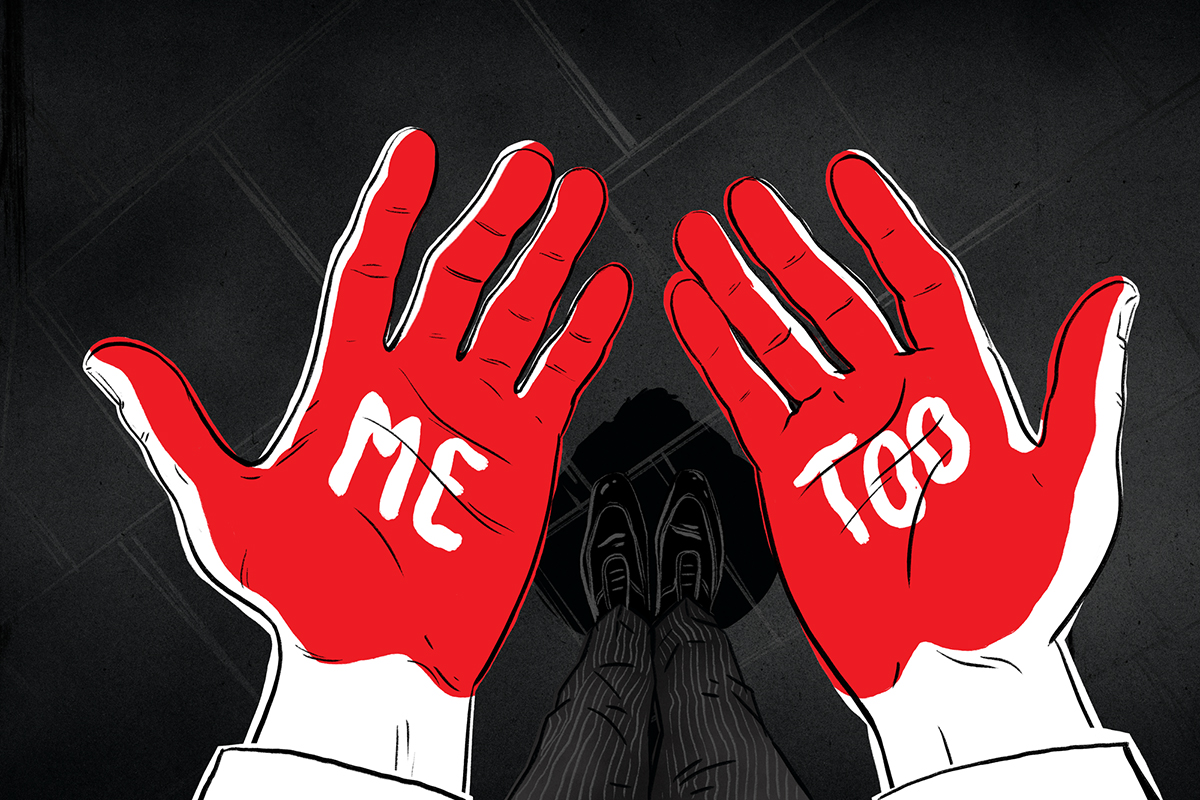



On Jan. 13, the website babe.net published the controversial exposé, "I went on a date with Aziz Ansari. It turned into the worst night of my life,” sparking conversations across the media about the #MeToo movement, verbal consent, and women’s’ agency. The report—and the conversations it provoked—diverged from the dominant contemporary sexual assault narrative in a number of notable ways: It did not involve a criminal accusation, and the accuser, called “Grace,” relied primarily on nonverbal cues to express her dissent. However, these distinctions opened the floodgates for the most striking divergence of the episode. Unlike in the cases of Harvey Weinstein, Roy Moore, and Louis C.K., the Ansari exposé incited a bombardment of op-eds—penned predominantly by women—criticizing the story for disempowering women, diminishing their agency, and inspiring a supposedly undeserved witch hunt against Ansari.
A day after the story was published, I got into an argument about whether Ansari deserved to have been humiliated by having his compromising night with Grace placed under a national spotlight. I have never met Ansari nor has he ever been my role model, and yet, while discussing the article, I felt protective—almost as if I was being personally attacked. I later realized that this is the exact opposite of how I, and other young men, should have responded to Grace’s experience.
In the age of #MeToo, many young men have felt the same defensive instinct. In strained online messages and hushed conversations I have borne witness to, university men with otherwise thorough understandings of consent and human decency guiltily disclose their fears and consternations about consent discourse. The subtext of these conversations, often, is anxiety that their sexual behaviour might be brought under a magnifying glass and undeservedly condemned.
When reading the babe story, one line in particular struck me: "Grace compares Ansari’s sexual mannerisms to those of a horny, rough, entitled 18-year-old. […] But Aziz Ansari isn’t an 18-year-old.”
Many of the men sitting in the lecture halls at universities across North America have been that horny, rough, and entitled 18 year-old. Many continue to be. Unlike the stories about accused male celebrities with long histories of systematic, intentional abuse of female acquaintances, the Ansari exposé described a situation that some young men could envision finding themselves in.
What stood out about the line was not its condemnation of Ansari, but its tolerance for young men who make similar mistakes. Many of them carry deep-seated fears—rooted in deep misunderstandings about consent discourses—of being scrutinized, outed, and witch hunted for what they believe was damning misconduct during their early years of sexual development. However, consent discourses are concerned primarily with growth and understanding—not with condemnation. Young men’s anxieties often block them from recognizing tolerance for their faults in women’s responses to exposés about sexual assault. Rather than inspiring self-reflection and growth, memories of the rough, uncomfortable, and sometimes painful nights they caused during their sexually formative years often leave young men feeling guilty and doomed to self-exclusion from these conversations. But, as with most facets of our personal development, it is necessary that we are able to recognize and accept the faults of our past if we hope to grow in the future.
Accordingly, it is important that progressive young men refrain from going on the defensive in the debate about whether Ansari deserves to have had his date with Grace exposed. It is also not productive for us to engage in performative, self-congratulatory condemnations of Ansari’s behavior. McGill students of all people should be aware that even those who have ingrained themselves into consent culture and memorized its glossary often lack respect for even the most basic tenets of consent.
Instead, as young men with the time and opportunity to grow, we should read the babe exposé, examine how Grace describes feeling throughout her encounter with Ansari, and reflect upon how we can avoid causing that same discomfort and anguish. Whether you believe Ansari is the subject of a witch hunt or that he has received his just desserts is irrelevant. Fear of public shaming is not a substitute for an understanding of consent. In response to stories like Grace’s, it is paramount that young men take their space to reflect and grow—lest they become adults whose only standard of moral sexual behavior is avoiding public condemnation or prosecution.

































/https%3A%2F%2Fblueprint-api-production.s3.amazonaws.com%2Fuploads%2Fcard%2Fimage%2F521220%2F57894e45-f0e2-47c7-a3cc-027e949eac73.jpg)