Latest News

Features

An Arrangement: Exploring the nuances of sugaring

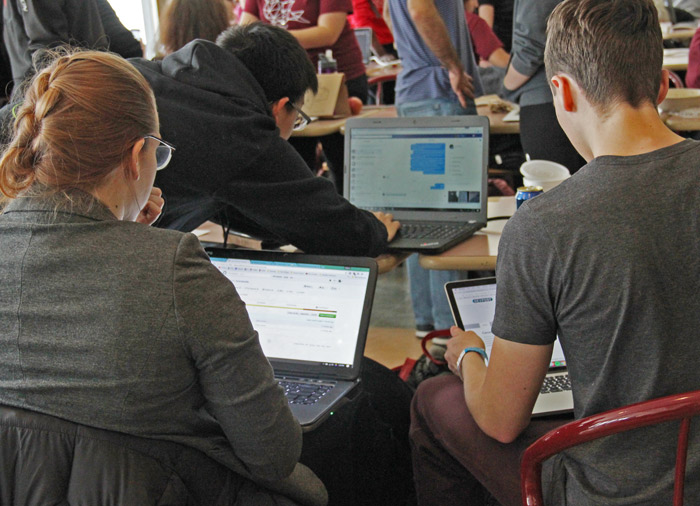
With tuition prices on the rise, the question of how to finance a university education without sinking into debt is a source of stress for many. As of late, mainstream media outlets have highlighted the prevalence of sugaring–a situation in which one person is compensated for spending time with another on a regular basis–on university campuses. Commonly discussed using the terms “sugar baby” and “sugar daddy,” media coverage has sensationalized the practice of forming a sugar relationship online.


Jasmine* considered sugaring after graduating from McGill in order to pay for a Masters program at an Ivy League university in the U.S. Although she eventually decided not to pursue a sugar relationship, she recalls how most of her friends would ask her how much she would get paid upon finding out that she was thinking of sugaring.

McGill, News

McGill takes the stage at Davos

From Jan. 17 to 20, McGill Principal and Vice-Chancellor Suzanne Fortier attended the World Economic Forum (WEF) in Davos, Switzerland to discuss labour markets for post-secondary graduates and to present research on sustainability and global connectivity. Fortier was accompanied by Professor Andrew Gonzalez of the Department of Biology, Assistant Professor Graham MacDonald of the Department of Geography, and Associate Professor Elena Bennett of the Department of Natural Resource Sciences and School of Environment. The annual Forum brings together more than 2,500 business leaders, international political figures, prominent researchers, and journalists to discuss current global issues.

Gonzalez, MacDonald, and Bennett jointly hosted a short presentation called an IdeasLab. They discussed research pertaining to their respective fields under the unifying theme of “Shaping a Sustainable World.”

Much of Fortier’s time at the WEF was spent on the topic of how future post-secondary graduates will integrate into the labour market while grappling with the challenges of globalization and the rapid pace of technological change. In a meeting with campus media on Jan. 23, Fortier discussed how a recent McGill initiative to implement internship opportunities will prepare students for success in today’s dynamic labour market.

“What we want to do is increase opportunities for McGill students in all programs to have work-learning experience outside the university, whether it’s in a company, an NGO, or a community group across Montreal [or] across the world,” Fortier said.

Fortier said that not only is it important for graduates to be job-ready, but also “future ready.” In a WEF panel titled “Jobs and the Fourth Industrial Revolution,” Fortier advocated for a university education that prepares students by exposing them to both liberal and technical instruction, something she calls a renaissance education.

“Of course, you cannot easily navigate this world if you have no understanding of science, technology, [and] mathematics,” Fortier said. “It’s an essential component [of a post-secondary education], but I don’t think it’s sufficient, […students] need to be exposed to the arts and humanities. We need to think of a broader education, not a narrower one.”

Gonzalez, whose research is centred on building sustainable cities, elaborated on the need for a more broad-based education, which he believes is more conducive to research.

“It is important that we marry the social and natural sciences and that we give students the opportunity to experience both of these things,” Gonzalez said. “You can’t ask a robot to work on the social dimensions of change, […] of sustainability. Many of the solutions are not strictly technological.”

MacDonald later said that he was pleasantly surprised by the topics of conversation at this year’s forum.

“We are seeing a very obvious focus on [issues such as] food, agriculture, and climate at the Davos meeting this year,” MacDonald said. “I did not expect to see so much discussion concerning these [topics] and it's very inspiring to see this discussion taking place.”

Fortier, who also attended the WEF in 2016, is proud that McGill was the only Canadian university invited to the forum this year.

“The fact that we’re the only Canadian university invited to [Davos] and that we’re a member of the Global University Leaders Forum certainly has a direct impact on students,” Fortier said.

Fortier added that McGill’s invitation to the WEF proves the high academic status of the university.

“The reputation of McGill internationally is obviously very strong and the fact that we are there speaks for itself,” Fortier said.

Commentary, Opinion

Defending the 8:35: Why early mornings at McGill aren’t going away

There is a certain meme circulating the depths of the Internet with which, by now, many McGillians should be quite familiar. It depicts a triangular model whose vertices point to certain generalizations about college life. “Good grades. Social life. Enough sleep. Pick two!” Though some may not find that their experiences required such a trade-off, the joke resonates with students precisely because the lack of sleep is a real problem—for students everywhere. A good night’s sleep is often difficult to come by, made scarce by late nights, piling workloads, and early morning classes.

In fact, sleep has become such a concern for students, that McGill-based researchers have recommended a delayed start to classes to allow more time for it. Their findings reaffirm what had been concluded in prior studies—that later start times improve the academic performance of students. The consensus is this: Later start times for high-school age students would result in an appropriate sleep threshold for growing teenagers—around eight to nine hours. Better-rested students would in turn make for less anxious and better-off students. But would delaying morning starts actually work for older students at McGill? Despite the ire which morning classes can draw, they deserve students’ consideration before being put on the chopping block. And there are a few reasons why students would miss 8:35 starts more than one would think.

We should consider that the studies mentioned above focus primarily on the experiences of teenagers—or high-school-aged students—whose experiences do not necessarily reflect the sleep habits of college students. One point of consensus is that the recommendation for eight to nine hours corresponds to the progression of adolescent circadian cycles, or sleep-wake patterns over a 24-hour period. The tendency to stay up later and to sleep in later, in other words, is a natural phenomenon for teens, which should be accounted for by later mornings. That sort of reasoning translates well to high schools in North America, whose students are still undergoing pubescent changes. However, the lack of sleep for students at the university level cannot be resolved so easily.


One need not be a morning person to see the standard start time at McGill for what it is: Sensible.

There are two possible outcomes to implementing a delayed morning start time: Either the university would make up for lost time by adding an hour of scheduled classes later in the day, or it would decide to do away with early 8:35 classes without replacing them. In the former case, the standard end to the day would be pushed back by an hour or even more. In the latter case, the outcome would be that an entire array of courses are cut from the curriculum altogether, since there would be no way to fit them into a shortened schedule. If considered logistically, the apparent solution to our initial problem of lack of sleep—prolonging the morning start time—is to either prolong one’s entire school day or to reduce a number of courses which would otherwise have been offered.

For those reasons, those who feel that their sleep is being disrupted by the demands of morning classes should not rush to immediately advocate their removal from the schedule. Instead, students should advocate that morning classes be recorded and made available online as a standard practice. Doing something as simple as that could curb the conundrum for many students, without forcing a drastic measure such as delaying the start of classes.

One need not be a morning person to see the standard start time at McGill for what it is: Sensible. That is not to say that the struggles of those who must choose between more sleep and morning attendance are not real. Addressing the problem, however, should not involve cutting an entire hour of class from a system which has functioned well thus far.


Arts & Entertainment, Film and TV

“20th Century Women” presents dimensional characters in a realistic world

On Jan. 20, the eve of the Women’s March on Washington, production house A24 made a quiet announcement. The producer of some of the most notable films of the past few years—Spring Breakers, Moonlight, Under The Skin—declared that all of the opening weekend earnings of its newest film, 20th Century Women, would be donated to Planned Parenthood. 

At a time when misogyny has found new footing in political discourse, this compassionate gesture comes as a striking reminder of the potential for artists to aid in social justice causes. It’s also emblematic of writer-director Mike Mills’ uncompromisingly feminist vision in 20th Century Women

Mills’ recent venture, 2012’s Beginners, starred Christopher Plummer as a fictionalized version of the director’s father. It was well-received, largely due to the powerful warmth Mills imbued in his characters, though it suffered from some tropey indie-romance quirks.  20th Century Women takes a similar quasi-autobiographical tact, but forgoes the gratuitous cheese in favour of sincere feeling and laughter. Annette Bening stars as Dorothea, loosely representing Mills’ single mother, who, along with Abbie (Greta Gerwig) and Julie (Elle Fanning), attempts to raise her fifteen-year-old son, Jamie (Lucas Jade Zumman) in Santa Barbara, in 1979.

The real-life inspiration behind  20th Century Women is evident throughout Mills’ film. From the colourful set designs to the post-punk soundtrack, to the disarmingly candid dialogue, Mills’ personal connection with his work shines through. He writes complicated female characters with a deep-seeded admiration and love. They are flawed and not as transparent as protagonists often are, but admired all the more in their inscrutability.

None of this would be possible without magnetic performances across the board. Bening exudes a remarkably assured liveliness each time she enters the frame. With a cigarette perched between two fingers, her superbly expressive face breathes volumes into the pauses of her frequent, “Yeah . . . no,” mannerism. Her honest, collective approach to parenting conveys depths far exceeding her role as a mother.

The sexual awakening of second wave feminism is integral to 20th Century Women. Throughout the film, Dorothea, Abbie, and Julie grapple with their unique concepts of femininity. As Jamie embraces the tenets of radical feminism, he struggles to understand the women in his own life. While both Lucas Jade Zumman and Billy Crudup—as William, an aging California hippie—deliver stirring performances, the spotlight is definitively cast on the three female leads, who are constructed with loving attention to detail. 

For the work of the captivating performances, in 20th Century Women’s 118 minutes very little happens, although in watching the film it feels as if Mills is moving mountains. While this lack of action could be considered a lack of focus on the part of the filmmaker, the result is an effective subversion of our narrative expectations. Although we’re tempted to look forward to Jamie losing his virginity to Julie as a sort of culmination of themes, the script is too insistently thoughtful and empowering of its female characters to allow for this familiar, male-centred coming-of-age tale ending to occur. Mills doesn’t want to sell us a neat, fictional resolution, instead favouring the ambiguousness of  real life. 

Montreal, News

Eva Bartlett in Montreal: ‘Mainstream media is lying’ in Syria coverage

On Jan. 28, the freelance and sometimes controversial Canadian journalist Eva Bartlett spoke at the Montreal Delta Hotel. The event was part of her nationwide tour on the Syrian Civil War and alleged misreporting by Western media. Bartlett, whose work has been published on independent watchdog journalism website MintPress News, focused on events in Aleppo from the perspective of her own journalistic experiences there and was accompanied by President and Director of the Centre for Research on Globalization, Michel Chossudovsky, and author Yves Engler. The event was sponsored by the Canadian Peace Congress and the Syria Solidarity Movement.

The talk commenced with remarks from Chossudovsky, followed by a discussion of incidents, which according to Bartlett, the mainstream media did not accurately report on or cover at all.

“Syrian voices weren’t being heard in the corporate media,” Bartlett said. “I wanted to concentrate on hearing what they had been living.”

Originally from Ontario, Bartlett lived in Gaza from 2008 to 2013, and has travelled to Syria a total of six times since April 2014. She speaks colloquial Arabic, which helped her to interview residents of Aleppo. Bartlett emphasized the importance of on-the-ground reporting, which she claims Western media, including BBC and Al Jazeera has failed to adequately do. Instead, she and the other panel speakers said that the media is playing a role in spreading propaganda.

“Most governments, in times of war, engage in propaganda,” Engler said, referring to a staged video of a civilian rescue that many news sources, including CNN mistakenly believed to be real.

The video was produced by the Syria Civil Defence, also known as the White Helmets, a group of volunteer search and rescue workers who were recently nominated for a Nobel Peace Prize for their work in Syria.

The panelists expressed their discontent with corporate media and claimed that major newspapers and news networks are feeding the public innacurate information. Concerning Aleppo, a city at the centre of the Syrian Civil War and the battle against the Islamic State of Iraq and Syria (ISIS), Bartlett and her colleagues insisted that the public is not getting the true story.

According to Bartlett, most news coverage regarding Syrian conflict focuses on the civilian battle against Bashar al-Assad’s regime, while widely ignoring the role of rebel groups in instigating violent attacks.

“This revolution has been targeting civilians and infrastructure,” Bartlett said. “Ask yourselves, ‘What kind of a revolution does that?’”

Chossudovsky added that any government—including the United States and its allies—involved in aiding rebel groups fighting Assad is part of an illegal war. According to Chossudovsky,  humanitarian efforts in the form of military interventions are nothing but an insurgency.

“U.S. media disinformation is complicit in this war [by] portraying this war as a humanitarian undertaking,” Chossudovsky said.

Ultimately, Bartlett made the argument that rebel groups are to blame for the decay of Aleppo. She did not comment on the role played by Assad and the government. 

Though Bartlett was received with praise from the audience, she has previously faced backlash and accusations from other journalists, among them Deputy Editor of 5PillarsUK Dilly Hussain, who debated with Bartlett on Dec. 16, 2016 and accused her of being a propagandist for the Syrian and Russian governments—a claim that she has denied.

McGill Department of Political Science Professor Rex Brynen wrote in an email to The McGill Tribune that he does not agree with Bartlett’s claims about the spread of inaccurate information about the Syrian civil war. Brynen’s research focuses on the politics in the Middle East, international development, and security.

“[…] I think Eva Bartlett has been fairly effectively discredited as a regime apologist,” Brynen wrote. “I think there’s been pretty substantial coverage of rebel human rights violations, and frankly the mainstream press coverage is pretty good. Moreover, none of that takes away from the massive human rights violations carried out by the regime.”

Bartlett’s Canada tour will continue through Feb. 3, where she will end in Regina, Saskatchewan.

McGill, News

Spousal hiring at McGill

A professor, who is remaining anonymous, was previously a faculty lecturer at McGill University. From her perspective, she had done everything that was expected of a good academic. She had good student reviews, published papers, and made presentations at international conferences. So when she was suddenly told that McGill would not renew her contract, she was taken by surprise. She later discovered that her job had gone to a spousal hire. She preferred not to disclose when her contract was not renewed. 

Spousal hiring usually happens when McGill provides relocation assistance to the spouses of newly hired tenure-stream academic staff by offering appointments, such as tenured/tenure track positions, contract academic staff (CAS) positions, and non-academic positions. In the professor’s case, however, the professor who negotiated the spousal hire was not newly employed.

“The husband, [who was a tenure track professor], had applied to teach [at other universities] and was offered to teach somewhere else,” the professor said. “He used his platform to re-negotiate his contract with [McGill University] so that his wife could get a job. He said, ‘If you don’t give my wife a job, I will leave for this other university.’”

At the time, the professor had been hired on a nine-month contract as a faculty lecturer, a type of CAS that are taken on to teach. Her contract had been renewed three times and she expected it would be renewed for a fourth year.

Terry Hebert, McGill Association of University Teachers (MAUT) president and professor of Pharmacology and Therapeutics, expressed that renewal of a contract is never guaranteed.

“There’s an end date in the contract,” Hebert said. “[The faculty lecturers] would know when their job will end. If I knew my contract was coming soon, I would be asking around.”

While the professor acknowledged that a contract has an end date, she expected to be notified that her contract would not be renewed.

“In theory, you say, ‘Oh it’s a nine-month contract,’” the professor said. “But when you’ve had it for three years and you’ve been doing a good job, there’s an assumption that [the administration] will let you know if they don’t plan on renewing you. And they can do this because there is no union, no protection.”

When the professor was told her contract would not be renewed, teaching application deadlines had already passed. Her phone service was suspended and her credit rating fell. 

“I applied for the [faculty lecturer position] even though there was no opening,” the professor said. “I wasn’t told that, ‘This is your last year’, so that I was able to prepare. I wasn’t told until it was too late to apply to jobs. [The department] said they were taking a new direction. But there was no new direction. What they had done was hire [the spouse] and now [the spouse] is in that position.”

Faculty lecturer positions must be advertised in bulletins from the University Affairs or Canadian Association of University Teachers (CAUT), letters to the department heads of at least 10 similar departments in Canada, and Canadian professional journals. Associate Provost (Policies, Procedures, and Equity) Angela Campbell said that spousal hirings can be the exception to the mandatory advertising rule. McGill can offer tenured/tenure track and CAS appointments, even when they have not been advertised and have not undergone competition. According to the McGill spousal hiring webpage, hiring procedures for CAS positions have even greater flexibility than tenured/tenure track appointments.

“In some cases, the advertising process for spousal hires may not be the same as that ordinarily followed,” Campbell wrote in an email to //The McGill Tribune//.

While the position may not be advertised, the appointment must still undergo review.

“Due diligence remains essential to ensure that the academic appointment (whether CAS or tenure track) has been carefully reviewed by the academic unit that is undertaking the hire, and that the hire furthers the academic mission of the University,” Campbell wrote.


Art, Arts & Entertainment

Photographer Jules Tomi brings viewers closer to South Korea

[metaslider id=50150]

Seoul may be far away—yet through “Seoul, c’est loin,” you will be closer than ever to the inimitable Korean city. Photographer Jules Tomi, U3 Sociology, allows viewers to travel all the way across the ocean with his photos that capture the beauty of what may be an unfamiliar terrain to some.  This all started with a photography book, a film camera, and a passion for Korean culture. 

When he was 14, Tomi’s mother got him a book of  French photographer Robert Doineau’s work and a film camera—enough to encourage him to begin taking pictures of everything. Later on, when taking classes at McGill, he developed an interest in Korea.

“I had been interested in Korea for quite a few years, it started pretty randomly,” Tomi said. “I just started watching movies out of nowhere, and they have a really good cinema, so I just watched a lot of them, and eventually it got me interested in other Korean things, more political and social issues.” 

These cultural phenomena are at the heart of the project he is currently presenting at the Glass Door Gallery on St Laurent. The project, composed of seemingly banal photos, are each emotionally touching because of their simplicity. One captivating shot, “fatigue 1,” simply shows a man asleep in public. Nothing is out of the ordinary, yet it is a moving shot. 

“I spent two months [in Korea] and so I brought two cameras, twenty rolls of film, not really knowing what I would be doing in the end,” Tomi explained. “So I just started taking pictures randomly, as I do here, just walking for hours in cities taking pictures and eventually, I sort of felt like I knew where I was going.” 

Tomi is trying to turn the everyday scenes he witnessed in Korea into artistic representations of the lived experiences of his subjects. For instance, Tomi explored the problem of seniors in poverty, explaining that old women are often forced to sell vegetables and other wares on the street to sustain themselves and when they are not financially supported by their families.  

“You don’t really realize what they represent, they’re just cute ladies selling vegetables on the street,” Tomi said. “But for me, with that knowledge and that background when I saw those people, […] I was able to understand what it meant on a larger scale.” 

When viewing many of the portraits, after discovering even just a little part of Korea’s social issues—such as impoverished senior citizens—the expressions of the subjects appear more poignant. 

“This is the type of photography that simply depicts the social reality of random people in the city, and since I study sociology, [I quickly] saw a connection between my interest in photography and my studies,” Tomi said.

This link between the studies Tomi is pursuing at McGill and his photos is what makes the entire project so attractive. Through this exhibit he is not only expressing his artistic ideas of what is beautiful, but also his understanding of social experiences. 

“Some people write books [to express their thoughts] and I take photos,” Tomi said.   

Private, Recipes, Student Life

Good Mood Food: 3 recipes with mood-boosting properties

With second semester already in full swing, gloomily shortened winter days, and the 45th President of the United States’ rocky first week in office, McGill students currently face countless reasons to feel down. One solution to this can be found in the diet; studies have shown a strong correlation between the foods one consumes and his or her everyday mood. Researchers have specifically identified a total of 11 nutrients that can help give one’s mood a healthy boost: Carbohydrates, proteins, omega-3 fatty acids, B-vitamins, folate, calcium, chromium, iodine, iron, lithium, selenium,  and zinc. While these technical terms for the nutrients beneficial to mental wellness may seem complicated, in reality, they are found in common ingredients that many students already have in their kitchen.

While consumption of these foods has been found to be connected to improvements in mood, they are not meant to replace treatment for diagnosed mental illnesses. Rather, these foods are simply part of a lifestyle of self-care that can improve mental well-being in general.


Maple-glazed salmon and spinach

(mccormick.com)
(mccormick.com)

This easy salmon dish with a side of greens makes for a quick, mood-boosting dinner. Salmon is rich in omega-3 fatty acids and vitamin B12; a deficiency in either is often associated with symptoms of depression. Sprinkling the fish with sesame seeds can also improve mood because, like most high-protein foods, they contain tryosine—an amino acid essential to the production of two neurotransmitters that regulate mood and behaviour. Leafy green vegetables, such as spinach or broccoli, contain an array of B-vitamins, including B12. Spinach also contains a large amount of iron, which when absent from the human body, results in a severe lack of energy.

Serves: 6

Ingredients:

  • 1 ½ lbs salmon fillets
  • 1/4 cup melted butter
  • 1/4 cup maple syrup
  • 2 tbsp. grainy mustard
  • 2 tbsp. soy sauce
  • 6 tbsp. black and white sesame seeds (optional)
  • 3 tsp. olive oil
  • 225g baby spinach leaves

Instructions:

  1. Preheat oven to 425° F.

  2. Whisk together butter, maple syrup, mustard, and soy sauce. Pour over the salmon pieces in a baking dish. Rub the fish with sesame seeds if desired.

  3. Bake for 15-20 minutes.

  4. Meanwhile, heat olive oil in a non-stick frying pan, and cook spinach leaves for 2-3 minutes until wilted. Season to taste.

(Recipe courtesy of Marie Labrosse)


Warm quinoa, spinach, and mushroom salad

(closetcooking.com)
(closetcooking.com)

For a vegetarian alternative to salmon, try a warm spinach salad. This salad also contains spinach, thus retaining the same mood enhancing benefits as the recipe above, combined with the uplifting qualities of quinoa and mushroom. Complex carbohydrates like quinoa trigger the production of serotonin and tryptophan—brain chemicals that contribute to an individual’s mood. Mushrooms are a source of selenium, which has been cited as a nutrient capable of reducing anxiety. As an extra pick-me-up, sprinkle the salad with high-protein seeds like sesame, sunflower, or chia seeds.

Serves: 4

Ingredients:

  • 1/2 cup red wine vinegar
  • 1/3 cup olive oil
  • Salt and pepper
  • 2 pounds fresh shiitake or portobello mushrooms, stems removed, caps halved
  • 1 ½ cups quinoa
  • 1 pound baby spinach
  • 8 ounces feta cheese, crumbled

Instructions:

  1. Heat broiler and set rack 4 inches from heat.

  2. Whisk together vinegar, oil, salt, and pepper for the dressing.

  3. On a large rimmed broiler-proof baking sheet, toss the mushrooms with half of the dressing. Broil 20-25 minutes until liquid is almost entirely evaporated, and mushrooms are tender, tossing occasionally.

  4. Meanwhile, cook the quinoa. Bring quinoa and 3 cups of water to a boil, then reduce to low heat, cover, and simmer until tender and fluffy.

  5. Place spinach in a large bowl with hot mushrooms, quinoa, and the rest of the dressing. Toss to combine, and top with crumbled feta.

(Adapted from marthastewart.com)


Chocolate peanut butter avocado pudding

(Marie Labrosse / The McGill Tribune)

Consuming an excess of sugar can trigger or worsen anxiety symptoms, but not all desserts are harmful for one’s mood. Some sweet treats contain mood-boosting ingredients, such as this chocolate peanut butter avocado pudding. Avocados are considered to have the strongest  positive effect on mental wellness of all foods. They are full of more than a few of the  nutrients that improve mental well-being recognized by researchers, including B-vitamins and omega-3 fatty acids. They can also help with falling asleep and improving sleep quality due to their elevated copper content. Additionally, dark chocolate causes the brain to release endorphins and boost serotonin levels. Studies show that sustained consumption of chocolate helps to reduce stress levels and anxiety symptoms, thus making this the perfect dessert to revive low spirits.
 

Serves: 6

Ingredients:

  • 1 1/2 avocados
  • 1 banana
  • 1/2 cup unsweetened cocoa or cocoa powder
  • 1/2 cup creamy or crunchy peanut butter
  • 1/2 cup sweetener of choice (maple syrup, agave, date paste, honey)
  • 1/4 cup almond milk or other non-dairy milk

Instructions:

  1. Add all the ingredients into a food processor and blend until smooth.

  2. Adjust the proportions according to your taste: Add more milk to thin the pudding, more cocoa powder to intensify, or more sweetener to obtain a sweeter flavour.

  3. Divide between six small serving glasses, protect with plastic wrap, and leave to chill for at least a few hours.

(Adapted from minimalistbaker.com)

Commentary, Opinion

McGill must improve the medical notes system

At 8:30 on weekday mornings, coughs and sniffles fill the McGill Health Services clinic. Sick students, looking miserable to their core, sit and wait—some for strep tests, others for a prescription. Many, however, have braved the negative temperature and icy sidewalks to wait for nothing but a medical note to save their GPA.

It’s an unfortunate reality that many committed—and ill—students at McGill face. It is it absurd to have sick students wake up for the clinic’s 8:30 AM opening, to then wait hours on end to see a nurse or doctor, only to have them scribble down a few words and provide a signature. The process places an unreasonable and unnecessary burden on sick students.

Current classroom policies require students to obtain a medical note to avoid penalization for missing class, which may result in lower participation marks. This leaves two choices for sick students: Get the slip of paper to save one’s grades, or get the rest to spare one’s health. Apparently, there is no way to have both. However, all hope is not lost: The Students’ Society of McGill University’s (SSMU) University Affairs Committee (UAC) is presently working to strike a working group on academic accommodations, as part of SSMU’s broader Know Your Rights campaign.

According to the Know Your Rights website, the UAC’s VP Internal and Office of the Dean of Students are undergoing talks regarding amending and upgrading the medical note policy, with the intention “to develop recommendations for faculty-specific improvements to streamline procedures and reduce the documentation requirements for students and Student Services.”


It is understandable that a professor would require punctuality and a way of monitoring satisfactory attendance, but it is not acceptable to have such a strenuous process to excuse an absence.

If successful, this initiative will benefit not only students, but also the university’s professors. It is understandable that a professor would require punctuality and a way of monitoring satisfactory attendance, but it is not acceptable to have such a strenuous process to excuse an absence.

While the clinic does its job prescribing the right antibiotics for sinus infections and pesky coughs, the process to see a physician for a note is painstaking and laden with inefficiency. Obtaining a doctor’s note requires no more than a five-minute encounter with an MD, but appointment slots fill up so fast that many students are left with no choice but to leave empty-handed. With no excuse for their absence, these unlucky latecomers must then return to class rather than their beds.

Pertaining to mental health and missing class, you can only hope that you have an understanding professor or a reliable psychiatrist. While McGill offers counselling services, walk-in spots are limited and resources are slim. In a high-stress university environment, students need to be able to find help when they need it, and an effective way to communicate their struggles to professors without being penalized.

There is an ideal option that comes to mind for remedying this situation: Create an entirely separate evaluation and documentation process for students who only need a note to excuse them from class. Have doctors, nurses, and psychiatrists present to evaluate the student’s condition and give them their note. UAC’s move to streamline the medical documentation process, as well as McGill mental health and counselling services’ recent adoption of a Stepped Care Model, are steps in the right direction. In the meantime, however, the fact that students have to jump through these hoops to prove they’re sick remains ridiculous.

It’s a simple concept: Rest when you’re sick. But when the process of getting a medical note is as exhausting as the flu itself, students are caught between a rock and a hard place when it comes to taking care of both their bodies and their grades. At this point, sick students can only hope for enough DayQuil to get us through the semester.


Arts & Entertainment, Theatre

“Superior Donuts” brings Broadway to Players’ Theatre

Written by Tony Award-winner Tracy Letts, Superior Donuts refuses to shy away from challenging topics such as addiction, divorce, and estrangement, while retaining light-hearted humour and relatability. Now brought to the Players’ Theatre stage, the student rendition of the Broadway drama successfully captures the emotional exhaustion of its characters.

Starbucks, Dunkin Donuts, and other corporate giants are running independently owned small businesses into the ground, according to Superior Donuts owner Arthur Przybyszewski (Jonathan Vanderzon). After inheriting the small donut shop from his Polish immigrant parents, Arthur struggles to keep the business afloat in modern day Uptown, Chicago. Aside from a few loyal customers, the quiet cafe is visibly disintegrating—both physically and financially.  

The plot focuses on the relationship between Arthur and his newest employee, Franco Wicks (Sory Ibrahim Kaboré). As the two struggle to maintain a balance between Arthur’s reluctance to update the shop and Franco’s modern suggestions,the number of troubling secrets kept between the two men are gradually revealed.

In playing Max Tarasov, Filip Rakic maintains a precise and authentic Russian accent—giving credit to his Slavic upbringing. Providing comic relief during the play’s more troubling scenes, Max manages to bring humour and laughter to otherwise dark themes. Despite suffering from alcoholism and facing financial disparity, Max maintains a positive outlook on the feasibility of the American Dream as a Russian immigrant.

Vanderzon’s embodiment of a middle-aged man frozen in his comfort zone is captivating. Arthur directly addresses the audience on numerous occasions to deliver soliloquies about his history of draft-evasion during the Vietnam War, troubled family relationships, and a broken marriage. These excerpts from his life are haunting, tainted with a regret that remains disappointingly unresolved as the show ends.

Director Clay Walsh and his team of over twenty-five must be applauded for their dedication; their commitment to creating such a compelling show is evident.  

“We’ve all grown a lot through the process,”  said Francesca Scotti-Goetz, who plays Officer Randy Osteen.

The play’s primary flaw occurred during its climax. Following the vicious actions of Italian mobster Luther Flynn (Thomas Fix),  an uncomfortable brawl between Arthur and Luther concerning financial debts felt overly dramatic and poorly executed. The sound effects—such as clicking tongues to imitate the sound of a punch to the jaw—felt amateur alongside exaggerated fake punches,  marring the otherwise mature account of Arthur’s life.

While desperately gripping the past, Arthur struggles to overcome regret and look towards life beyond his parent’s run-down donut shop. “Dreaming is dangerous,” yells Arthur as he delivers a heartbreaking conclusion to an anger-fuelled disagreement with Franco. Arthur’s refusal to allow Franco to assist in modernizing the shop—and ultimately his outlook on life—is the central conundrum of the play.  Superior Donuts uses Arthur and Franco’s conflicting points of views to exemplify the difficulties of abandoning one’s normality to keep up with the rapidly changing world.  

~
Superior Donuts is playing at Players’ Theatre from Jan. 18-21 and Jan. 25-28 from 8-10 p.m.  Tickets are $6 for students and $10 general.

Read the latest issue

Read the latest issue