Latest News

India
Commentary, Opinion

India-Pakistan tensions: When the international is personal

On Feb. 14, a suicide attack on Central Reserve Police Force (CRPF) in the Pulwama district of Indian-administered Kashmir, a region at the centre of a border dispute between India and Pakistan, pushed the two nuclear powers to the verge of war. The attack, carried out by Jaish-e-Mohammad, a Pakistan-based group, killed at least 40 CRPF personnel. India blames Pakistan for the attack, while Pakistan denies any connection to the militant group and condemned their actions.

The anxiety, grief, and fear provoked by recent events were the same as they were in 2014 when I was in the final year of my GCE O Level examinations, roughly equivalent to Canadian grade 11. A deadly attack on a school in Pakistan resulted in my school shutting down indefinitely as the army launched an operation against militants in the country’s north. When schools did reopen after a few weeks, heightened security measures were in place. I had to leave home early because the queues for security outside our school’s gates were busier than those in some airports. Parents’ goodbyes outside the school in the mornings became even longer. As a Pakistani who experienced the terror of war and saw it inch so close to home, the news of an imminent conflict paralyzed me with fear.

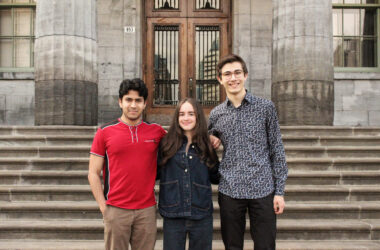
Only this time, some things were different: I am a university student in a foreign country with a circle of friends that includes Indians and Pakistanis alike. When the standoff began, I felt unsure whether we were safe around each other, or if any of my best friends from across the border saw me differently.

Two days after the Pulwama attack, my best friend, who is from India, confessed to having similar concerns. She said that I had sounded short with her on the phone that day and that she hoped it was not because of ‘the India-Pakistan thing.’ My heart sank. Neither of us was overreacting—war does create distance. Some students at McGill had taken to social media to spew hate against ‘the other’; more extreme and jingoistic cases called for war.

But, as tensions between the countries worsened, the opposite shift occurred among my circle of friends. Instead of feeling unsure of how ‘the otherfelt, we huddled around our laptops in the Redpath library at 2 a.m. together, checking the news and worrying that our country would provoke conflict. The following morning, we called each other to check in. We knew that no matter our nationality, we had something more important in common: A love for our homes and for each other. We did not want war, we despised the hysteria, and we hated seeing each other stressed and afraid.

During the past two weeks, despite what I had feared, I have grown closer to many of my Indian friends. They answered my anxious calls with love, and we settled our usual political debates by our mutual wish for peace—despite the hate we saw on our social media and news channels. We all wished for cooler heads to prevail.

The two countries stepped back from the brink of war after Pakistan’s Prime Minister, Imran Khan, offered a round of peace talks when addressing national and international media on Feb. 19. With this hopeful news, my friends and I decided to get together. We had to calm down after a week that reminded us of the gut-wrenching memories of past terrorist attacks, emergency drills, and constant worry for our families back home. My Indian friends and I attending a showing of Bollywood’s newest release, Gully Boy, and shared a meal of biryani to cherish what we had in common and to celebrate the victory of peace over war—not just between countries, but among friends.

Science & Technology

Addressing LGBTQ+ needs in healthcare

At their recent panel on Feb. 25, Healthy McGill and the Nursing Peer Mentorship Program hosted a collaborative forum to address LGBTQ+ needs in healthcare.

“Over 50 per cent of trans people say they are not comfortable going and getting healthcare services and, of people that needed emergency care in Ontario, about 23 per cent opted not to get the care,” Florence Ashley, a transfeminine jurist and bioethicist, said during the discussion.

These statistics are stark evidence of a lack of professionals trained to address the needs of the LGBTQ+ community, which has long struggled to have access to the same basic services as the general, cisgender, heteronormative population, particularly in rural areas. Trans individuals are often forced to travel to large cities to visit one of a select few doctors known among the community for offering adequate services.

Panellists at the forum included Ashley, Kimberly Wong, who works with AIDS Community Care Montreal (ACCM), and Eve Finley, an equity facilitator with the McGill Dean of Students.

“[This session is for] folks who have never heard all the letters to [the LGBTQI2A] acronym and […] folks that may be deeply immersed in trans activism in communities,” Ashley said.

The panel started with an exploration of the meaning of each letter in the LQBTQI2A acronym and the difference between the terms transsexual and transgender. It aimed to educate students, particularly those in nursing, occupational therapy, and dietetics, about appropriate care practices for LGBTQ+ individuals. The forum served primarily as a safe space to ask questions and disenuntangle assumptions about individuals in the community such as the difference between sexuality and gender.

“Sexuality is who you go to bed with, gender is who you go to bed as,” Finley said.

The simple definition cleared up many preconceived ideas at the forum and hinted at a major issue across education systems: The lack of proper, LGBTQ+-inclusive sexual education.

Sex education in Quebec is known to be rudimentary and mainly addresses the needs of its heterosexual population. From teaching students about penetrative sex, contraception methods, and how to put on a condom, sex education in primary and secondary schools is often irrelevant for LGBTQ+ youth. McGill’s programs to train future healthcare professionals are similarly lacking.

During the education session, the panellists divulged helpful tips to put LGBTQ+ patients at ease in a healthcare setting. Sharing one’s pronouns and avoiding the use of gendered titles were just two of the practices.

“As a healthcare provider, you can still support someone and be respectful to them and be inclusive of them even if they are using words to describe themselves that you do not quite understand,” Finley said.

These simple approaches, rooted in respect, empathy, and understanding, were just a few of the recommendations made during the forum.
“‘I would rather die than go to the doctor because I cannot stand being misgendered again,’” Wong said, recalling words from LGBTQ+ individuals she had interacted with.

By educating healthcare professionals on the needs of LGBTQ+ populations, the panellists hope that, one day, such a phrase will no longer be spoken.

Know Your Athlete, Martlets, Sports

Know Your Athlete: Madeleine Whitestone

On Feb. 16, third-year hurdler Madeleine Whitestone secured her season-best time of 9.61 seconds in the 60 metre hurdles at the Raven U-Sport Last Chance Invitational, finishing in fifth place. Whitestone had been struggling with a back injury all season so the strong performance was an encouraging sign of her recovery.

Running has always been a part of Whitestone’s life. She started running triathlons when she was young but also played soccer and field hockey. Eventually, she picked up track, too. During high school, Whitestone ran for the University of Toronto (U of T) Track Club so that she could run year-round rather than just during her school’s short track season.

“I was always a big runner […], so I have pretty much been doing track [and] running for as long as I can remember,” Whitestone said. “I joined the U of T track club. It was really close to my house and had some of the best facilities in the country, so I was really lucky with that.”

Growing up, Whitestone mainly ran long-distance, so when her coach threw her into a hurdles race, she was surprised. However, she performed well and decided to stick with running the 60m hurdles.

“Hurdles, to me, are pretty fun because it makes running a bit more technical, as if it wasn’t technical enough,” Whitestone said. “If you’re doing a longer race like the 400 [metre] hurdles, it’s a lot easier to focus on the hurdling than on the pain.”

Track and field is an exhausting, painful sport. As a result, competitive runners are often self-motivated and independent individuals, so completing workouts are personal challenges and victories. For Whitestone, this is exactly the case.

“A motivator for me is focusing on how accomplished and amazing I will feel after the workout is done,” Whitestone said. “Another huge help in getting through hard days are my teammates. They are always so supportive and encouraging, [and] if someone is really not feeling it [that day], someone else will chime in with a motivating comment and keep us all going.”

Racing is mostly an individual endeavour, though Whitestone and her teammates train alongside each other in practice. However, at the 2019 Provincial Championships, she did get the opportunity to run with her teammates as part of the 4x200m relay team.

“Track, despite it being a team, is an individual sport which can put a lot of pressure on you and [lead to] a somewhat lonely journey,” Whitestone said. “Getting a chance to do a proper team event is really great because we all support each other as teammates, but this gives us a chance to be ‘in it together’ which is pretty fun.”

While many of her teammates have specific routines to prepare themselves before a race, like eating only half of a banana, and exclusively drinking blue Gatorade, Whitestone likes to keep hers simple.

“Pre-race rituals are pretty big on the team,” Whitestone said. “I’m boring and just try to eat a sugary snack about an hour and a half before I race, typically a granola bar or fruit. In terms of music, I know how tacky this is, but I like to listen to Drake because it reminds me of home.”

The Toronto native is currently in her third year of an undergraduate degree in chemical engineering. She hopes to work in the sustainability industry and eventually pursue graduate school after working for a year or two.

“I’d love to get involved in research or work on topics such as the circular economy, where I’d be given a chance to use my degree for good,” Whitestone said.

With the outdoor track and field season approaching, Whitestone is preparing to transition back into longer sprints as well as the 400m hurdles. Having just wrapped up the 2018-19 season, she will condition the way she always has: Performing athletic activities that put less stress on her body, like yoga and swimming, to help her heal after all the strain she accumulates over a season on the track.

McGill, News, SSMU

Progressive groups on campus form alliance

Founded in fall 2018, Solidarity Alliance McGill (SAM) is a new umbrella organization that serves to unite several of McGill’s socially-progressive groups. Student clubs such as Divest McGill, McGill Students for the New Democratic Party (NDP McGill), and Socialist Fightback at McGill and Concordia attended a Feb.11 SAM meeting to finalize the coalition’s constitution. According to the new document, the Alliance will act as a forum for McGill’s left-wing groups to coordinate efforts and is committed to the ‘protection of all those who are unjustly oppressed.’

NDP McGill member Joshua Werber was inspired to help found SAM in Nov. 2018 to foster relationships among parties with similar interests. For Werber, the Alliance represents a way for progressive voices on campus to act in a more concerted manner.

“Whenever there’s a hot issue, the groups will make [an] individual statement,” Werber said. “It becomes very divided. But, if we can all join together to make some sort of united statement on certain salient issues, we can have a much larger impact.”

Maranda Raskin, SAM social media coordinator and member of Independent Jewish Voices (IJV), gave a different reason for SAM’s inception. For her, SAM is also a means for progressives to match political rivals on campus.

“I feel like a lot of conservative groups on campus are, [or] have been in the past, very organized, and this is just a way for us to do that ourselves,” Raskin said.

Raskin believes that SAM will help foster communication between left-leaning groups on campus. She also hopes that the alliance will make it easier for students to get politically involved on campus.

“In the future, we want it to be like a platform for new students who are interested in leftist politics or progressive organizing to come into McGill and have one platform for people to shop around, like a virtual activities fair,” Raskin said.

Members stressed that the non-hierarchical structure of SAM is a crucial part of the organization’s identityno member has a veto.

Students’ Society of McGill University (SSMU) Vice-President (VP) Student Life Cody Esterle confirmed that SAM members have already conveyed their desire to gain club status, which members of SAM hope will guarantee their Alliance’s existence after they graduate.

However, Esterle warned that associating with SSMU is not without its conditions. This comes after the SSMU Judicial Board (J-Board)’s unanimous ruling in May 2016 to prohibit SSMU from politically campaigning against either side of the Israel-Palestine conflict. Specifically, the J-Board found that the Boycott, Divestment, and Sanctions (BDS) campaign, which aims to non-violently pressure Israel into complying with international law, was unconstitutional and violated the SSMU Equity Policy by targeting a country directly. 

“Any group that is associated with SSMU has to adhere to the Judicial Board ruling […] in their official documents,” Esterle said. “All groups would be held to the same standard [whether they are] existing groups or groups seeking [SSMU club] status.”

The J-Board is the dispute resolution body mandated by the SSMU Constitution to adjudicate interpretation of constitutions, namely, the SSMU Constitution but, also, the constitutions of clubs and services under SSMU. Currently, SAM’s constitution supports BDS.

“We’re fully committed to not violating any SSMU legislation or [Judicial Board] ruling,” Werber said. “We respect SSMU and we also are not ashamed of our beliefs, but we’re certainly not going to try to usurp SSMU, and if we’re told there’s an issue we’re going to work in good faith.”

Werber pointed out that several student groups have published pro-BDS material and continue to work with the SSMU. He also noted the Alliance’s stance against anti-semitism which stand independent of its views on BDS.

“Both ‘pro-BDS’ and ‘opposed to anti-semitism’ are independent [principles],” Werber said. “We believe in both because they’re both progressive values. All of our principles are equally important to us. It could happen that some individuals may decide to focus on one of our particular principles, but we’re a very broad coalition and our goal isn’t to be defined by one principle but rather to offer the left on campus a louder and inclusive platform to speak from.”

News, The Tribune Explains

Tribune Explains: The Montreal wastewater system

With the spring thaw on the horizon, students are already swerving away from massive puddles on street corners and sidewalks. To better understand why the temporary flooding is so severe, The McGill Tribune looked into how Montreal handles its wastewater.

Where does the water go?

According to the City of Montreal, the city’s drainage system gathers 2.5 million cubic metres of wastewater on a normal day and up to eight million cubic metres on a wet day. Almost all of this water is treated by the J.R-Marcotte water treatment plant located at the base of the Island of Montreal, which is also the third largest water plant in the world. Every litre of water that flows through the plant is filtered for garbage and particles then given a chemical treatment that binds smaller particles together so that they too can be filtered out. Once treated, the water is dumped into the Saint Lawrence River. Currently, Montreal does not sanitize its wastewater, although there are plans to open a new sanitization plant within the next three years.

Why isn’t the water sanitized?

Sanitizing millions of litres of wastewater is expensive, time-consuming, and has its own environmental impact: Nature Education estimates that wastewater sanitization accounts for three per cent of global electricity production and five per cent of all greenhouse gas emissions worldwide. Professor Jim Nicell, dean of the Faculty of Engineering at McGill, explained that the most sustainable solution for an environmental problem may not be the obvious one.

“A few years ago, there was an issue where [Montreal] needed to divert wastewater directly into the St. Lawrence river in order to repair a pipe,”  Nicell said. “From an engineering perspective, that’s a non-issue: You look at the size of the river, you look at the level of dilution, [and you find that] nature’s not going to feel it. Now, consider someone that would instead want to build a giant basin to hold the dirty water because they were really concerned about the environment. But, what about the environmental and economic resources that would be required in order to build a temporary structure to hold this water? That’s not a wise use of resources in our efforts to protect the environment.”

How is the water transported?

Most of the city is serviced by a combined sewerage system which transports both sewage and storm water. There is a drainage pipe underneath every street in Montreal, the smallest of which are only 30 centimetres in diameter and the largest being over four metres wide. All of the water in the combined system is eventually moved into one of two massive pipes. These underground rivers, called interceptors, are over five metres wide and, ultimately, transport the water to the treatment plant.

Why are there massive puddles on every street then?

Sewerage systems have a maximum capacity and, when reached, the system must either dump untreated water directly into a holding facility or water source or else risk flooding thousands of businesses and homes. Nicell, who has worked in environmental engineering for over 25 years, explained that engineers try to avoid this issue by intentionally designing storm drains and streets to drain water at a slow rate.

“If you allow the water to flood as quickly as possible down the sewer in order to keep everyone’s feet dry, that creates a massive peak of flow that may overflow the sewer […and] flood businesses and homes that are blocks away,” Nicell said. “So, what we’ll do is purposely allow the water to pool and then slowly drain down into the system so that it doesn’t flood.”

However, he also pointed out that the flooding near campus can be excessive.

“I can’t always say [the flooding] is by design,” Prof. Nicell said. “For instance, the [drain] by the Roddick Gates is not good [….] Sometimes, the design is good, but the contractors make a mistake during construction.”

Student Life

To double major or not to double major

The number of McGill students partaking in double majors or joint honours degrees has risen in recent years. As of 2017, approximately one in five McGill students were expected to graduate with a joint degree. Yet, despite a trend toward interdisciplinary education, many continue to question the value of pursuing a double major.

In a 2018 New York Times article, David Leonhardt argued that students should avoid double majoring, rationalizing that though dual concentrations encourage students to familiarize themselves with two academic fields, it also gives them less flexibility to diversify their programs through electives. Despite Leonhardt’s warning, universities have increasingly promoted interdisciplinary study. At McGill, the Faculty of Arts and Science was founded in 2005 to enable students to major in both a science and a humanity discipline. Similarly, across North America, universities are offering interdisciplinary programs: through New York University’s Gallatin School of Individualized Study students can curate their own major according to their interests and Middlebury College’s winter term program allows them to take month-long classes outside of their major.

Many students feel that this holistic approach to education exposes them to a wider breadth of classes and allows them to explore more of their scholastic interests. Kate Englehutt, U1 Arts, majors in geography and double minors in political science and religion and globalization. In her experience, taking a diverse selection of classes has enriched her understanding of each concentration.

“I found that [pursuing a double minor] was the best way to specialize what I was studying to best suit my interests,” Englehutt said. “My courses overlap in really interesting ways, like some urban geography courses have a lot to do with politics and policy, for example. I think it impacts my life at McGill positively because I get to dip my toe into a few different departments and diversify my undergrad classes.”

In response to multidisciplinary programs, economists have worked to determine the value of a joint degree. In a 2016 study conducted by the Society for Benefit-Cost Analysis, scholars noted that many students who double majored did so, in part, because they expected to earn a higher salary after graduation. Though many students initially pursue interdisciplinary study to satisfy their diverse interests, there are also perceived professional advantages to earning a joint degree.

Some believe that students who take double majors work harder or are more driven, attributes that employers view as indicators for professional success. Fernando Nunez-Mietz, an assistant professor in the political science department and joint honours advisor, has observed that the double major students he supervises can sometimes have an advantage in the increasingly competitive job market because of their unique interests and skills.

“My presumption [about why students double major] is that it has to do with the signal it sends to future employers or future institutions that students are looking to apply to,” Nunez-Mietz said. “Basically [it shows] that you are above the average, that you are an overachiever or that you basically stand out from the crowd.”

At McGill, double majors require that students take on a heavier course load and attend additional required classes. While the extra hours of studying that come with a double major degree can cause a strain on students, many of them believe that the unique skill sets they develop from their joint programs will aid their academic and professional growth. According to Leanne Young, U1 Science, who is earning a joint honours degree in computer science and biology, pursuing two seemingly unrelated disciplines has helped her develop the necessary skills to succeed in academia.

“This specific joint degree opens so many more windows to both the technological world and the research world,” Young said. “Science students who do not possess any mathematical [or] computational knowledge […] are greatly missing out on [a range of] opportunities and research that can be done.”

Nonetheless, some students find that the sacrifices they make to complete a joint degree can take a toll on their personal and academic lives. Many double majors note that they struggle with heavier course loads and inflexible course schedules. These challenges can prove especially difficult when the student loses interest in their course material. McGill Career Planning Service (CaPS) director Darlene Hnatchuk explained that despite these obstacles, many disillusioned students persevere with their double major because they believe it will guarantee professional success—an outlook she finds unproductive.

“I think that if students choose to do a double major it should be because they’re equally passionate or very keen about the two topics they are choosing to double major in,” Hnatchuk said. “The best reasons are because you can’t figure out what you’re most intensely interested in, and some of the worst reasons are because you think it’s going to guarantee you certain types of positions or employment outcomes.”

Many double majors hope that interdisciplinary study makes them adaptable job candidates, however research indicates no correlation between double majors and higher salaries. Though interdisciplinary majors can help students develop a diverse skill set, Hnatchuk explained that students enrolled in other programs can gain comparable experience in other academic fields through extracurriculars or electives. Increasingly, she noted, employers seek prospective employees that add value their companies, which can be measured by a candidate’s demonstrated abilities, rather than simply the degree they carry.

“Employers aren’t saying that they’re looking for students that have done double majors, they’re looking for skill sets,” Hnatchuk said. “Whether you develop the skills that they’re looking for through your academic or co-curricular […] doesn’t really matter to them, what matters is that you have those skills, that you can demonstrate those skills.”

Over the course of their undergraduate degrees, students enrolled in multidisciplinary programs find that the work ethic and diverse skill-sets required to succeed in double major programs have also aided their personal development. Caitlyn McConnell, U1 Arts and Music, studies classical vocal performance, economics, and computer science. She explained that balancing the workload required to complete a double major challenged her to develop stronger organizational skills. She also believes that this experience has helped her become a more versatile thinker.

“The benefits [of a dual degree] are being able to take a huge variety of classes,” McConnell said. “I have to take, music, math, three languages, computer science and economics courses [….] I think it prepares you to enter [the] ‘real world’ by forcing you to apply your skills over a wide range of subjects and teaching you to think in a completely different way because you have to juggle so many subjects at once.”

In their efforts to come across as ideal candidates for job opportunities, students can sometimes forget the underlying role of gaining a university degree: to highlight and expand on knowledge and skill sets that are beneficial for both personal and professional growth. While some view double majoring as time-consuming, McGill students pursuing joint degrees believe that double majoring can educate them on a range of issues, open doors with the university’s ecosystem, and teach them skills that serve them long after graduation.


Student Life

From Away

Over 27 per cent of the McGill student population is international, more than any other university in Quebec. For many, it can be difficult to feel comfortable in a new country. In “From Away” The McGill Tribune asked international students: Where do you feel most at home on campus?

Saruul Khishigjargal, U2 Political Science, Mongolia

“There is really only one place I truly feel at home on campus, Rutherford Park. Sitting on that open expanse, watching the city skyline, I feel as though I have a piece of nature all to myself. I feel free and that’s home to me.”       


Jeanette Zhong, U2 Philosophy, China  

“The Nahum Gelber Library. It is so close to my apartment and I spend most of my time studying there. It is a quiet area where it is usually easy to find seats. Despite the construction surrounding the library, it is a beautiful building where I feel the most at home on campus.”


Eve Cable, U1 Cultural Studies, London

“I feel most at home in my dorm room in RVC, because I feel like I made it into a place where it’s a home for all my friends and me, not just me. Most people think my dorm room is super cluttered, and it is, but that’s because I have millions of photos of my friends from home and my family on the walls, as well as lots of tickets and posters from my walls in my old bedroom [….] My favourite part of my dorm room is the huge rainbow ‘Happy Birthday’ sign I taped up to the wall. All my friends here had their birthdays in November and December, and I decided to keep the sign up so that anybody having a birthday can use my room as the birthday room.”


Priyanshi Sharma, U1 Psychology, India  

It’s mainly the people I surround myself with, my roommate, girls from my sorority, AOII, and my friends. I thought it would be hard to settle here when I first got here but it hasn’t been like that at all.”


Soukaina Amrani, U3 English Literature, Morocco

“The things that make me feel most at home are my friends, my sorority, and my sister since she lives here. Without them I would be homesick and sad, especially with how cold and dark winter is here.”


Mohammed Haj Ali, Second year Masters in Environmental engineering, Syria

“I’m part of WUSC [World University Services Canada] McGill, a university club that helps McGill students […] sponsor refugees from conflict zones to pursue their education at McGill. It’s where McGill empowered me to transform the lives of individuals who suffer [from the same] conflicts […] my home country is currently suffering from.”


Navoneel Chakraborty, U2 Physics and Philosophy, India


“My favourite place on campus is McGill Pizza. Nothing like one-for-one beers and all day breakfast.”

Commentary, Opinion

Campus Conversation: Apartment hunting trials and tribulations

It’s springtime in Montreal: The days are getting longer, the weather is just slightly getting warmer, and thousands of students are rushing to find a new place to live. Contributors Makena Anderson and Leina Gabra detail the trials and tribulations of apartment hunting as McGill students.

Exploitative landlords and annoying age limits

Makena Anderson, Contributor 

It’s no secret that good landlords are few and far between, but they seem especially scant in the Milton-Parc area. Between broken dishwashers, missing doorknobs, and unreturned phone calls, nearly every student has horror stories about their landlord.

Following a two-year tenancy in the Plateau, I came up against some surprising troubles as I began my search for a new home. While on the hunt for an apartment, I discovered that—at age 20—I was too old for some landlords. By their second and third years, many students are unappealing candidates for potential landlords because they are less likely to renew their leases for the following year. As a result, some landlords will opt for younger prospects, which is illegal.

Even if you belong to the lucky group of students who are invited to sign a lease for their apartment of choice, you may find that your potential landlord has tacked on extra fees like illegal security deposits. Quebec is the only province in which landlords are not allowed to ask for a security deposit; however, they have been known to circumvent this law by exploiting students’ naïveté.

With hundreds of students hunting for housing near campus, landlords are afforded substantial power. As students desperately look for an apartment before the Apr. 30 deadline, landlords have the opportunity to bypass certain regulations and are still likely to find a tenant. By the time students file a complaint, landlords will likely have found a different signatory for the lease. The future of renting may seem unpromising to many students, and, moving forward, the Régie du Logement should take a more active role in advocating for student renters and condemning landlords who partake in illegal renting practices.

The stress of finding and living in a Milton-Parc apartment

Leina Gabra, Contributor 

The Milton-Parc area is home to over 11,000 residents, thousands of whom are McGill students. Many students live in the neighbourhood because they enjoy the convenience of being able to leave home 10 minutes before classes begin. Affordable units in this densely-populated area are snatched up within minutes: I had Craigslist and PadMapper bookmarked for months because apartments were being rented out as soon as they were listed.

McGill Student Housing offers a webpage with some online resources and a handful of workshops and Q&A events to assist its community in finding off-campus housing and understanding the law. However, this still does not fully prepare students for all of the headaches that come with apartment hunting. Unprepared second-year students are thrust into the big, scary world that is apartment hunting with few tools to guide them, especially regarding their rights as tenants. Although McGill does provide some resources, they do not assist in finding apartments in concentrated and highly-popular areas like Milton-Parc.

On top of the difficulty of finding a satisfactory apartment in Milton-Parc, for many students, this is their first time renting. For those who are especially unaware of Quebec’s renting laws, such as international students, this highly-concentrated neighbourhood of students allows landlords to take advantage of oblivious McGill students for their own profit through illegal deposits, hazardous living conditions, and unfair rent prices. Besides exploitation, some students living in Milton-Parc have reported burglaries, trespassing, or peeping—especially female students.

Apartment hunting as a McGill student is no easy feat, especially when students are all looking in the same neighbourhood. Students who are tired of the struggle that is apartment hunting in Milton-Parc and don’t mind a short commute should consider renting in other neighbourhoods outside of the ‘McGill bubble’ such as like Atwater, Saint-Henri, or the Mile End.

Science & Technology

People are rational—wanna bet?

It’s the final round of Jeopardy! and the stakes are high. Martha wipes a bead of sweat off her face, her fingers descending to trace the pearls around her neck for good luck. Despite holding a bank account several orders of magnitude smaller than her opponent Patricia, both women bet approximately the same amount in an attempt to win the game. Irrational though this might seem, there is a whole subfield of economics dedicated to similar forms of decision-making.

In a paper from 2003, researchers explored a slightly different gamble: A single bet with a 50 per cent chance of winning $550 and a 50 per cent chance of losing $500. In the scheme of things, the $50 difference is negligible. However, despite the probabilistic promise, very few participants chose to take the bet.

The explanation for why people did not want to take the bet relies on a distaste for uncertain risks. The formal term for this phenomenon is risk aversion, a situation wherein people try to minimize uncertainty even when the odds are in their favour. This works in parallel with the endowment effect, where people tend to see losing something as more consequential than gaining a reward. This study, and many like it, explore the motivations that drive individuals’ decisions.

Perhaps less intuitively, the study also found that risk aversion to the 550/500 bet did not change based on overall wealth. This is as a result of a phenomenon known as narrow framing, which causes people to evaluate gambles in isolation, without taking information from other parts of their lives into consideration. In the Jeopardy! scenario, narrow framing would push Martha to match Patricia even though her bet had greater consequences for her outside of the game.

Risk aversion research is most relevantly applicable in the stock market. Although investing in the stock market generally produces returns, this does not inspire much interest in investment among the general public. The reasons behind this disinterest are similar: People are generally risk-averse and tend to frame situations narrowly. The stock market is perceived as risky, and, while it has relatively low returns on the day-to-day scale, even small returns can build over time. Meanwhile, most people do not evaluate their finances holistically when considering opportunities to spend. For those who already have money in bank accounts and real estate, it makes sense to diversify their wealth and invest in stocks, yet most people avoid investing.

Even though people generally like to think of themselves as rational agents who make good decisions,  an individual’s judgement is, more often than not, heavily swayed by factors they would think irrelevant in the grand scheme of things.

Science & Technology

Freedom is worth more than a billion dollars

Canadians typically enjoy high living standards yet tend to suffer from weaker social support networks than countries such as Mexico where, despite having much lower standards of living on average, residents often live in very tight-knit communities. According to a new study conducted by a pair of researchers from McGill and the Universitat Autònoma de Barcelona, tight social circles in Mexico several important advantages.

“The aim of our study was to take a literature which is now firmly well-developed about the determinacy of happiness […] and think about what the implications were for the future,” Christopher Barrington-Leigh, associate member of McGill’s Department of Economics and associate professor in the McGill School of Environment and the Institute for Health and Social Policy, said.

The researchers used a statistical model which combined two sets of measures. The first set measured objective, material factors: Per capita gross domestic product (GDP) and life expectancy. The second set was based on social factors including corruption, freedom, charitableness, and social support. The researchers then observed the global changes in the well-being of individuals between 2005 and 2016, as self-reported by evaluations from the Gallup World Poll, a global poll created in 2005 which tracks quality of life statistics in more than 160 countries. Based on the changes to the measures over time, the study projected self-reported quality of life for the year 2050.

The researchers found that changes in ‘material’ variables produce modest improvements in global quality of life. These changes varied from an increase of zero to 10 per cent above present levels. Meanwhile, changes in the non-material factors showed up to a 30 per cent increase in quality of life. The greatest potential for such improvement was found in India, China, Eastern European countries, and sub-Saharan African countries. The most pessimistic scenario, on the other hand, showed a decline in non-material factors leading to a decline in quality of life of 35 per cent. The survey also showed that global improvements in material conditions were more significant when paired with enhanced average freedom and corruption scores and were negligible when accompanied by declining average social support scores.

This study suggests that the greatest benefits to well-being in the upcoming decades lie in the non-material realm, suggesting that states should focus their resources on explicitly social aims. This conclusion has interesting ramifications for public policy.

“Governments need to start thinking about cost-benefit analysis differently,” Barrington-Leigh said.

Certain countries have already started to weigh policy alternatives based on residents’ well-being.

“New Zealand has just started to implement cost-benefit analysis for its budgeting processes in terms of human well-being, so this, I would say, is the beginning of a revolution,” Barrington-Leigh said. “Wales has also done something similar by passing a piece of legislation which says that governments should be accountable to future well-being. In that sense, the implications for governmental policy are very radical, [and] they could really eventually change how things are happening in the world.”

Barrington-Leigh hopes that other countries will join New Zealand and Wales in considering non-material well-being in cost-benefit analyses. However, despite the many new insights provided by this study, its model is far from perfect.

“Implications for future research are to start being much more quantitative and predictive,” Barrington-Leigh said. “We painted two scenarios, but they were not predictive.”

Increased predictive power is crucial for shaping future governmental policy.

“Future research [should investigate] what policies […] we should be following in order to get one of those scenarios in 2050 versus another,” Barrington-Leigh said.

Utilizing the right policies will help to achieve the optimal scenario in 2050 in a world with increasing material standards and decreasing social well-being.

Read the latest issue

Read the latest issue