


Latest News

Album Reviews, Arts & Entertainment, Music

Solange’s ‘When I Get Home’ is an avant-garde celebration of black excellence

Three years after the striking A Seat at the Table (2016), Solange released her fourth album, When I Get Home, on March 1. Accompanied by a short eponymous film, the album is an homage to the artist’s Houston roots, her birthplace, and the city’s black pioneers.

A notable departure from her last studio album, When I Get Home offers a collection of brief, episodic thoughts, with 14 of the 19 tracks clocking in under three minutes, rather than the concentrated black power anthems of A Seat at the Table. Much like in her previous works, black solidarity is at the core of many of the album’s tracks, including “Almeda” and “My Skin My Logo.” The album is meditative, transitioning beautifully from song to song, with brief yet impactful interludes, including “Can I Hold the Mic” and “Nothing Without Intention.”

The album was released with a 33-minute short film featuring Solange and an all-black cast of performers, reimagining Houston through the artist’s eyes. Rather than reconstructing the Houston of the past, the film envisions the city’s future, depicting cowboys and futuristic technology in Solange’s imagined home with an Afrofuturist aesthetic. The film’s choreography is elegant but impassioned. Solange challenges herself by producing more experimental work and in the process challenges her audience: The video’s avant-garde sensibilities might render it bewildering and difficult for some viewers, but the dazzling aesthetics qualify it as a masterpiece.

When I Get Home transports the listener—and viewer—to Solange’s childhood and home, a visceral, culturally-rich, site-specific experience. Solange names some of her tracks after Houston streets and references the city in many of the album’s songs, adding to the complex layers of the album and accompanying video. Through experimental Rhythm & Blues, Solange reclaims and creates space for black artistry and experiences. The album and short film are equally eccentric and avant-garde, paving the way for a completely new genre of art and music.

The album represents the beginning of a new chapter for Solange. The artist’s last two albums, according to her, have one significant difference: “With ‘A Seat at the Table,’ I had so much to say,” Solange said in an interview with The New York Times about one of the collection’s tracks. “And with this album, I have so much to feel.”

Rating: ★★★★★
Sports

U.S. Olympic athletes move towards unionization

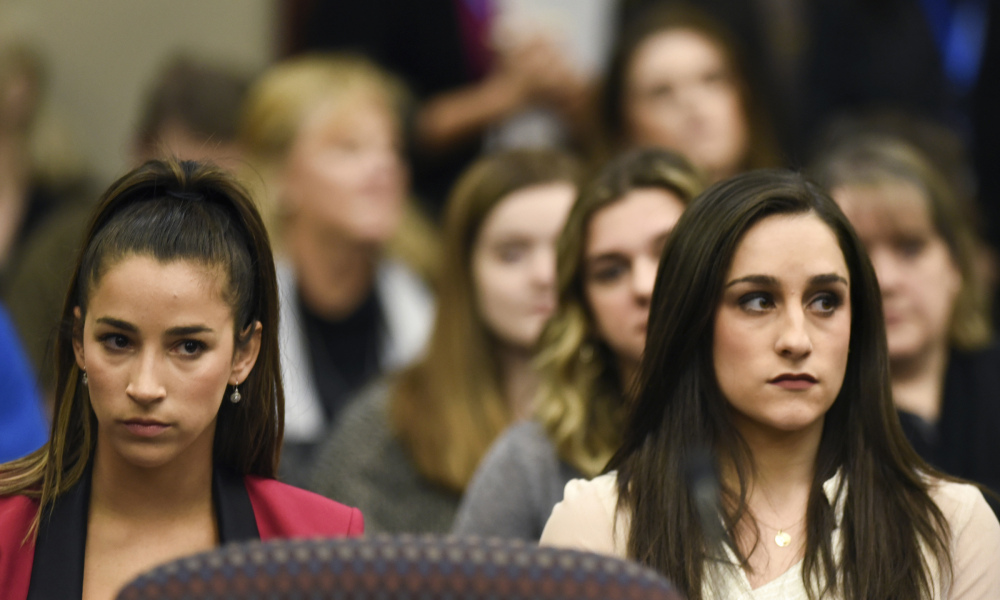
On Jan. 24, 2018, Dr. Lawrence Nassar, a former United States gymnastics team physician, was sentenced to 40 to 175 years in a Michigan state prison for sexual abuse. One hundred fifty-six women testified against Nassar, recalling how he had abused his position for decades to sexually harass and assault young female athletes. The case highlighted the institutionalized separation between American Olympic athletes and the United States Olympic Committee (USOC), the organization that oversees U.S. Olympic competition. To meaningfully address this, as well as the financial challenges that the athletes face, the Athletes’ Advisory Council (AAC) met to consider a solution: Unionization.

Donald Fehr attended the meeting between the AAC and the newly-hired CEO of the USOC, Sarah Hirshland, underlining the seriousness of the issue at hand. Fehr is the former Executive Director of the MLB Players’ Association and current Executive Director of the NHL Players’ Association. With his career’s worth of experience in the field, Fehr joined the AAC’s side of the table to help secure greater power for U.S Olympic athletes in negotiating with their Olympic committee.

Beyond addressing the many physical and legal concerns athletes may have, the call for unionization also seeks to resolve long-standing concerns surrounding athletes’ compensation and quality of life. In 2014, NBC paid $7.75 billion to secure American television broadcasting rights for all Olympic programming through 2032. Meanwhile, the U.S. Olympic athletes who generate the revenue are not earning dependable incomes; they are forced to rely on performance-based stipends from preliminary events and cash prizes from their home countries. The U.S. award bonuses fall well below those of countries like Singapore, Russia, and France and help only a few fortunate athletes—often those who are already benefiting from hefty endorsement deals. As such, most U.S. Olympic athletes struggle to cover expenses, forcing them to resort to part-time jobs, crowdfunding, or ending their Olympic careers early.

Throughout American history, labour has evened financial imbalances through the collective bargaining power of unions; for Olympic athletes, it could do the same. A scathing article in the Washington Post exposed how in 2016, the non-profit USOC had 129 employees make over six figures, 14 of whom took home salaries above $200,000, with the top paycheque peaking at $1 million. If U.S. Olympians collectivized as a singular bargaining body, their action could help ensure that revenues are more evenly distributed from the USOC to athletes. The credible threat of an Olympic Games boycott—not unlike lockouts in other professional sports—could prove greatly effectual, especially with the pressure an already-contracted NBC would put on preventing such an outcome.

Nevertheless, it remains challenging for Olympic athletes to unionize. With so few chances to compete, athletes have limited power against the USOC: Speaking out can cost athletes their spots on the Olympic team. Furthermore, athletes are usually not treated as actual employees, but instead as individual contractors, leading to further isolation and difficulty in unionizing.

After the Chicago meeting, Hirshland promised that the USOC will work to fix the current system. While Hirshland should be given a fair opportunity in her new position to keep this promise, she should also support immediate steps toward unionization. A healthy athletes’ union serves all who wish to see Olympic athletes at their best. Hirshland, the USOC, and Olympic athletes should go all in to make it happen.

Arts & Entertainment, Books, Private

Marlon James delves into fantasy with ‘Black Leopard, Red Wolf’

In an entertainment market dominated by superhero blockbusters and binge-worthy streaming services, audiences often overlook the fantasy genre’s literary counterparts. On March 5, Dimitri Nasrallah, author of The Bleeds, joined Marlon James at the Rialto Theatre to discuss his new novel, Black Leopard, Red Wolf. The novel has become a phenomenon in the fantasy world, achieving both popular success and critical acclaim. Hosted by Librairie Drawn & Quarterly, the sold-out event attracted an audience eager to see the literary powerhouse.

Set as the first instalment in a trilogy, Black Leopard, Red Wolf is a stark departure from James’ previous novel, the 2015 Booker Prize winner A Brief History of Seven Killings, a realist story revolving around the attempted assassination of Bob Marley. For his foray into fantasy, James adopts the same explorative view he uses in A Brief History to construct a world populated with diverse characters and settings. The story follows Tracker, a solitary protagonist who begrudgingly joins a mercenary group in order to hunt down a missing boy presumed dead.

When Nasrallah commented on the novel’s seemingly straightforward premise, James contested his claim, explaining that he intended to challenge readers’ notions of what a fantasy story should be. From its onset, Black Leopard, Red Wolf does away with tropes of the hero’s journey and the traditional three-act literary structure, and rejects the genre’s tendency to borrow from European mythology. James abandons familiar eurocentric settings and archetypal characters and instead spotlights uncharacteristic heroes in a dense African mythos.

“[Tolkien] had myths to go back to,” James said. “We need myths to create myths. In the absence of me knowing what those are, I couldn’t create a mythology [….] The initial stories are essential, but I had to search for them.”

Beyond the novel’s cultural inspiration, James sought to distinguish his work by experimenting with the narrative style that dominates the current literary scene. Fantasy writers often employ world-building to capture readers’ attention, though it often tests readers’ concentration when communicated through unwieldy blocks of text. James deviates from the exposition-heavy tradition by employing unreliable narration. His prose is sparse and kinetic, and he uses vague terminology in compact sentences that allude to a rich world instead of providing a complete picture for his audience. If readers don’t slow down to read between the lines, Tracker’s deliberately confusing narration will leave them feeling lost.

“I wanted to write a novel where everything is up for grabs, including reality, including identity,” James said. “Everything is fluid, everything is precarious, everything shapeshifts, and nothing is a given, including whether you should believe this novel or not.”

Near the end of the talk, Nasrallah inquired about how James’ transition into genre fiction clashed with his literary identity. Though James was quick to dismiss the literature versus genre fiction bias, Nasrallah remarked that perhaps the literary world only allowed authors of James’ renown to navigate the genre spectrum without consequence because of their reputation. James rebuked the idea, recognizing it as a uniquely western ideal that replacing make-believe with realism is a sign of intellectual maturity. James explained that he owes his literary imagination to the genre fiction of his childhood and that none of his previous works were without fantastical elements.

“I’ve always been in awe of fantasy,” James said. “Comics pretty much saved my life when I was a teenager. To me, it doesn’t feel like a change of direction, it feels like I was always headed there.”

Art, Arts & Entertainment

Thierry Mugler’s couture makes its world debut at the MMFA

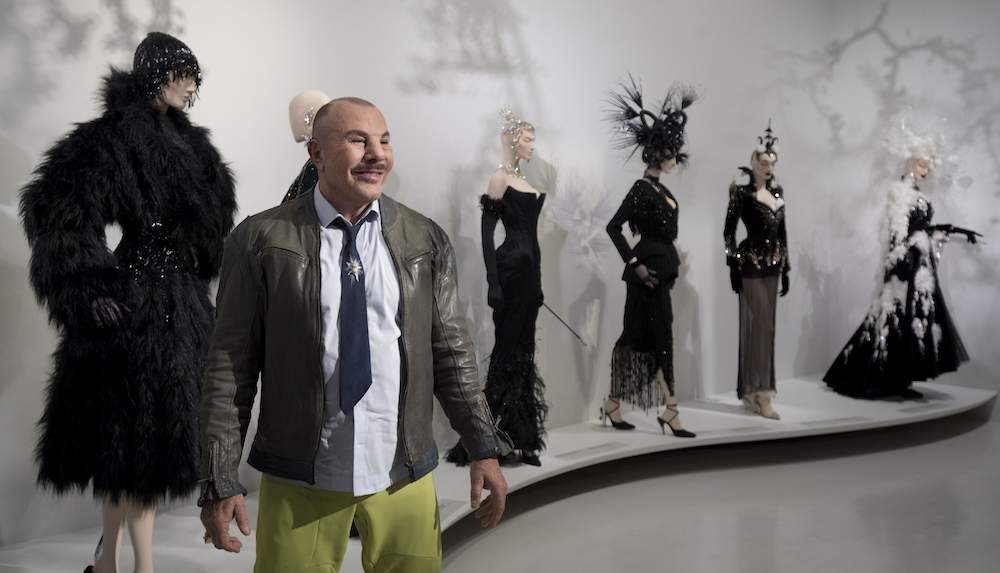
Continuing the trend of haute-couture exhibitions like Balenciaga, Master of Couture at the McCord Museum, the Montreal Museum of Fine Arts (MMFA) debuted Thierry Mugler: Couturissime, a landmark exhibition which features 150 of the designer’s designs. Though he began as a professional dancer, Mugler entered the world of fashion in the late 1960s, first producing ready-to-wear garments in Paris, and eventually distinguishing himself with his 1973 collection Café de Paris.

“The MMFA [… had] the right people, with the right approach, to reinvent the past with innovative staging, eclectic mélanges, and a new vision of my work,” Mugler wrote in the press release for the exhibit.

To cover the breadth of Mugler’s work the MMFA foregoes chronology, opting instead to group the designer’s pieces by motif, a choice which highlights the timeless nature of Mugler’s style. The MMFA compare their sequencing of Mugler’s work to an opera in six acts, each concentrating on the themes permeating throughout Mugler’s design: Theatre, celebrity, urban style, photography, metamorphosis, and futurism. No two outfits better exemplify Mugler’s range than La Chimère’s rainbow bird-like dress, with a rugged silhouette that uses bright, wild colours and feathered accents, and Anniversaire des 20 ans’s metallic bodysuit, which harkens back to a medieval knight revolutionized with a flare of 21st century eroticism.

Throughout his career, Mugler has worked with the likes of Lady Gaga, Beyoncé, and David Bowie. In the portion of the exhibition dedicated to his celebrity pieces, mannequins wearing his designs form a conga line down a mock runway.The celebrities listed are a testament to Mugler’s continued mainstream relevance. Notably featured is Cardi B’s peacock dress, which she wore to the 2018 Grammy Awards. The garment’s leopard print and glittering silver accents command attention among the extravagant dresses and costumes that crowd the room.

In Mugler’s work, grandeur often takes precedence over modesty. His eye for elaborate experimentation is seen in his costuming for the 1985 Comédie-Francaise production of Macbeth, in which Mugler adorned his witches in charred dresses with massive bustles and thicks ruffs. Mugler also designed an outfit for George Michael’s “Too Funky” music video, in which the singer sports fiery decals and is fitted with rear-view mirrors, transforming Michael into a motorcycle. The choices, though bombastic, are indicative of a creative voice that strives for showmanship rather than convention.

In conjunction with their celebration of Mugler, the MMFA has also decided to highlight several contemporary designers with Montreal Couture. A worthy adjunct to the main exhibition, this gallery recognizes local artists who seek the same worldwide renown Mugler has attained. The gallery also features seasoned professionals like Marie Saint Pierre and Philippe Dubuc, and offers snapshots of these designers’ unique takes on fashion. Variety is paramount here and though several of the garments harken back to Mugler’s aesthetics, each designer carves their own niche. In one corner of the exhibition, Ying Gao’s dresses, which look as though they are made from electrical wiring, shift and contort autonomously when viewers pass by. In another, Atelier New Regime’s branded orange jumpsuits blend sporty chic and metropolitan consumerism.

Bringing together a host of creatives both seasoned and new in Thierry Mugler’s: Couturissime, the MMFA popularizes high fashion, a craft that often seems inaccessible, reserved for the fashion elite of New York City or Paris. Fashion, though rarely exhibited in museum galleries, is at home here because, unlike on runways, the garments are stationary and available for close examination, engaging audiences more personally with the work than ever before. Much like a painting or a sculpture, the MMFA celebrates couture as the work of art that it is.

McGill, News, SSMU

SSMU and McGill join forces for a Fall Reading Week

As students return to classes from a week off, they can rest assured that the Students’ Society of McGill University (SSMU) is working in conjunction with the McGill administration for the implementation of a similar break in the Fall semester.

Following a referendum question in Winter 2018 where 96 per cent of students voted in favour of a Fall Reading Week, SSMU released the SSMU Fall Reading Week Survey in Nov. 2018 to gauge student support for the various options that could create time for a Fall Reading Week. With 4,338 respondents, the most popular option to make up for the classtime lost to a break was to start classes before Labour Day in September. Arts and Science Senator Bryan Buraga vouched for this option as a way to give students a full week off instead of having to combine reading week with Thanksgiving. This option would also allow additional days to be added to the December exam period, push back deferred Winter exams to mid August, change Frosh and move-in dates for incoming freshmen, and may impact the summer courses’s schedules.

“Starting school a week early in the last week of August would give McGill the flexibility to have a Fall Reading [Week] while allowing the fall exam period to be extended, alleviating a lot of stress that students face during these times,” Buraga wrote in a message to The McGill Tribune.

The administration has raised concerns that such an option might force students to pay an extra month’s rent. However, only nine per cent of survey respondents had leases from September to April, giving some relief to concerns over financial consequences.

A different option currently under consideration is the addition of an extra four or five minutes to each class period. This would amount to an additional 35 minutes per course, which would affect the timing of continuing studies classes and potentially present conflicts for those reliant on daycare services.

Currently, the McGill ad-hoc Fall Reading Week Committee and a sub-committee of the Enrollment and Student Affairs Advisory Committee (ESAAC) are working together to weigh the feasibility of each option. Once an option is selected, students will be given a referendum question in March or April to affirm support for the break.

According to Fabrice Labeau, McGill’s interim deputy provost of Student Life and Learning, a Fall Reading Week in 2020 might be possible if ESAAC is able to secure approval from other administrative bodies.

“By the time we hit April, depending on the advancement, ESAAC may be able at their meeting to say ‘we endorse this choice,’ [though] this is all conditional on being able to get a buy-in from the rest of the stakeholders because we’re limiting our study to some extent to the student view and the logistical view,” Labeau said. “But, to me, [planning a Fall Reading Week for 2020 would be] a reasonable time frame.”

Similar debates about the feasibility of a reading week have occurred in the past; however, SSMU President Tre Mansdoerfer is confident that, this time, SSMU and the administration are working together to ensure that all options are thoroughly considered.

“I’m in my fourth year at McGill, and I’ve seen these discussions take place in my first year, and, originally, I think people had these ideas that they brought, but there was never any sort of formal committee made at McGill,” Mansdoerfer said. “There’s different leadership that is listening to students, and, if at the end of the day it turns out that it can’t work out, I’m appreciative because at least they were giving an honest shot […] at it. And that’s kind of the difference right now, is that there’s a genuine desire to explore it and to see what kind of happens from there that necessarily wasn’t there one, two, or three years ago.”

Album Reviews, Arts & Entertainment, Music

Weezer stumbles into pop music with ‘Weezer (The Black Album)’

Before even pressing ‘play,’ Weezer’s Weezer (The Black Album) tempts listeners to write the album off immediately. With The Black Album, released on March 3, the band tried to emulate meme culture, adding a spork into the packaging of pre-ordered copies, and even making a cameo in the game Fortnite. These gimmicks are strange bells and whistles on what is ultimately an album with little to offer.

The band’s newfound interest in millennial internet trends is a departure from the counterculture-inspired aesthetic they had spent the last two decades developing. The release of an underwhelming album of cover songs, Weezer (The Teal Album) on Jan. 24 was just a preview of the onslaught of disappointment that the next wave of Weezer content would bring. While The Teal Album was meant as a strange, self-aware joke, The Black Album takes itself much more seriously, yet shows very little improvement.

There is an admirable, albeit undeserved, confidence that pervades the album. “Everybody’s playing it safe,” Rivers Cuomo sings on the The Black Album’s second track, “Zombie Bastards.” The song is taking a dig at bands who pander to their audiences, betraying their artistic integrity. Ironically, Weezer themselves are attempting to appeal to a larger and younger audience, and a broad, generic pop style that only serves to further contradict their lyrics. “High as a Kite” sees Cuomo metaphorically plugging his ears to drown out anyone who criticizes his band: “Miles above, it’s so serene […] Way up here, no one can touch me,” he croons.

“The Prince Who Wanted Everything” is a forced tribute to the late, great Prince, and like The Teal Album, acknowledges music icons without coming close to doing them any justice. Every song feels manufactured to be as catchy as possible, but “Byzantine” is the only track which successfully harkens back to the Weezer of old.

Despite these shortcomings, Weezer (The Black Album) is not messy, nor is it poorly produced. It’s the pop fixtures and referential quality that are antithetical to Weezer’s musical identity.

Rating: ★☆☆☆☆

Science & Technology

Eat your greens

Among other changes, Canada’s 2019 Food Guide places dairy and meat in the same category as other sources of protein including fish, beans, and tofu. The diet of every Canadian is at stake, with the Canada Food Guide influencing the recommendations of teachers, doctors, and dietitians across the country.

The new guide reflects a global trend toward more plant-based diets. In Canada, consumers have increasingly been avoiding meat and dairy. Statisticians have noted recent decreases in milk consumption among Canadians, with total consumption falling to 66.68 litres per capita in 2017 compared to 69.53 litres in 2016. In addition, nearly one out of 10 Canadians, half of whom are under 35, consider themselves vegetarian or vegan.

There is precedent for these changes, with previous food guides representing largely different scientific and social attitudes towards nutrition. For example, the previous food guide, from 2006, does not highlight the danger of processed foods, which have been strongly linked with cardiovascular diseases. It also included a decrease in recommended vegetable and fruit portions alongside an increase in meat portion compared to the previous guide from 1992. Several studies have since found that plant-based diets are more environmentally friendly since they require less natural resource input and produce fewer greenhouse gas emissions.

“[I am] excited that the new guide brings a focus on plant-based options, as the scientific evidence points to the health benefits and lower environmental impact of having a more plant-based diet,” Andrea Rubin, a nutritionist and registered dietician, said.

However, deemphasizing the importance of meat for a healthy diet has prompted resistance among established interests. The government created the past 2006 Food Guide under the watch of an external advisory committee which included representatives from Food and Consumer Product Manufacturers of Canada, the Vegetable Oil Industry Council, and the BC Dairy Foundation. According to reports, Health Canada diminished the influence of meat and dairy industry lobbyists in the new 2019 Gude by banning them from meeting with Health Canada personnel working on the project.

“[The new guide is a] move toward a more science-based versus a politically-motivated guide,” Rubin said.

Beyond current food trends and lifestyle choices, the new Canada Food Guide also reflects Canada’s varied demographic groups. The 2011 National Household Census illustrated this diversity, which showed that one out of every five Canadians is foreign-born and one in five identifies as a visible ethnic minority.

The new guide also emphasizes individual responsibility for health. The notions of mindful eating, food labels, and food marketing put more onus on the consumer to make more conscientious food choices. This contrasts with the view that the government is responsible for regulating marketing, food labels, and production.

Canada relies heavily on imported fruits and vegetables throughout the winter, making it difficult to prioritize local produce for families facing food insecurity and simply cannot afford a diet rich in nutritious food.  A recent study shows that 90 per cent of Canadian youth did not meet the recommended fruit and vegetable servings from 2006. Furthermore, a 2017 UNICEF report ranked Canada 37 out of 41 high-income countries on child hunger. Canada is also one of the only high-income countries not to have a national school food program. This new food guide is undoubtedly a step forward; the next challenge is empowering Canadians to be able to meet its standards.

Montreal, News

Liberal victory in Outremont by-election

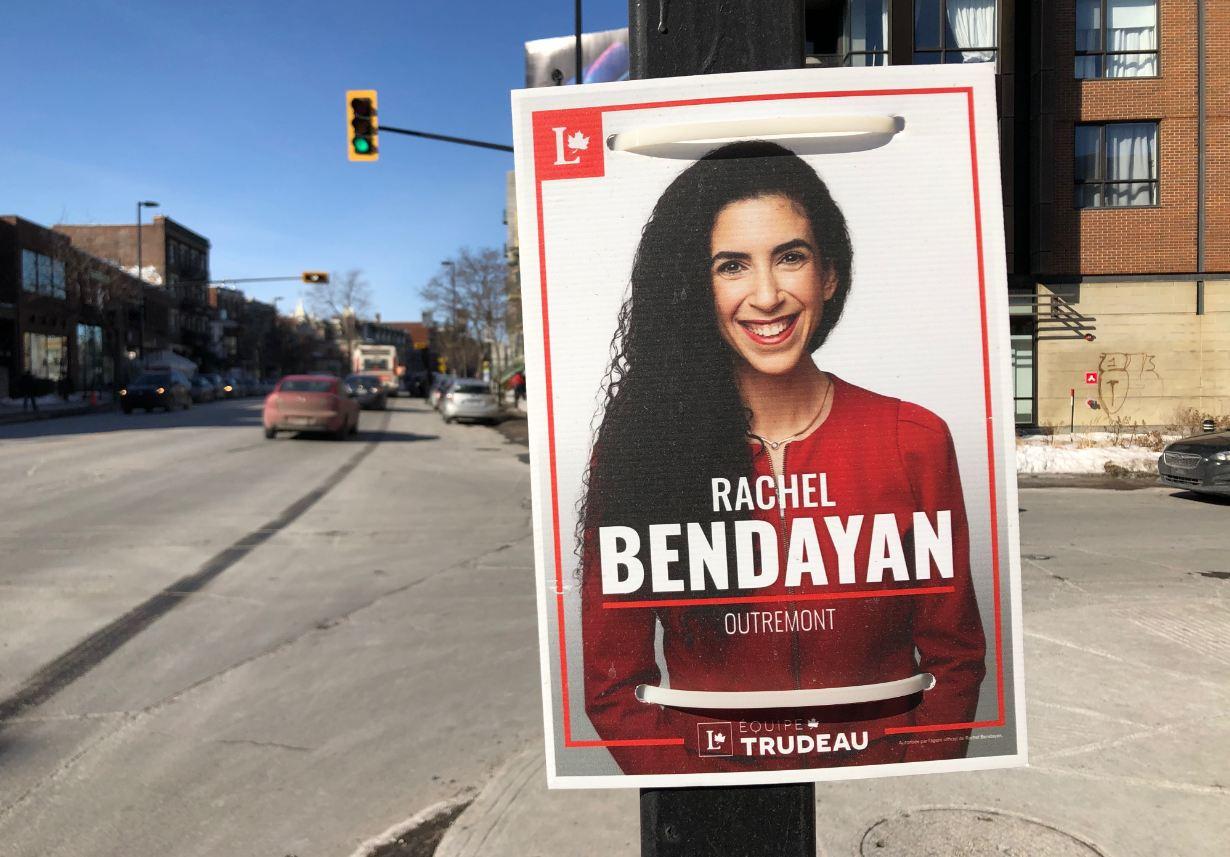
The Feb. 25 by-election in Outremont, which includes the Plateau-Mont-Royal borough, saw the victory of Liberal candidate Rachel Bendayan. In the past, Liberals have almost exclusively held the riding since 1935 until New Democratic Party (NDP) leader Tom Mulcair’s victory in 2007.

Bendayan won the seat with 40.4 per cent of the votes while NDP candidate Julia Sánchez came second with 27.5 per cent. Green Party Candidate Daniel Green came in third with 12.9 per cent, Bloc Quebecois candidate Michel Duchesne came in fourth with 11.1 per cent, and Jasmine Louras, the Conservative candidate, came in fifth with 6.1 per cent. The voter turnout was 21.35 per cent.

Daniel Minden, vice-president (VP) Communications for Liberal McGill, worked closely with Bendayan during her campaign. Other members of Liberal McGill helped by knocking on doors and hanging posters. Minden credits Bendayan’s victory to her efforts to make the campaign personal for the people in her community.

“She’s from the riding, and [she] really knows the community well,” Minden said. “She has a lot of connections with community organizations. She has been very involved with all those communities, and they came out to support her”.

Mulcair’s win in Outremont as part of 2011’s ‘orange wave’ saw the NDP earn official opposition status for the first time in Canadian history. However, in 2018, Mulcair resigned after the party voted to hold elections for a new leader, stating that that he would not run in Outremont again.

“We’re very excited that this riding has returned to the Liberal Party,” Minden said. “We hope that it is emblematic of something larger that’s going to come in October.”

Celeste Cassidy and Sarah Mikhail, co-presidents of NDP McGill, considered the historical tendencies of voters in Outremont to be a deciding factor in this by-election, in spite of their candidate and group’s efforts to mobilize NDP voters.

“It was a different candidate [this time around], and Tom Mulcair was the leader of the party, so that also holds some gravity,” Cassidy said. “The seat was traditionally Liberal, so it was not that shocking.”

However, both Cassidy and Mikhail remain hopeful for the party’s future following Jagmeet Singh’s victory in Burnaby-South, where he gathered 38.9 per cent of the votes.

“[Now that he is elected], I think that will really bring a shift into how his leadership is viewed and, hopefully, how the party fares in the coming months,” Cassidy said.

Ali Gürsoy, VP Finance of Conservative McGill, likewise explained the loss of the Conservative candidate, Mouras, as a symptom of the riding’s political history.

“In my opinion, many Conservative-leaning voters didn’t [come out to vote] because it was a safe Liberal seat,” Gürsoy said. “If it’s a safe seat, then turnout is low, and the opposition voters are just not interested in that campaign.”

However, the low voter turnout could also be a consequence of the vote being a by-election, which Minden, Cassidy, Mikhail, and Gürsoy all agreed tend to see lower numbers. Taharima Habib, communications coordinator at Apathy is Boring, a non-partisan charitable organization aiming to increase youth engagement in the democratic process, believes that by-elections are unfairly undervalued.

“By-elections indicate an empty seat in the House of Commons [since Mulcair left],” Habib said. “This means that [the Outremont riding] is not represented, and representation is important.”

The McGill clubs involved in the by-election, as well as Habib, also agreed that youth involvement in politics is crucial. Not only are youth the new voter demographic, but the current policies will affect their lives and should, therefore, include their input.

“It’s fantastic that we’ve seen campus clubs of all parties be involved in this election,” Minden said. “I think there’s a real sense on campus that politics, including federal politics, really affect students, and there’s a desire to get involved. As we lead up to the federal election in October, we hope that that sentiment only grows.”

Point-Counterpoint, Sports

Point-Counterpoint: Paying NCAA student-athletes

On Feb. 20, Duke University basketball star Zion Williamson suffered a knee sprain, reminding the basketball world that one major injury can jeopardize any college athlete’s future earnings. The National Collegiate Athletic Association (NCAA) and its member schools, meanwhile, make over a billion dollars a year off of the backs of Williamson and his peers. Is it time for the NCAA to compensate its athletes?

Pay NCAA athletes

Kaja Surborg

NCAA student-athletes are expected to maintain a high standard of achievement in both academics and athletics. This set of expectations places an immense amount of stress on student-athletes, especially those playing on scholarships. Additionally, more than 98 per cent of NCAA athletes do not become professionals in their respective sport, even though the huge time commitment of collegiate varsity sports prevents them from exploring other career options and from making the most of their education. The time commitment also makes it challenging for athletes to earn money through part-time work while they are in school, but, under NCAA rules, they are not allowed to receive any compensation from endorsements. Thus, they should be paid.

Student-athletes are not considered NCAA employees and therefore are not paid for the time and effort that they put into the games that generate millions of dollars. In 2017, the NCAA reported $1.1 billion in revenues—and not a single cent went to the athletes. The NCAA claims athletes receive an education in return for their contribution to their schools’ athletics programs. But, tactics such as using only certain grades to calculate eligibility GPAs make academic eligibility easier to achieve and, in turn, easier for coaches to demand that student-athletes commit even more time to their sport. This system prevents student-athletes from accessing a quality education and university experience.

Colleges also argue that they cannot afford to pay their players. However, any large Division I school generates huge revenues from their sports teams. Schools could pay the players who generate these revenues instead of spending their money on lavish new athletic facilities or raises for coaches in order to maintain their non-profit status. In 2007, for example, the University of Michigan approved a $226 million renovation project for the largest stadium in the United States. If a college can afford to own and maintain a 100,000-seat stadium, it can afford to pay its athletes.

Don’t pay, NCAA

Zoe Babad-Palmer

Student-athletes are, first and foremost, students. Paying them puts the ‘athlete’ before the ‘student,’ undermining the primary mission of a university. While athletics are an important part of the university experience for student-athletes, sports should not be their primary motivation for attending school. Less than two per cent of NCAA athletes go pro; if they were paid, they would feel pressured to devote even more time and effort to their athletic endeavours, further pushing their academics—and future—aside. Student-athletes are already attracted to programs with expensive facilities and big-name coaches, rather than academics. If universities were to tempt players with substantial paycheques, the recruiting process would only get more skewed, and smaller schools would suffer from their inability to match others’ offers while recruiting top prospects.

Both practically and ethically, there is no ideal way to compensate student-athletes. Teams could either pay all players equally or pay them by performance. Both options would lead to resentment between teammates. Further, many sports, like track and field or swimming, are less profitable to the NCAA than others, like football and basketball, but it would not be fair to pay those athletes less money simply because their sports are less profitable.

Clearly, the NCAA’s current system is flawed: Players are exploited, and coaches are engaging in illegal, underhanded recruiting practices. To fix its problems, the NCAA should require that schools redistribute their revenues toward programs that help their student-athletes, like academic support or mental health services, instead of paying coaches millions of dollars. By placing more emphasis on academics, the NCAA would help students—not just administrators and coaches. Fortunately, the system has already begun to shift in the right direction: Next year, the NCAA will redistribute Division I revenue to schools based on academic performance.

Paying student-athletes will only create more troubles. The NCAA needs to create a system that is focused on the holistic experience of its student-athletes. Maybe then the NCAA can fix its image and, more importantly, improve the lives of student-athletes during and after university.

Editors’ Pick:

The NCAA needs to pay up. Student-athletes are the most important members of collegiate sports, and, with each restricting regulation, the NCAA is only further taking advantage of their hard work to fill its own pockets.

Executive
Editorial, Opinion

Overworked and underpaid: Executive dysfunction in student government

On Feb. 25, Cody Esterle, Student’s Society of McGill University (SSMU) Vice-President  VP) Student Life announced that they would be taking time off for an indefinite period due to immense emotional and physical burnout. Similarly, VP External Marina Cupido resigned in Sept. 2018 citing mental health concerns while in office. In Dec. 2018, Post Graduate Students’ Society (PGSS) External Affairs Officer Hocine Slimani left his position as well. With executive elections fast approaching, student societies need to confront that burnout is inherent to a flawed structure. Underpaid and overworked executives are physically and emotionally unable to fully carry out all of the tasks in their portfolios or campaign promises—healthier systems of labour will only strengthen the work that SSMU and PGSS are already doing.

Students often underestimate the significant roles that student society executives play on campus. While executives garner unwanted attention during times of controversy, much of their job is mundane. Besides being responsible for facilitating many day-to-day operations, such as the SSMU Daycare and tutoring services, executives often handle multiple large-scale projects at a time. On paper, the job is a 40 hour a week commitment, but, in practice, that number can stretch to anywhere from 60 to 90 hours. For the amount of work executives do, they are grossly underpaid. For instance, as of 2016, SSMU executives are some of the lowest paid in Canada, making roughly $6,000 less than the $35,000 per-year average for Canadian student association executives at the time.

Institutional structures are part of the reason why executives are overworked: A small group of elected representatives come into year-long terms with multi-year goals. These representatives are tasked with handling budgets of over $1 million, running multiple businesses such as SSMU’s MiniCourses, and lobbying governments, all while completing their degrees. PGSS officers juggle additional academic responsibilities, such as holding teaching positions and conducting research.

When it comes to advocating for campus reform, administrative change at McGill often happens too slowly for an executive to see the results of their efforts during their term. What students may see as a failure to achieve campaign promises may be indicative of something more concerning: McGill’s current bureaucratic administrative structure makes achieving their goals almost impossible.

A lack of institutional memory contributes to these structural issues, as well. Previous and newly-elected executives’ terms overlap for a month in May, but this is hardly enough time for new executives to fully grasp all of the responsibilities of their roles. Student societies should consider creating more administrative full-time positions or extending elected terms to have more overlap. Additionally, student societies should hire more students and non-students to aide executives, taking over their more mundane, but time-consuming tasks, such as email correspondences.  

SSMU and PGSS serve indispensable roles on campus by supporting and advocating for students. General Elections are approaching soon, but student engagement and voter turnout continue to be low; in previous years, most candidates ran uncontested. Currently, there are only four candidates running for PGSS’s six executive positions. Assuming a more reasonable workload would likely help address the problem of uncontested executive elections, as well. There has been momentum toward reforming aspects of SSMU through a governance reform committee, and it is crucial that these efforts be sustained. Student societies need good executives to continue, improve upon, and create new tasks and projects: Making their jobs less grueling is a first step to keeping them around.

Read the latest issue

Read the latest issue