Latest News

Student Life, Word on the Y

Word on the Y: What lessons have you learned this year?

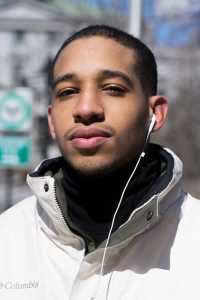
The end of the school year is a time for reflection: Closing textbooks for the last time, packing apartment belongings into boxes, and sharing one last beer with friends at OAP leave many looking back on the past eight months with a little more wisdom. The McGill Tribune caught up with students passing by the Y-intersection to hear the lessons they’ve learned from being part of the McGill community and the experiences that have shaped their year.

Q: What is the most important lesson you’ve learned this year?

A: Clare Kenny – U3 Psychology and Religious Studies

“Something that I have realized in the last couple of years but have acted on this year, is that I am much happier just taking four classes instead of five. I’ve found that it’s just not worth it to push myself in the end by taking five classes. It’s a significantly better experience to take four classes—[there’s] definitely [a] quality of life difference and that is important for mental health.”

Abdoulaye Mouflet – Graduated in January from Economics

“The biggest thing I’ve learned, that I think will be practical for me when I’m older, is money management. Learning not to spend all my money for the month in one week.”

Shanti Rumjahn-Gryte – U2 Anatomy and Cell Biology

“Get involved. Go to the events. Meet people in your program because that’s the only way you’re really going to make friends other than in lecture. That is something that I really didn’t do in U1 but I’m doing now and it’s a lot more fun.”

William Liu – Graduated in June from Pharmacology

“I think I’ve come out of McGill being more organized and being better at dealing with stress by writing things down when [I] get anxious, or exercising and having a good schedule.”

Julia Lesser – U0 Cultural Studies

“You should always go to office hours and make relationships with your profs. Because when you feel disconnected from class, you’re going to feel disconnected from the course as a whole, and especially when you have an individual relationship with the teacher it really strengthens the level to which you can really succeed.”

Berk Tokmak – U2 History and Classics

“When I came to McGill a lot of things were [going wrong] in my life. The more you fail, the more things you learn. I just had nothing but the courage to try things.”

Emma Hignett – U3 Microbiology and Immunology

“I came in with advanced credits like many students, but because of the degree I chose I have to finish in four years instead of three. But it’s been really nice because [you get] a lot more elective space to explore your options [….] Don’t rush things, take advantage of what university has to offer.”

McGill, Montreal, News

Doctors demand that caregivers be allowed to accompany children

Doctors from the McGill Faculty of Medicine are fighting to repeal a Quebec policy that prevents parents from accompanying their children during health-related air transport, most recently in a 90-minute testimony on March 21 to the Commission on Relations Between Indigenous Peoples and Certain Public Services in Quebec.

Dr. Samir Shaheen-Hussain, is a pediatric emergency physician and assistant professor in the Faculty of Medicine at McGill University who helped spearhead the initiative. He sees the policy as an example of the mistreatment that Indigenous communities face when dealing with the government. Children in these communities often have to be transported from remote areas by plane and face the greatest linguistic barriers. Further, he claims that neither he nor journalists, lawyers, or the Commission’s legal counsel are able to locate the actual wording of the policy.

“There have been plenty of opportunities for the provincial government to lead the way as an innovator in the field of medical air transport by being responsive to the concerns raised by Indigenous communities,” Shaheen-Hussain wrote in a letter to the Quebec Aeromedical Evacuations (EVAQ). “Instead, it chose to opt for the status quo, which is why Quebec is an aberration across the country by maintaining such an antiquated airlift policy for kids.”

In December 2017, Shaheen-Hussain worked with two colleagues at the Montreal Children’s Hospital to demand reforms from EVAQ. He is disappointed by the government’s reluctance to act, and praises movements like the #aHand2Hold campaign for highlighting the importance of support during medical airlifts.

“The concerns of Indigenous communities and the well-being of their children are not priorities for the provincial government,” Shaheen-Hussain wrote. “Otherwise, the government would have reviewed its egregious pediatric airlift policy long before the public outcry from the last few months forced it to do so.”

Shaheen-Hussain reports that several children are airlifted alone every week. This places the onus of the language barrier on Indigenous children, because the medical teams are often not versed in Indigenous languages. The language barrier can be a major issue, with supporters of reform arguing that communication is key to effective medical assessment.

“[The language barrier] is an obstacle to many because they feel they can’t properly tell the doctor and nurses how they feel, what happened,” Isabelle Picard, a member of the Hurrone-Wendat Nation, said. “When it is kids that fly alone and don’t speak English or French, it is a major obstacle. Plus they [have] never been in a big town with so many non-Indigenous people.”

Cindy Blackstock, executive director of the First Nations Child and Family Caring Society of Canada, has consulted Indigenous leaders and community members about the trauma of sending sick children alone to a hospital. She adds that it is also a struggle for family members to book a commercial flight to be by their children’s side. Overall, Blackstock finds the solitary airlifts reminiscent of Canada’s colonial past.

“For some parents, the sight of their children leaving alone on a plane also brings back traumatic memories of children being taken by plane to residential schools,” Blackstock said.

Shaheen-Hussain intends to continue pressing the provincial government to address systemic barriers that Indigenous peoples face when receiving health care.

“We emphasize that every single child living in Quebec must be accompanied by a member of their family for aeromedical transport, but this is especially true for Indigenous children due to the innumerable injustices inflicted on their communities,” Shaheen-Hussain wrote. “Assuring that parents can accompany their children would be a step to mark a rupture of yet another practice that separates these children from their parents; a practice that risks perpetuating public distrust in Quebec’s healthcare system.”

Commentary, Opinion

Campus Conversation: First year residence—a house or a home?

Editor’s note: For many McGill students, the first campus community that they encounter is in residence. The McGill Tribune Opinion section asked contributors to draw on their personal experiences living in residence (or not), to answer the question, “Do McGill residences facilitate community-building, and if so, how?”

Bryan BuragaLucas BirdKyle DewsnapGabriel Rincon

Gardner Hall

Bryan Buraga, Contributor

Starting at McGill University this past September, my housing situation was uncertain. I was one of the hundred or so unfortunate students who did not know which residence they would be living in until late August. I was lucky to be assigned to Gardner Hall. One of the first things I noticed after moving into residence in August was how diverse the body of residents was. I met introverts, extroverts, people from my hometown, and people from an ocean away. I felt like I could find a group that I could call my friends—and soon after, I did.

An ideal first-year community is one that is welcoming to people from all walks of life. For students who enjoy drinking and partying, the near-nightly legendary pre-games in the common rooms characterize the atmosphere of Upper Rez. However, for students who are not partiers or are more on the introverted side, this side of McGill residences risks alienating them in a place they are just beginning to call home.

At the same time, I found it easy to find friends among both groups of people. I had plenty of exposure to partiers, but was also able to reach out to more introverted people in intimate settings, such as floor teas and coffeehouses.

As I met other McGill students throughout the year, I found that I could instantly form a connection with those who also lived in Upper Rez. This was due to our shared experiences, from struggling up University Street on our way home, to dealing with co-ed washrooms. My friends in hotel-style residences considered those of us who were in dorm-style residences lucky, because it was easier for us to meet people in this setting. The familial environment in Gardner stood in stark contrast to the isolation they sometimes felt due to their style of residence. They felt that we had more of a sense of community—and honestly, I agreed with them. Like actual hotel guests, it is much easier for hotel-style residents to minimize their interactions with their neighbours. Dorms offer more opportunities to see the same people over and over again, especially in common spaces like the washrooms.

Residences provide a place for students to find their first community at McGill, and while school clubs or intramural teams can provide that welcoming space as well, being closer to other people who are going through a similar experience is more conducive to forming a sense of community. This sense of community is what built my time in Gardner into a formative student experience.


MORE House

Lucas Bird, Contributor

I live on Avenue des Pins, in one of McGill’s big, brown stone MORE houses. The house holds roughly a dozen first-year students, including myself. While my housemates are lovely people, and we resolve living issues pretty well, I am not super close with any of them.

As far as I can tell, this goes for most of the other people in the house. We say “Hi” when we pass each other in the hall, recount our days when we burst into the living room, but no one is particularly attached to each other. We each have our own separate friend groups, which the other people in the house aren’t necessarily aware of—except for happenstance, like the time I encountered my floormate Wendy and her friends playing Just Dance at 2 a.m. This polite separation is exactly what I hoped for when I ranked the MORE house as my first choice, because it fosters a trait that I have cherished throughout my first year experience: Independence.

In my experience, these residences are not particularly good at cultivating an internal community. Admittedly, this might be because I don’t pay close attention to my house advisor’s emails regarding teatime and pizza parties. More importantly, though, I think it’s because that isn’t what the MORE house is meant to do. Out of all the first-year residences, the brown stones are as close as a student can get to apartment-style living. There are separate rooms, a single kitchen, and some common areas, but all are designed around the general structure of autonomous living. Many students would say rez communities are crucial to first-year life, and they’re correct, but proximity shouldn’t be the defining factor of a community. Strong relationships are formed through agency, not adjacency.

Within the first five hours of my arrival at McGill, I was in the basement of a different first-year residence, University Hall. Hardly a day has passed where I haven’t spent at least a few hours in that very same building, because it’s home to the people closest to me. This place has served as a sheltering abode for me during my first year. I have become inseparably close with its inhabitants, to the extent that some of them were surprised to learn late in first semester that I didn’t actually live there.

University Hall has become my community because I sought it out, and it welcomed me with open arms. The MORE house didn’t hand me my crew on a silver platter—it encouraged me to go out and create a community of my own. My friends are not my friends just because we live in the same building. I chose them and they chose me, and I wouldn’t have it any other way.


Solin Hall

Kyle Dewsnap, Contributor

Like most first years in my residence, I ranked Solin Hall lowest on my rez application because it is particularly far from campus. While other residences are peppered around McGill’s Downtown campus, Solin is in the Sud-Ouest neighbourhood, a three-stop metro ride away from campus. So when I learned that I was going to be put into an apartment at Solin, I was a bit apprehensive. However, now two years into my degree at McGill, I can say with certainty that Solin Hall has created one of the best communities for me at McGill.

Although Solin is far away from campus, the unique experiences that the residence offered quickly outweighed the slight inconvenience of the commute. Solin is an apartment-style rez. Each apartment has two to four bedrooms, and a common area with a full kitchen. Meal plans are optional, meaning most people who I lived with in Solin opted to cook for themselves. I was lucky enough to be in a four-bedroom apartment, which taught me the virtues of shared living (if someone says their cast-iron pan is off-limits, that means it’s off-limits). Living in such a unique space allowed me and my roommates to form unique and genuine bonds that come from sharing an apartment, rather than just sharing a hotel room.

Our floor fellows took good care in ensuring that the first two weeks of rez were filled with ice-breakers. However, unique to Solin, one floor fellow is designated as a project manager, whose sole job is to organize a year-long project made up of monthly rez-wide activities centred on a theme. In our year, the theme was metro-based. This meant that Solinites didn’t suffer the same kind of “post-Frosh cooldown” that students in other residences did; there was always something going on at Solin that kept us excited to get out of the McGill bubble and explore the city.

Perhaps united by our collective anxiety over needing to wait in line at Berri-UQAM metro station for an OPUS card, the bond we Solinites formed was instantaneous and strong. I met my current roommate on the first night of move-in, and my old roommates and I still talk whenever we bump into each other on campus. Traditions that my friends and I began in our first semester still occur regularly today. While it was a minor inconvenience to take the metro to get to class, the Solin community helped me get through the transition to a new city and school, and was easily the best part of my first year.


Off campus housing

Gabriel Rincon, Columnist

I didn’t live in a McGill residence in my first year. As a transfer student from Saint Mary’s University, I wasn’t guaranteed residence, so I had to find housing off-campus. I came to McGill firmly believing that living in residence was the best way to find a community of friends at the University. As a result, I was worried that I would have trouble making friends. I tried to replicate the McGill rez experience by living in a hotel-style student residence close to Concordia called St. Cathy’s. I haven’t stayed in touch with anyone I met there.

Needless to say I didn’t make any friends, or interact with my building community in a meaningful way. Living alone really wasn’t conducive to being social, especially for a person as introverted as myself. This meant I didn’t really experience the stereotypical first-year McGill rituals of house parties and clubbing on the weekend. And since I didn’t necessarily participate in the drinking culture, McGill seemed a little lonely at times.

Instead, I found my communities by participating in extracurricular activities, including writing for The McGill Tribune and playing intramural basketball. I also made one of my best friends in class and he brought me into the Kappa Alpha Society. At the society I have made what I know will be lifelong friendships. But by far the most important community for me has been my family. My aunt and uncle live here in Montreal and were incredibly supportive in my first year, and through them I met other Colombian families in Montreal. And, of course, my mother and father were always there for me even though they live far away. Unlike any other college freshman, I called my mom everyday.

Although I think I have found my communities at McGill, if I could do it again I would’ve preferred to live in McGill residence. Living alone was very isolating and I simply didn’t interact with as many people as I would’ve liked. Finding a community where one feels at home is incredibly important for first-years, not only to avoid the loneliness, but also because Montreal is a great city to experience with friends. I feel like I did miss out on some of those experiences, especially in first year. However, the reassuring thing about McGill is that it’s so big that everyone is bound to find a community that suits them, just as I did.

Sports

Join the pack: Skating through the Montreal roller derby scene

Georgia W. Tush founded Montréal Roller Derby (MTLRD), the first flat-track roller derby league in Canada, in 2006. Today, the league consists of three home teams (Les Contrabanditas, Les Filles du Roi, and La Racaille), two “All Star” teams that compete internationally (Sexpos of Montréal and the New Skids On The Block), and the Smash Squad, where rookie skaters practice their skills before being drafted to a team. MTLRD is a non-profit organization in which all players, referees, announcers, and organizers are volunteers. In 2009, MTLRD became a part of the Women’s Flat Track Derby Association (WFTDA), the international governing body for roller derby, comprised of 405 Full Member leagues and 41 Apprentice leagues. MTLRD currently sits eighth in the WFTDA team rankings.

Roller derby is a strategic, full-contact sport, comparable to a cross between rugby and chess. Matches are held on a flat, slightly-lopsided oval track and divided into several rounds called “jams.” Each of the two competing teams puts five players on the track at a time. These players are divided into three main positions: One jammer, one pivot, and three blockers. Over the course of each jam—which can last up to two minutes—jammers skate around the track and attempt to pass players on the opposing team, who move close together in a “pack.” Jammers earn points for each player they pass. Meanwhile, members of the pack—blockers and pivots—can impede opposing skaters through regulated contact such as hip checks. As an added twist, pivots can become jammers by “passing the panty:” If a jammer removes their starred helmet cover (also called a “panty”) and successfully passes it to the pivot, they switch roles for the rest of the jam.

First-time observers may have difficulty grasping the intricacies of the sport, but roller derby is open to anyone brave enough to try it. Brigitte Charest, known as “Eye Roll” on the track, is co-captain of MTLRD’s Smash Squad and a relative newcomer to the sport. In an email to The McGill Tribune, she outlined the process of joining MTLRD.

“First you need to complete a bootcamp, which was held last summer from August to November 2017, and pass what we call the ‘minimal skills test,’” Charest wrote. “This bootcamp is to [ensure] that you can learn the basics of quad skating and Roller Derby action to be safe for you and your teammates. Once [I passed the test], I entered the league in December 2017 for the 2018 Season.”

After attending a roller derby match for the first time last summer, Charest fell in love with the sport.

“I saw my first derby game last summer and LOVED it!” Charest wrote. “I liked the fact that it was on quad skates (I don’t like running), that it is a team sport, athletic, rough, physical and that I saw a bunch of really strong and smart women coming all together on the track. I went to the last [two] games of the season and I knew I’d wanna try.”

For Charest, getting involved in MTLRD has been deeply rewarding. She explained that the tight-knit derby community in Montreal has played an important role in her derby experience.

“It is truly empowering, especially as a young woman,” Charest wrote. “The league is managed by the skaters, for the skaters! Being a part of the league is truly being part of something much bigger than ourselves. We can lean on each other, and it feels great to be there to support other people too. I like having responsibilities, helping, and mostly learning new experiences. The roller derby community in Montreal is a large family! We get to know around 200 new amazing humans in a matter of [a] few weeks!”

Although derby is a full-contact sport, Charest emphasized that the MTLRD community is open to individuals from a range of different skill levels and backgrounds.

“If you have an athletic background it will be easier to get started as [roller derby is] rough on your body,” Charest wrote. “But, skaters [come] in [all] ages, shapes, heights, genders, backgrounds and everyone uses their strength in their own way. In this game, all we have is our body and our mind—there is no ball, or puck, or stick. Roller derby fascinates me [because of] how inclusive the community is. From the first practices you feel in a safe environment and welcome by everyone around.”

Charest stressed that even those who are not interested in participating as skaters can still get involved in MTLRD.

“There [are] also great other ways to get involved,” Charest wrote. “The derby community isn’t just about the skaters, it couldn’t be. We could not be playing if it wasn’t [for] our refs, volunteers and [of] course… fans.”

Despite only having skated for a few months, Charest is deeply immersed in Montreal’s roller derby scene. The sport has helped her develop strong relationships with her teammates and other members of the community.

“In Montreal there [are] a lot of people [involved],” Charest wrote. “At first it can be a bit overwhelming or intimidating to meet all these new people. But there is a good [caring] relationship [between] everyone. I am very close to some teammates as we do activities outside of practices, and some people I’m just starting to know them. I would describe my relationships [as] genuine, caring, natural, honest, fun, considerate, [and] kind.”

Charest highly encourages interested individuals to explore roller derby. MTLRD provides a welcoming space for interested individuals who want to dip their toes in the world of organized sports.

“Everyone can give it a shot, really!” Charest wrote. “If you can get your hands on a pair of skates and protective gear, you’re in for a fun adventure.”

Out on the Town, Student Life

Slicing into the history of McGill Pizza

Ever since humanity invented flatbread, we’ve wanted to embellish it with savoury sauces and tasty toppings. When students tire of eating overpriced wraps from La Prep, waiting in long lines at Dispatch, and digging for that elusive toonie at a samosa sale, McGill Pizza is there for them—a welcoming space to indulge in their favourite foods.

McGill Pizza has been a student favourite since it was founded in the 1960s and, although it does not have a formal connection to the university, it is regularly visited by more McGillians than your average 8:30 a.m. elective.

“It was always named McGill Pizza, just because it was close to McGill,” Chef and owner Costa Deligiannis said. “Most of my customers are students, professors, staff of McGill, all sorts of different people.”
Specializing in classic diner comfort foods, McGill Pizza offers a reminder of a home-cooked meal, with a touch of Greek influence passed down through the family over generations.

“[Our menu] comes from the family, they’re original recipes,” Deligiannis said. “All my family works here: My brother, my sister, my dad, my mom, [and] my brother-in-law as well, it’s a family business. My parents are originally from Greece, but everybody else is born here in Montreal, born up the street actually in the Royal Victoria [Hospital].”

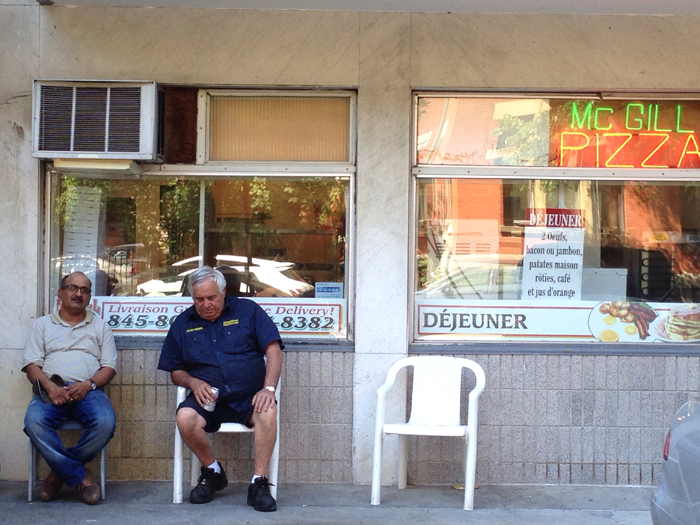
The restaurant’s glowing neon tube sign is hard to miss when walking down Milton street—its vintage exterior seemingly packed with memories of McGill students over the years. It’s interior is no different: Vintage McGill faculty crests line the walls, modest metal napkin holders sit atop simple black tables, and paper place settings greet each new customer. According to Deligiannis, the restaurant’s old school vibe is intentional.

“I have kids come back, this weekend actually this kid came back, graduated must’ve been 12 years ago, and he came in and McGill Pizza was the exact same way he left it,” Deligiannis said. “And that’s what I try not to change. A lot of restaurants try to renovate and do this and that, yes you paint, but you keep the same idea. The customer that graduated 10 years ago is going to come in here and is going to say it brings him back memories.”

But McGill Pizza’s connection to alumni extends far beyond the past decade; Deligiannis has formed an iconic bond with students from long before.

“[I remember when somebody’s] grandfather came back to McGill, he had gone to McGill in the ‘70s and he remembered McGill Pizza,” Deligiannis said. “He was here for his grandson’s graduation. So they were both basically two different eras, sitting at the same table, enjoying the same food which was made back then. That’s pretty cool. It’s very special.”

Part of the restaurant’s popularity, of course, comes from Deligiannis’ own gregarious character. On most days of the week you can find him near the register, ready to take orders and banter cheerfully with customers.

“When you’re talking about the smile, being happy, it’s your business, it’s something we take dearly,” Deligiannis said. “It comes naturally, someone comes into your home you’re going to be happy, no matter what happens you serve with a smile and try to give the best service you can. And that’s it, that’s how it’s done.”

In fact, the eatery’s hours more or less follow the average student’s schedule. Deligiannis enjoys taking his vacation over the summer break (and, presumably, would enjoy time off over a fall reading week as well.)

“The [business] season is about from the end of August to the end of May, with the summer obviously being quieter,” Deligiannis said. “We go with the McGill schedule, so during the holidays when McGill is closed we get to enjoy our holidays as well [….] So that’s another cool thing, a lot of restaurants don’t have […] that freedom.”

Highlighting his favourite recipes from the restaurant’s vast menu, Deligiannis is particularly proud of his father’s tzatziki recipe and his Greek-inspired spaghetti sauce. But like many chefs, Deligiannis will never be satisfied: He hopes to one day serve ice cream and smoothies at the restaurant. Yet, above all, his favourite item to both eat and make is, appropriately, pizza.

“The pizza sauce [and] the dough, this is something my uncle originally came up with, it’s always been in the family,” Deligiannis said. “It’s more of a deep-dish pizza, it’s a pan pizza, lots of cheese. A lot of people say Chicago is known for the deep dish but I’d say Montreal, in fact, [popularized it] in the ‘50s, ‘60s.”

And this style of pizza—along with the rest of the diner’s menu—certainly goes over well with students. In researching students’ opinions of the restaurant, The McGill Tribune did a quick informal call for testimonials on Facebook, and was met with a flood of positive responses.

“McGill Pizza… I don’t even know where to begin… It really is a second-home for me,” Hannah Rapaglia, U2 Arts, wrote. “It is the all-day breakfast we deserve and need. McGill Pizza can be TRUSTED on all fronts: The breakfast, the pizza, and the gyro are all of the highest caliber. Also, the service is so friendly?? There is a waitress there who I really want to befriend!!! TENS ACROSS THE BOARD.”

Amid the tiring cycle of university life and the stress of maintaining a respectable GPA, some students praised McGill Pizza’s reliability.

“At our lowest lows and our highest highs, McGill Pizza, there for us without compromise,” Nikolas Dolmat, U2 Arts, wrote.

Student Life

Viewpoint: Popping my way into the McGill bubble as a Montrealer

Starting university at McGill required very little adjustment for me. I had lived my entire life in Montreal, in my parents’ home in Côte-des-Neiges. By the time I was enrolled in classes, I was already familiar with the campus, given that my mother, an employee of the university, had taken me to work every couple of weeks from a very young age. I already had a post-secondary degree from Dawson College and a tight-knit group of friends whom I met in high school and CEGEP. I had a long-term partner, a part-time job, and a solid, well-established life in the city. However, I quickly noticed that many of my first-year peers at McGill were living very different lives from my own.

For starters, many of them lived in residence, away from their families and friends for the first time. And given that Quebec’s legal drinking age is lower than in surrounding provinces and states, it felt like the majority of students around me were just discovering what it felt like to be able to drink legally. Even though I was only about a year older than those other first years, I felt we couldn’t relate. Admittedly, this was partly due to a false sense of superiority that I had developed to shield myself from the fact that my university experience was leaving me feeling very alone. While I wanted to meet new people and become more involved, my anxiety about being unable to relate to other students kept me from taking that first step.

During my first three semesters at McGill, I was very aware of the vibrant community of students bustling around me. Meanwhile, largely due to my lack of involvement in events on campus, I had made no lasting university friendships. While other students attended multi-day drinking events, mingled in rez, and joined clubs, I would come to campus to attend class and leave right afterward. I never went out with other McGill students who weren’t already friends of mine from high school, and I still didn’t know what Carnival was, or where all those onesies had come from. The concept of the “McGill bubble” was familiar to me—but only because I felt like an outsider with little idea of what was occurring inside that bubble.

Even though I was happy and fulfilled in my life outside of McGill, I felt a very strong fear that I was missing out on the university experience. I had already made peace with the idea that I would never explore McGill the way that first-years coming from outside of Montreal would, but I still wanted more of a quintessential student experience than I was getting.

However, I knew that in order to be happy during my time at university, I needed to get over the mental block that was keeping me from meeting other students. Following the advice of a close friend from CEGEP, I got involved with The McGill Tribune where I got to meet other students with similar interests to mine. I quickly found that befriending students from varying hometowns and backgrounds was surprisingly easy. This shattered my assumptions about not being able to relate to people from outside the province, and allowed me to develop relationships that have made me a more well-rounded human. Now, on the cusp of graduating, I am deeply proud of the community I forged at McGill, and the fact that I have done far more with my time here than simply complete my credits.

Being a native Montrealer can remove the incentive that most students have to build a community at university. However, the university experience only amounts to what one makes of it. Although finding the motivation to make that extra effort was something that didn’t come naturally to me, becoming more involved on campus was without a doubt the only way I was able to become fulfilled here, and graduate knowing I had the made the most of my time at McGill.

Ask a Scientist, Science & Technology

Ask a Geologist: How do islands form?

Earth’s surface is constantly changing due to a number of natural processes: Rivers transport sediment, glaciers carve valleys, and colliding tectonic plates build mountains. One of the planet’s most impressive talents, however, is the formation of islands.

In recent decades, various new islands have popped up. The island of Nishinoshima off the coast of Japan formed from an eruption in 1973, and Yaya Island formed in 2013 near Russia. In Newfoundland and Labrador, sea level rise and coastal erosion turned a former peninsula into an island called Sandy Point in the 1960s.


Nishinoshima island (hakaimagazine.com)

Although islands can be formed by a variety of processes—such as clashing continents, sediment deposition, and glacial retreat—one of the most prominent ways in which they appear is through the convection currents of the mantle, the layer of earth directly below the crust. These currents cause Earth’s tectonic plates to move and interact with one another, which leads to phenomena like earthquakes and continental drift. When tectonic plates are pushed and pulled apart, they form volcanoes, causing eruptions when the plates are pulled apart. As hot magma rises from the crevasses created, it eventually builds up to form islands.

According to Christie Rowe, a geologist and associate professor in the Department of Earth and Planetary Sciences, there are two types of submarine volcanoes that create islands: Island arc volcanoes and hotspots.

“[Island arc volcanoes] are formed when there’s a subduction zone, so the oceanic plate is actually going down into the mantle, where it triggers melting,” Rowe said in an interview with The McGill Tribune.

In this way, a convergence of two plates can result in a long belt of simultaneously active volcanoes, like those of Guam, Tonga, Fiji, and Alaska’s Aleutian Islands.

On the other hand, hotspots are point sources of magma that are not associated with a plate boundary. They typically form island chains like Hawaii, Réunion, and the Azores.

“[Hotspots] can also come up under continents,” Rowe said. “Yellowstone [National Park] is a mantle melt source that’s not associated with a plate boundary.”

The mechanisms that create hotspots are not fully understood. Nevertheless, all volcanoes essentially work in the same way. An island is formed when magma builds up and breaks the ocean’s surface. In some cases, like the island of Hawaii, land masses merge together.

Each volcano is a bit different, and so are the rates at which they form. For many volcanoes, formation can take thousands of years, though some volcanic islands can sometimes appear quite suddenly.

“In terms of becoming an island, it depends on how deep [the] water they’re in [is] and how productive their magma source is,” Rowe said.

The formation of mud volcanoes—which are not true igneous volcanoes, since they don’t contain lava—can be observed in a day. In 2013, a 7.7-magnitude earthquake hit Pakistan and caused a mud volcano to form the island Zalzala Koh, which sank into the ocean three years later.


Surtsey Island (arctic-images.com)

In the 1960s, a three-year-long volcanic eruption off the southern coast of Iceland gave birth to a new island that has since been colonized by plant and animal life. Now a UNESCO World Heritage Site, Surtsey is a valuable location for scientists to study ecological succession.

“There are whole ecosystems basically based off the colonization of volcanic islands,” Rowe said.

Still, the transformation of a barren magma island to one able to support life is not unique to Surtsey. Earth is often called  the ‘Dynamic Planet’ because it is always changingvolcanic islands like Hawaii and Réunion remind us of nature’s ability to do so.

Out on the Town, Student Life

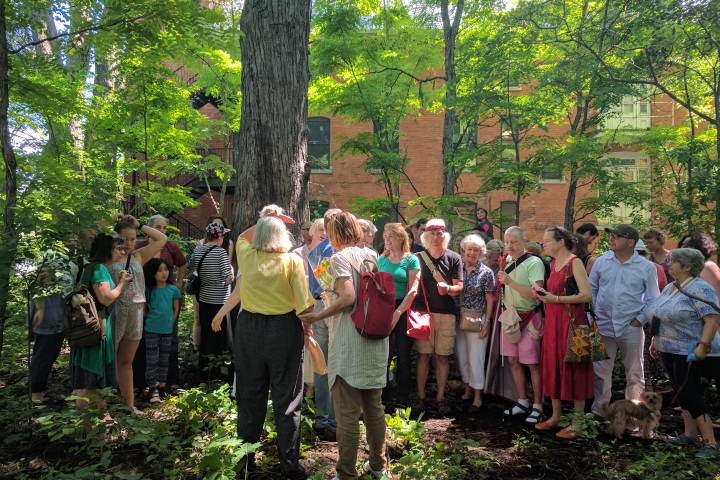
Going for the green: A look into the fight to save Milton-Parc’s Notman Garden from development

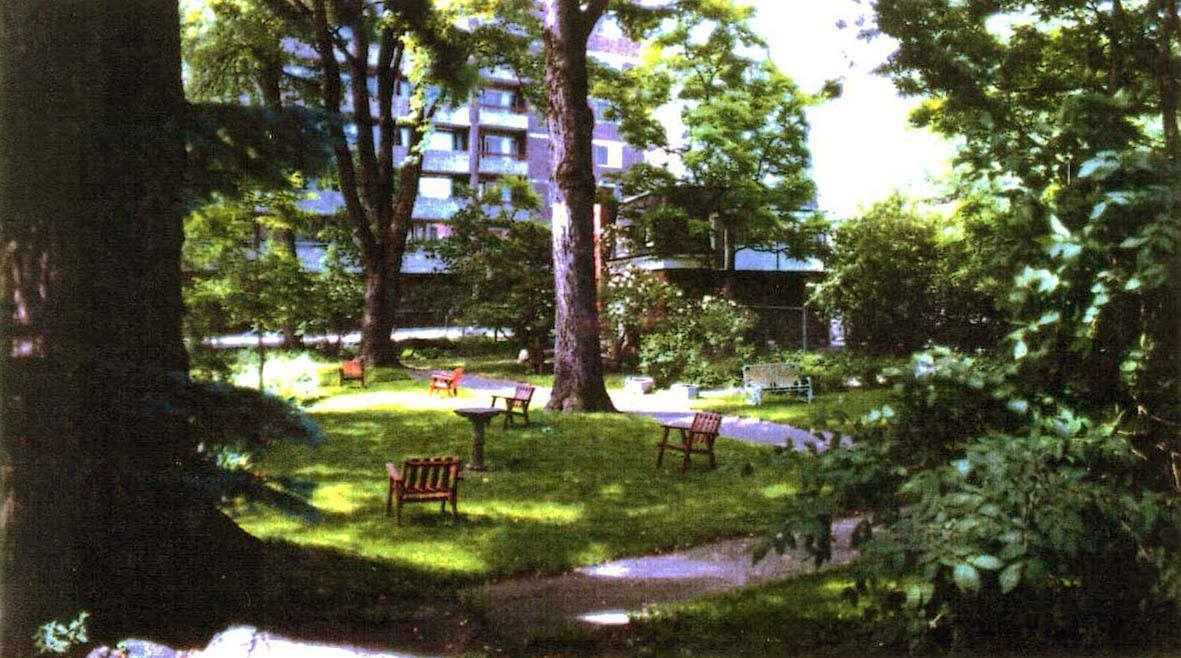
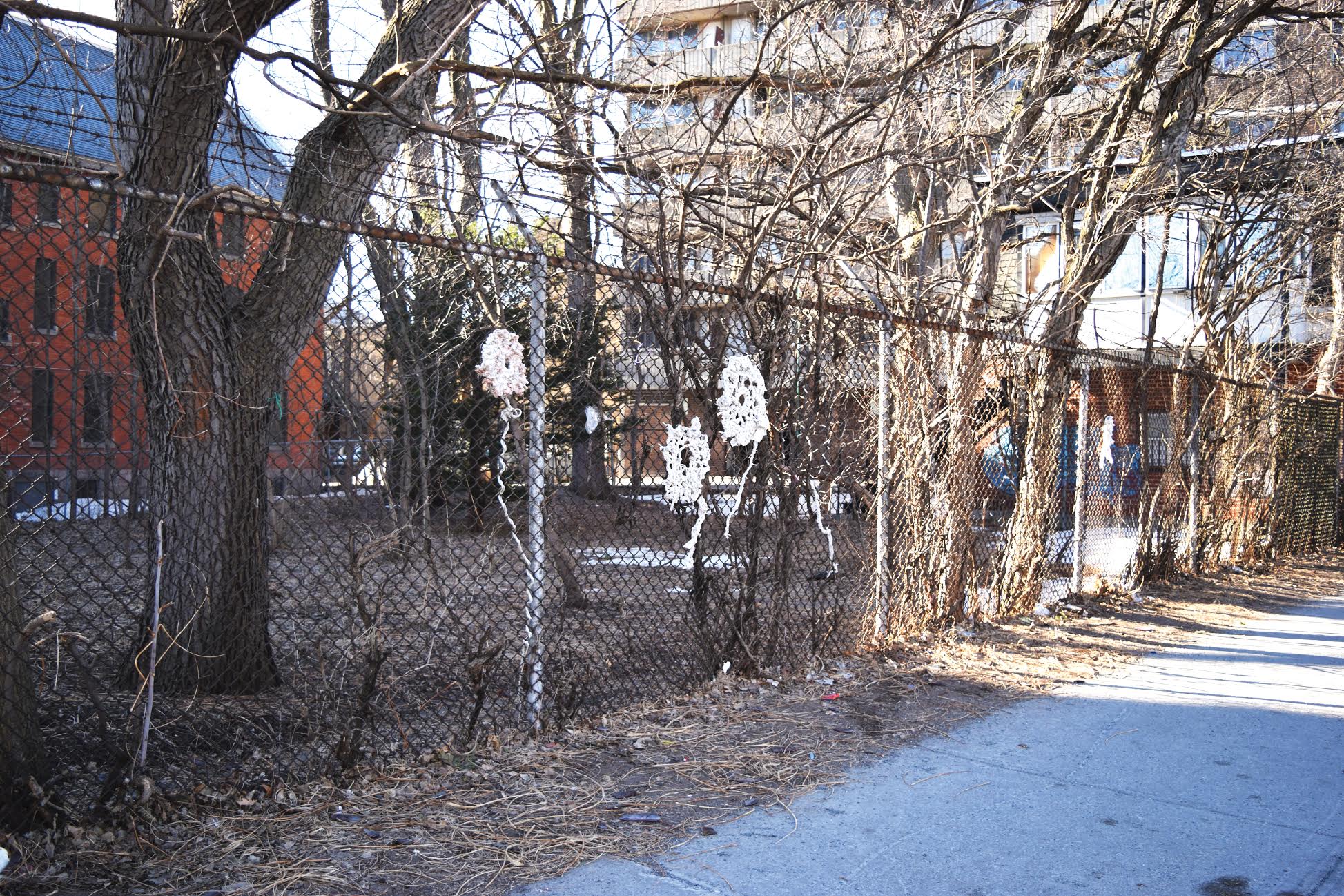
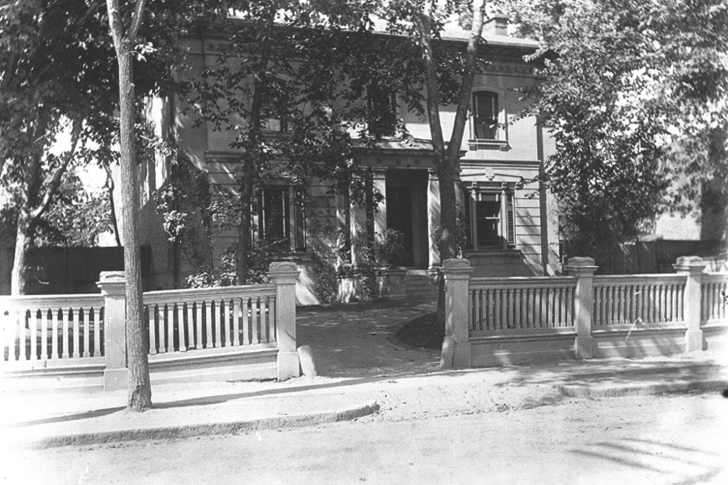
It’s easy to miss Notman Garden when walking past the intersection between Milton and Clark streets on a brisk April day. Under the strain of cold weather each year, the grass in the 1,000-square-meter area goes brown and the centuries-old trees become dry and bare. But this humble spot has a rich history to it, as the focus of activist efforts within the Milton-Parc community for decades.

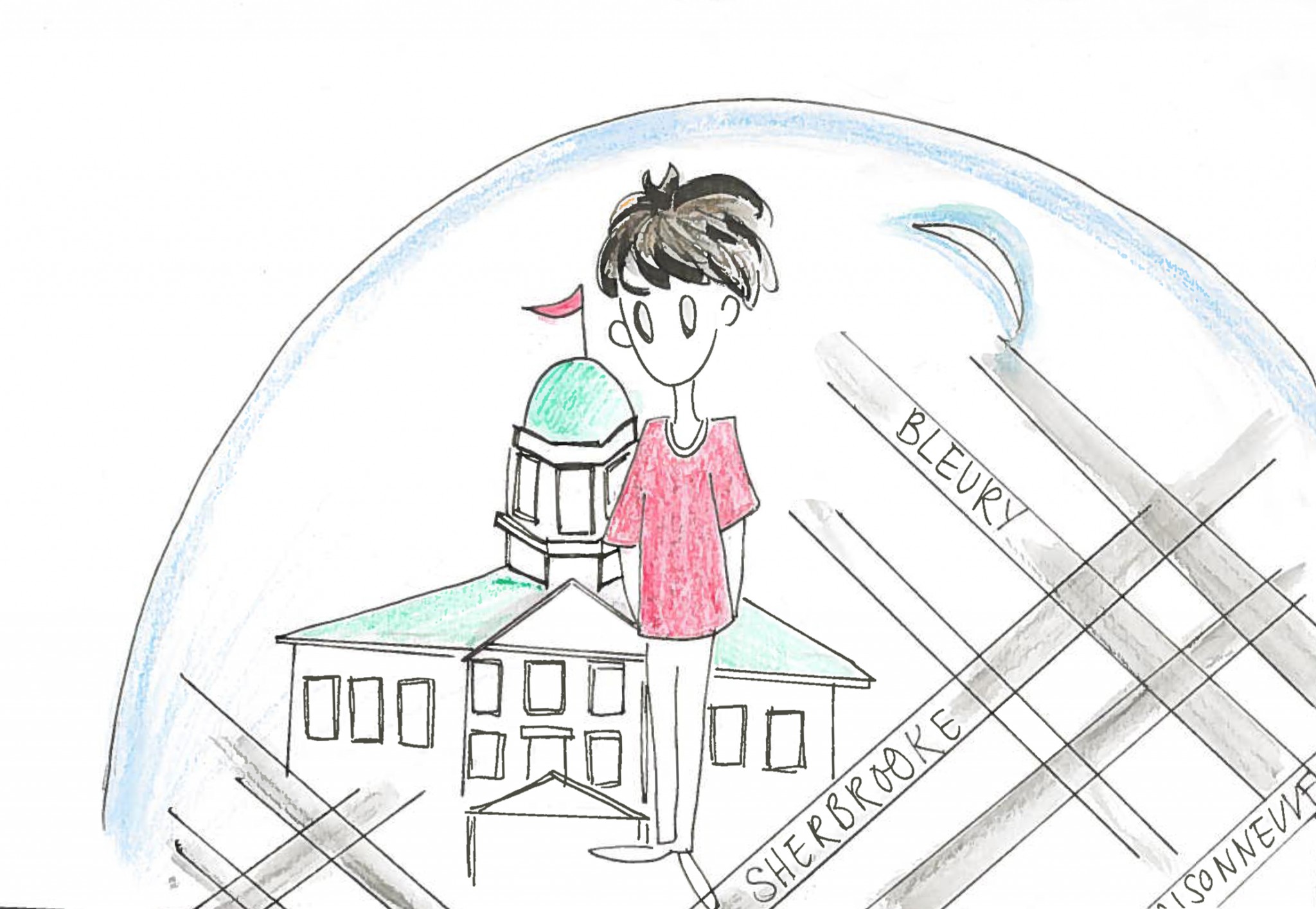
Renowned architect John Wells built the garden in 1844 behind the heritage Notman House on Sherbrooke and Clark streets.

The house and garden were both passed down through famed Canadian families over several decades: The Molsons purchased it in 1866, then photographer William Notman followed suit in 1876, as did the Drummond family in 1893. In 1894, the house was renovated into a hospital for women with incurable ailments, and the garden was transformed into a leafy oasis of care and comfort for patients in their last years.

Fast forward 100 years, and the garden property has been separated from the house and sold to a development company. Despite the government granting Notman House protection as a historic site in 1979, the same security was not afforded to the garden. While its sale sparked outrage in the community at the time, this and every new threat to the space over the past twenty years has led Milton-Parc residents to come together to protect the land.

“In the Milton-Parc area, people have been mobilizing for quality issues and heritage issues and green space issues, transforming back [alleys] into common gardens, since the 1970s,” Dinu Bumbaru, Policy Director at Heritage Montreal, said. “So there’s really a special culture.”

This decades-long fight came to a head in May 2017, when a local condominium development company began vying to purchase the land, now valued at an estimated $1.8 million. But this threat did not fly with residents in the surrounding Milton-Parc community, who quickly mobilized to save the garden from being demolished and turned into condos.

“It’s not a mere green space or a set of trees for us, it is a bit of a historic garden associated with a very appreciative historic building,” Bumbaru said. “And this has been our statement since the first battle to save it around 2000.”

After months of protest and heated dispute, residents’ activism finally paid off. The Plateau Mont-Royal borough council voted for the City of Montreal to appropriate and preserve the land at its meeting on Feb. 5. The council’s resolution will hand ownership of the land to the city government, who plan to turn it into public space for the surrounding community.

While the garden will be open to use by long-time residents and McGill students alike, the student community has been relatively disengaged from the fight to save it. This is, in part, due to the transience of the student population, which turns over every four years. During the campaign, Students’ Society of McGill University Community Affairs Commissioner Julien Tremblay-Gravel experienced firsthand the challenge of involving the student community in the fight for the garden.

“It’s a nice space and I think it’d be made nicer by student involvement,” Tremblay-Gravel said. “We have different schedules [from the permanent residents] and can fit a lot of stuff in. So we can be very helpful, we can be a positive force in the neighbourhood.”

Being the most densely populated neighbourhood in Montreal, the Milton-Parc community has very little green space, making it all the more important to preserve. To Bumbaru, green space is essential to a healthy urban community.

“The case of the Notman Garden is quite special, but it’s a reminder that there are little gardens all over the place,” Bumbaru said. “Frankly, the quality of life and the heritage of the city doesn’t rest in large, expansive land, like parks [….] These little green dots in the city make the difference between a good and a bearable space.”

Commentary, Opinion

Lonely campus

I’m a first-year McGill student, and I’m lonely.

I did all the right things. I lived in residence. I participated in Arts Frosh. I joined a few clubs. But nothing seemed to work. None of my relationships could bridge the canyon-sized gap between acquaintance and friend.

Everyone else, it appeared, had found their social groups: Engineers were drinking at Blues Pub, Management students were drinking at 4 à 7, and science students were bonding over shared complaints about required classes. The Thursday-through-Saturday night-clubbing expeditions had begun. And, in the middle of it all, I felt entirely out of place. Specifically, I felt out of place for being out of place—as if I was the only new student who couldn’t find his people.

But, in reality, I was not. Searching the word “lonely” on the McGill subreddit returns some bleak results: “Why the McGill experience is so lonely?” “Lonely at mcgill, have no friends, failing most classes.” “Lonely, and alone in mtl this summer. Is there any way I can pay people to hang out with me?”

As the year went on, and I started to make deeper connections, I found that many other McGill students shared my experience of feeling alone in their loneliness. This shouldn’t come as a surprise: We all accept occasional loneliness as a potential fact of life. Despite this, university marketing campaigns that advertise idyllic, predictable social lives have convinced students to think of campuses as an exception.   

The freshman blues phenomenon isn’t exclusive to McGill. A 2016 study by the American College Health Association found that around 66 per cent of Canadian post-secondary students reported feeling “very lonely” within the past 12 months. Still, I can’t shake the sense that McGill is an especially lonely place—and I think I know why.

In her recent book The Perils of “Privilege”: Why Injustice Can’t Be Solved …, author Phoebe Maltz Bovy observes how so-called “elite” universities have begun advertising themselves as not just schools, but as comprehensive, once-in-a-lifetime experiences.

Marketing a university as an unrelentingly blissful “experience” creates unrealistically high expectations of what life at university will be.

“What these schools are promising is sort of … everything,” Maltz Bovy wrote. “Everything in the sense of, every minute of the day will be spent with people who were, like yourself, handpicked for all-around perfection, as well as for serving some kind of preordained role in the impeccably balanced community.”

McGill is certainly guilty of idealistic advertising. Its slick admissions website promises: “From your first day on campus, you’ll quickly realize that you’re among kindred spirits.” Even better: “This is a place where creativity is contagious, and where there is always someone who shares your interests, no matter what they are.” McGill’s targeting of heart over head promises an all-inclusive experience. Unfortunately for would-be McGillians, it’s impossible to guarantee someone the intangible feeling of belonging.

Marketing a university as an unrelentingly blissful “experience” creates unrealistically high expectations of what life at university will be. In truth, university life is just that—life. It’s filled with the same quotidian boredoms and inconveniences as every other existence, and the same loneliness, too. But when students’ experiences fall short of the admissions-website hype, what are they to make of that? How could they not assume they’re the odd-ones-out?

This is far from the only consequence of the pernicious “best years of your life” myth. There’s no chapter in the experience narrative in which the protagonist realizes they chose the wrong school and transfers, nor one in which they drop their course load to part-time for a year (or, God forbid, withdraw) to take a needed mental health break. What many students forget is that neither of these choices are bad. Sometimes, they’re the best decisions a student can make. However, their exclusion from the advertised “experience” advertising narrative gives students the impression that such choices are not viable.

The loneliness epidemic comes as much from students’ high expectations as their bleak realities. McGill can’t offer students an effortless glide into a tailor-made social life, nor can any other university. For a lot of people, socializing is hard. Even for those lucky enough not to find chit-chat anxiety-provoking, it still demands a degree of energy. When energy is in short supply, as it’s gobbled up by exams, papers, extracurriculars, and internship applications, it’s no wonder that it’s so hard to make meaningful connections.

To those reading this who find themselves without a brochure-cover-ready group of friends—you may be lonely, but you are not alone in being so. As Billy Joel once sang, “Yes, they’re sharing a drink they call loneliness / But it’s better than drinking alone.”

Off the Board, Opinion

“So what are you going to do with that degree? Any plans?”

Six years ago, I sat in a computer lab at my rural high school in southwestern Ontario for a mandatory course that the majority of my grade considered mind-numbingly dull: Civics and Careers. This one-credit program instructed 10th graders on ethics, resume-writing, and surviving the post-2008 labour market. Our assignment that day was to research a prospective field of study that would shape a larger project—a 10-year plan describing our dream job, lifestyle, and income in detail. Our respective plans, we were told, would be an important resource for us to refer to during course selections, as our eligibility for certain post-secondary programs depended on selecting the appropriate high school courses in our junior and senior years.

Six years later, I’m past the halfway mark of the 10-year plan I’ve long forgotten, and I fail to recall the dream job and lifestyle I once envisioned. I have, however, over the last year, crafted a number of satisfying responses to the two questions that I’m most frequently asked regarding my impending graduation: “So, what are you going to do with that degree? What’s your plan?”

These questions often come from a place of curiosity—and perhaps even a place of concern. Whatever the intention, both reflect the socially-acceptable and mechanical process undergraduates are expected to follow: Work hard, earn a degree, and secure a successful—synonymous with well-paying—job in a relevant field that, with a university education, should be easy to find.

While this may not sound like an unreasonable expectation, it fails to account for the fact that the post-secondary student experience has changed radically over the last 50 years. Undergraduates today are living in a different world than that of their parents or their grandparents. Long-gone are the days when an undergraduate degree was a ticket to a dream job, a glorious pay cheque, and a prestigious reputation among one’s colleagues. Nowadays, post-grad options for arts students seem to fall anywhere along the spectrum from attending law school to settling for barista work.

This may be due to the ever-growing gap that separates the expectations of soon-to-be grads from the realities of the labour market. A 2013 report from the CIBC World Market stressed the drawbacks of pursuing arts and humanities degrees, citing a much lower return on investment for soft degrees in comparison to specialized ones. These low-return fields—which in 2013 accounted for 45 per cent of all university graduates—make up the largest share of university students. Students in humanities and arts degrees are expected to earn around $30,000 per year—less than half of the median income.

Long-gone are the days when an undergraduate degree was a ticket to a dream job, a glorious pay cheque, and a prestigious reputation among one’s colleagues. Nowadays, post-grad options for arts students seem to fall anywhere along the spectrum from attending law school to settling for barista work.

But, it’s not just arts students who should be worried. Even the engineers aren’t guaranteed a full return on the value of their degree: A 2015 report from the Ontario Society of Professional Engineers (OSPE) showed that 33 per cent of engineering graduates in Ontario are underemployed, meaning that they’re working jobs that don’t require an engineering degree. The OSPE suggested that universities may be at fault. Post-secondary institutions are under-preparing their graduates and neglecting the job-related skills so critical to securing employment in today’s labour market, such as the hands-on experience gained through internships or experiential learning initiatives.

Regardless of the type of degree, these are the realities facing most, if not all, undergraduates: Dismal job prospects, preceded by inadequate preparation by the institution. Unfortunately, there’s still a certain level of perfection expected among university students—not only throughout the course of their degrees, in the form of extracurricular commitments, internships, and a high GPA, but in their post-graduate plans as well. If a student’s success isn’t defined by their acceptance to graduate school, it’s defined by their ability to secure employment opportunities, the primary value of which often lies in the associated dollar sign. Any deviation from the idealized undergraduate path—whether it means taking a year off, working a lower-end job, or enrolling in a college program—is viewed as a failure.  

Ultimately, the job opportunities associated with the degrees we’ve worked tirelessly to earn are no longer guaranteed. The changing labour market doesn’t value bachelor’s degrees to the extent that it used to. This change has been accompanied by a spike in competition between students, and the failure of universities to prepare us for the new jobs landscape after graduation. University students need to think creatively about new ways to use their degrees, and shouldn’t be bound by a model that was built for the student experience of the 1960s.

Read the latest issue

Read the latest issue