Latest News

McGill, Montreal, News

Mohawk Mothers appear in court, discuss archives and records related to New Vic site

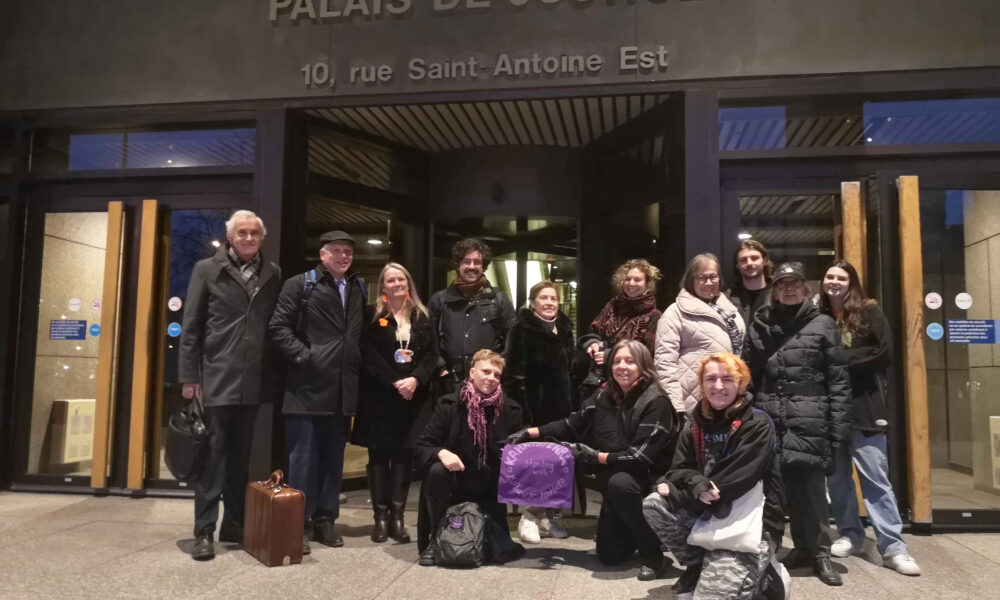
The Kanien’kehá:ka Kahnistensera (Mohawk Mothers) appeared at the Montreal Courthouse for a five-hour case management hearing on Dec. 1. The hearing came as part of the Mother’s ongoing investigation into McGill’s New Vic Project site, where they fear that there may be unmarked Indigenous graves. The Mothers argued that the defendants—including McGill, the McGill University Health Centre (MUHC), the Société québécoise des infrastructures (SQI), the Royal Victoria Hospital (RVH), the Integrated University Health and Social Services Centres (CIUSSS), the City of Montreal, and the Attorney General of Canada—were refusing to abide by the settlement agreement’s mandate to provide the Mothers with all archives and medical records related to the former RVH. 

Mohawk Mother Kahentinetha was the first to speak before Justice Gregory Moore. She reminded the court that under articles two, three, and four of the settlement agreement, McGill, MUHC, and the Attorney General of Canada are bound to provide expedited access to their archives and records. She alleged that MUHC refused to share their archival records on medical experiments on Indigenous children, which she believed to be direct evidence of denialism. 

“[The archives] is where all the information is of what they did to our children, to our people. It’s all there, it’s all in the archives,” Kahentinetha said in an interview with The Tribune after the hearing. 

The lawyer representing MUHC and RVH argued that MUHC has a right to patient confidentiality and that while MUHC wanted to assist in the investigation, they could not as confidentiality laws prohibited them from providing all patients’ records. The lawyers also explained that the medical records are only searchable by patient number, not by age or ethnicity, meaning that researchers could not search for Indigenous patients on the database. 

Julian Falconer—the lawyer for the Office of the Independent Special Interlocutor, Kimberly Murray—asserted that the settlement agreement allows the defendants to override “confidentiality concerns” without consent from the patients. He further expressed that he felt the notion of collaboration and reconciliation between the two parties had “utterly disappeared,” with credible historians working on the case being at a standstill due to limited or no access to archives. 

Falconer ended by stating that the refusal to provide full access to archives is the second breach of the settlement agreement by the defendants, the first being the defendant’s disbandment of the court-mandated expert archaeological panel, which Justice Moore ruled to reinstate on Nov. 20 after a case hearing on Oct. 27

In an interview with The Tribune after the hearing, Falconer revealed that the Mothers were made aware that the defendants were considering appealing the court’s decision to reinstate the archaeological panel during the hearing. 

“[McGill] was told that they made an agreement to be guided by a panel led by Indigenous-led best practices, and their response was to fire that panel,” Falconer said. “When a judge brought to their attention the error of their ways, their response is to appeal to that Judge. Does that sound like reconciliation to you?”

Philippe Blouin, anthropologist and associate of the Mothers, pointed out that appealing the court decision will take more financial resources from McGill and will lead the investigation away from protecting Indigenous graves. 

“The money that they are going to spend on the appeal is money from the Canadian [and] Quebec public and from McGill students, that they’re going to use against using the best practices to find unmarked graves on those lands,” Blouin said in an interview with The Tribune. “It’s going to cost them way more than abiding by the recommendation of said panel.”

McGill explained in a written statement to The Tribune, that they have chosen to appeal to obtain further clarity on how to proceed with the investigation, and that some of the legal fees will be drawn from students’ tuition. 

“McGill is seeking leave to appeal the decision that Justice Moore rendered on Nov 20. to obtain some clarity on the decision and ensure there is a clear path forward with respect to the archaeological work taking place on the site,” McGill wrote. “The University’s expenditures related to legal matters draw on the University’s operating funds. That budget is built from a range of revenue sources, including tuition and government grants.”

Kahentinetha revealed that to her knowledge, since Justice Moore’s ruling to reinstate the panel, the defendants have not taken any action to contact the members of the panel to reassemble them, all while work continues on the New Vic site. McGill confirmed in a written statement to The Tribune that they have not reached out to the members of the panel since Nov. 20. 

Justice Moore adjourned court without a decision, stating the date of the next hearing will be decided via email between him and the parties involved. 

All Things Academic, Student Life

Leaving laptops at the door

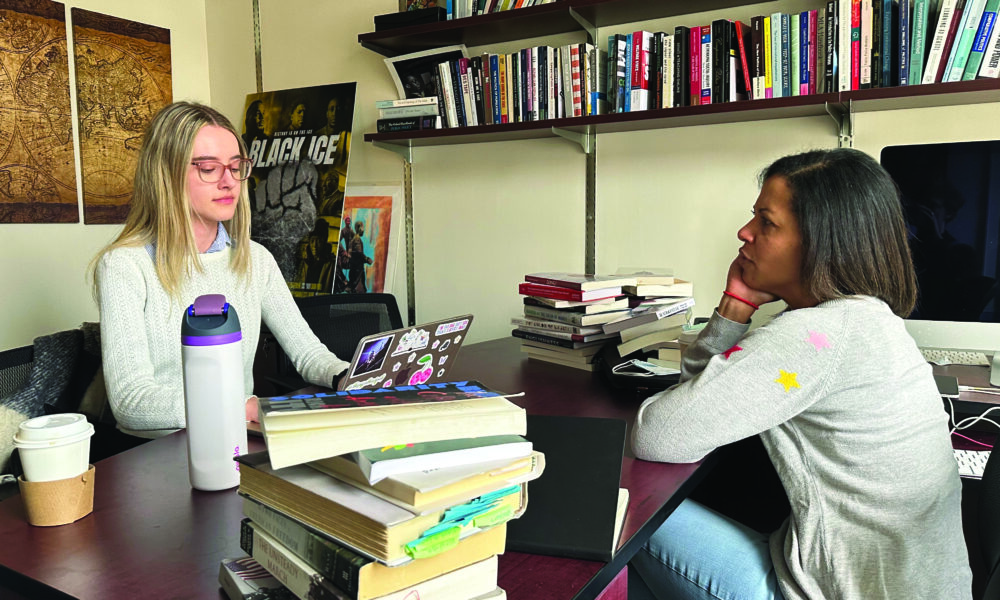
“If you were to walk around any undergraduate large lecture hall and be a fly on the wall, how many students do you think would have something unrelated to the course material open on their screen?” Aaron Erlich, a professor in McGill’s Political Science department, wondered out loud. It was not a rhetorical question, and he waited to give his own estimate until I’d hazarded a response. “‘A lot’ is probably a good answer.” 

Erlich’s POLI 311 lecture hall is one of few on campus that are peculiarly silent—not from a lack of discussion, but void of a sound so familiar that most of us probably no longer give it a second thought: The murmur of keyboards clicking as students type their lecture notes. In these courses, professors have decided to ban the use of devices in their classrooms altogether, in favour of a “tech-free” environment.

What has driven professors to implement such policies? 

First on their list was the ever-present possibility of distraction offered by our devices.  

“We live in an age where attention is a premium and distraction is easy,” Erlich reflected. “Your attention is monetized and everyone wants to get [it], so it’s very easy to lose.” 

And with limited time per class, the professors interviewed by The Tribune expressed that every minute matters, as do the perceived pedagogical benefits of hand-writing notes. 

Samuele Collu, an anthropology professor, argues that transcribing lectures word for word—a habit encouraged by typing—is an impediment to learning, which requires filtering and reorganizing information.  

“If I gave them a laptop, they’d be writing down every word I say,” Collu laughed, adding, “[It’s] kind of like this delusional idea that if you write down everything that has been said, you will understand more [….] But to learn is to transform, it is to synthesize.”

For Collu, having a tech-free class also gives students an opportunity to briefly step away from technology—sometimes the only moments in their lives where they are completely disconnected from their screens and notifications. 

“Because we’re always so wired into technology […] even to have one hour of your time or one hour and a half of your time without [it] already creates a massive difference,” he argued. “It just changes your way of being present in the classroom.”

Cristiana Furlan, a professor in McGill’s Italian Studies department, has held tech-free classes since 2017. She noted the heightened connection and quality of teaching she feels she can offer to students who comply with her policy. 

“Maybe I’m putting it in too strong a way, but it’s like a barrier somehow,” she said, referring to students who, despite her rule, continue bringing their laptops to class. “I feel like they are interacting more with the screen than with me.” 

Particularly in language classes, Furlan noted the importance of forging a space where students can be vulnerable, fully present, and learning from one another—an environment which, she argued, is improved by leaving technology at the door.

“Computers do not facilitate talking to each other, asking questions to each other […] interacting with each other,” she explained. 

All of these professors also aim to make their tech-free policies work for all students. Exceptions to the no-devices rule are included in Erlich’s syllabus, and students who require this accommodation, he noted, have been treated with respect by their peers. Collu’s strategy has been to carefully select various note-takers in each course, who upload their detailed notes to MyCourses after every class. He also offers lecture recordings and individualized office hours to students who require extra help. 

Collu, Furlan, and Erlich all noted that, while initial resistance to their policies could be intense, by the end of the term most students got used to the change. 

“[They’ll tell me they] can’t believe how good it has been to be without technology,” Collu said. “It’s a threshold that needs to be passed.” 

Student Life

A comprehensive guide to finding the perfect winter coat

As the fall semester comes to an end, the infamous Montreal winter begins, and your attire may feel incapable of warding off the December chill. If so, you are primed for a new winter coat. 

The search for a good jacket can feel daunting, especially for first-year students who may have never experienced a winter quite like Montreal’s. Any good coat encompasses more than just functionality—the style matters too, and getting it right can elevate your winter look to the next level while keeping you warm. Here are a few tips on what to look for—and what to avoid. 

How to get started

The key factor in determining a coat’s quality is its ability to keep you warm. This depends mainly on the material of the coat. So, which material is the best for ensuring cozy comfort?

In an interview with The Tribune, GQ Style Editor Noah Johnson gave some advice on what to look for. 

“For a jacket, always go for down. It’s got the best warmth for its weight, by far,” Johnson said. 

The more insulation, the better, so look for anything thick enough to withstand cold and wind and trap heat. It’s always a good idea to make sure the down is ethically sourced. Some good options are The North Face and Patagonia, which are certified to the Responsible Down Standard.

If you’re not a fan of down, Johnson offered some good alternatives. 

“Go for wool, or better yet, cashmere if you can swing it,” he explained. 

Aside from down, these fabrics are the next best option in terms of warmth and are always stylish

If you enjoy the snow, look into brands like Burton, Arc’teryx, and Helly Hansen that carry more water-resistant jackets meant for winter sports and extreme weather. 

Avoid slimmer puffers and vests, which still have insulation but aren’t enough to withstand Montreal’s far-below-freezing temperatures. If you like to accessorize, choosing a jacket with extra pockets is useful for added storage, but if hats and scarves aren’t your preference, a parka-style jacket will provide added head warmth. 

For those who want more than just upper-body warmth, you may be in the market for a longer style that helps keep your legs warm, in addition to your torso. 

“I always like a winter coat to fit a bit oversized—I just think it looks cooler and it makes sense to give yourself maximum layering options,” Johnson explained. 

If you’re looking for something classic and reputable, the iconic North Face Nuptse and Uniqlo’s Seamless Down Parka are great options. If your price range is a little more flexible, go for even higher-quality brands like Woolrich, Canada Goose, and Ten c. Bear in mind that the average-priced winter jacket is still in the $100 to $200 range. A quality coat is never going to be cheap, but a hefty price tag isn’t necessarily something to be afraid of. 

“I think a winter coat should be an investment,” Johnson explained. “Buy the absolute best one you can afford, and expect to wear it for as long as it fits you.” 

A good coat maintains its quality for years, so it’s better to spend more on a long-lasting coat than to buy a cheap one that has to be frequently replaced. 

“If you’re really strapped for cash or unsure about finding the right style,” Johnson added, “Just go to an army [or] navy store and find some vintage military field jacket or peacoat. You can’t go wrong with either of those.” 

Where to look 

Montreal has plenty of amazing options for coat shopping. A ten-minute walk from McGill’s downtown campus will take you to St. Catherine Street, where you’ll find stores like Simons, Sports Experts, Uniqlo, Arc’teryx, and The North Face

If your budget is tight, walk over to St. Laurent Boulevard, where you’ll find great options at thrift stores and vintage shops like Eva B, Empire Exchange, and le Chaînon.

If you’d rather order a winter jacket online, look for brands that can ship within Canada to avoid hefty import fees. 

It’s safe to say that nobody looks forward to the cold of a Montreal winter, but with a well-chosen jacket, even an unpleasant trek to your 8:30 a.m. class will feel more like a cozy holiday stroll.

Student Life

A day in the life of a 4.0 student

Most of my mornings start within the healthy range of 9 a.m. and 5 p.m. Today I woke up peacefully around 11 a.m., primed for another day of academic indifference.

I listen to my body and give it all the beauty sleep it needs. After all, how you present yourself at a school such as McGill is by far the most relevant indicator of success. 

In that vein, I take the next 45 minutes getting ready. McGill is a runway; it’s imperative that I look classy (without looking like a finance bro), accessorize uniquely (without going all out Plateau-y), and try hard, but look effortless. 

Around 11:45, I’m finally set, and if I do say so myself, I’m pretty proud of this outfit. Blue Adidas Spezials to match my blue, asymmetrical sweater, and thrifted grey dress slacks. Plus, I even curled my bangs today.

My first class is at 11:35, so I grab my tote bag and head out the door. 

WHAM! 

Striding down my steps onto the sidewalk of Milton, I immediately slip on a monstrous ice patch hidden underneath a pile of nice, brown Montreal slush. Before I know it, I’m face-up on the sidewalk, my hands, behind, and ego badly bruised. 

My tote bag has taken off, skidding full-speed down the street. I consider getting up and chasing it but quickly consider the consequences—Slush Girl, they’ll call me. The incident will go viral on YouTube, and I’ll be the subject of Spotted: McGill posts and Tribune articles for decades to come. No, thank you. No recovering from that. I call off my 11:30 class and scramble right back up to my apartment. 

It’s not as if class would’ve served me much anyway. After all, my usual seat during chem class in Leacock 132 is the table. You know. The table. 

Plush chairs, no one behind you to judge your 90-minute Pinterest scroll, and excellent proximity to the lecture hall doors for easy last-in, first-out access.

If you don’t know Leacock 132 has a table, chances are you are in fact not a 4.0 student. 

For the next few hours, I heal from the horror of this morning’s slip-up by practicing some much-needed self-care: Some online shopping, a facial with my aloe mask and Jade Gua-Sha, and a midday snooze seem to do the trick.

Around 3:30 p.m, I head over to campus with one goal—start my history paper. I skip on over to Schulich, first grabbing my obligatory ‘little treat’ from Dispatch, fifteen dollars worth of toast and coffee.

An hour later, I head back home. I feel drained but proud of the work I did. Not only did I finish The Washington Post crossword, but I mapped out every single possible schedule option for my next three years on Visual Schedule Builder, I perfectly curated my LinkedIn profile, and I created the Google Doc for my essay.

Later that evening, I head to Bar des Arts with some friends. The theme is Snug as a Bug, so naturally, I dress up as a sexy cockroach. A few Sleemans deep, I ditch my friends to go on a side-quest and investigate the large crowd outside Leacock 132. 

I spot my blissfully-unaware-of-the-Leacock-132-table friend in the crowd.

After listening to her spatter off her usual “I’m so nervous,” and “I’ve barely studied,” and “I only got a 52/55 on the practice exam,” I come to the sobering conclusion that the big event of the evening is, in fact, my forgotten Chem midterm. 

I actually learned a lot from my adventures in academic indifference:

  1. Benzene rings are very hard to draw under the influence
  2. A 25 per cent midterm is practically nothing (I’ll easily make it up with the final)
  3. Snug as a Bug actually meant dress in PJ’s, but damn, do I make a super cute cockroach
Science & Technology, Student Research

Human Cognition: Moving away from the brain

Long before Francis Schmitt coined the term “neuroscience” in 1962, scientists have been interested in demystifying the secrets of the human brain. Although neuroscience primarily focuses on the functions of the cortex—the outer layer of the brain— researchers have begun to highlight the importance of more primitive brain anatomy: Namely, the brainstem. In her recent paper, Justine Hansen, PhD candidate from The Neuro, used a novel approach to pair brainstem functions with those of the cortex.

“The brainstem isn’t really looked at in vivo [in living human participants],” said Hansen in an interview with The Tribune. “Because of that, we’re somewhat biased against thinking of the brainstem as being involved in these human-specific cognitive functions.” 

Most contemporary knowledge about the brainstem comes from animal studies, anatomy studies looking at connectivity, or lesion studies—lesions in the brain induce various deficits from which we can extract functions. However, many more methodological aspects make this research interesting.

Many studies examining brain functions exclusively look at the cortex. This is the wrinkly part most people imagine when thinking about the brain. The cortex reportedly hosts most of the mind’s cognitive functions, including memory, perception, and decision-making.

“We wanted to extend our perspective of cortical function to the brainstem. The reason we want to do that is that the brainstem is very often overlooked in a lot of these human neuroimaging studies,” Hansen said.

The current cortico-centric view of the brain poses many constraints when looking at the purpose of certain brain circuits. This perspective disregards the potential role of the brainstem’s intricate anatomy. 

“A big thing is that it’s comprehensive across the brainstem. So a lot of studies, or those already doing brain imaging studies, typically just focus on a region in the brainstem that they are interested in,” Hansen stated.

As an attempt to address some of these issues, this research also groups different anatomical brainstem areas according to their associated cortical functions. Multiple neurotransmitters are produced in the brainstem, each implicated in different functions such as arousal and awareness. These groups represent clusters of neurons producing these molecules.

Interestingly, they found that norepinephrine, a neurotransmitter downstream of adrenaline, is present across all functional groups. Norepinephrine is implicated in various functions, including arousal regulation. This omnipresence paves the way for many hypotheses about the role and importance of norepinephrine in the general integration of cognition.

“[Norepinephrine] is involved in getting the brain to work together or work in a more segregated fashion,” Hansen said. 

Hansen’s team also found a gradient in how the functions of the brainstems are correlated to those of the cortex. They discovered that the brainstem has more associations with the anterior part of the brain, including the frontal lobe and the anterior temporal lobe, implicated in higher cognitive functions like language, rather than the occipital lobe. The presence of this gradient implies that the brainstem might serve an important role that is usually attributed to the cortex in higher cognitive functions.

Although this paper is correlational and therefore does not prove causality, this type of research opens questions into the different functions of interaction between the brainstem and the cortex, especially surrounding the issue of consciousness. A coma is an altered state of consciousness and can provide valuable information on its nature.  

“Now I don’t know if I want to go that direction, but it would be another angle to look at the brainstem in a [comatose] population instead of just in a healthy population,” Hansen said.

Hansen’s research paper emphasizes the importance of researching the more primitive parts of brain anatomy to gain a deeper understanding of the beautiful intricacies of the human brain.

“I think we can stop thinking of the brainstem as just being a lizard brain implicated in breathing and keeping you alive,” Hansen noted. “Maybe it’s also involved in more higher-order functions that we usually attribute to the cortex.” 

Science & Technology

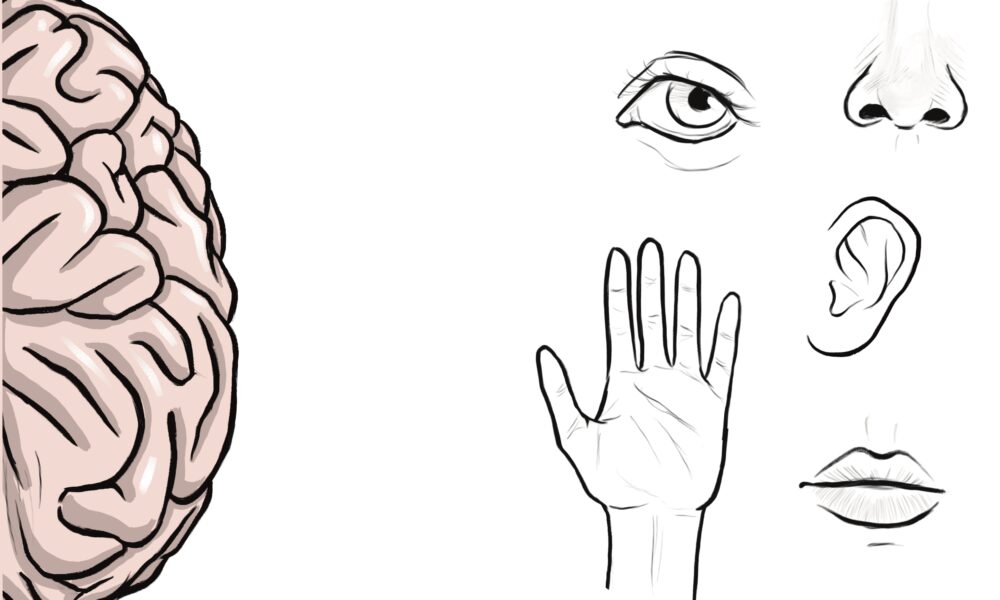
Neuroscience myths and facts: Alcohol and the spectrum of human senses

If you are as curious as the rest of this Tribune special issue, then this article will hopefully answer some of your burning questions about two topics that merge neuroscience and student life seamlessly: Alcohol and human senses. In this second round of myth debunking in our Neuroscience myths and facts series, you will learn whether alcohol kills any of those brilliant neurons in your brain and whether humans only have five sensory faculties. So grab a beverage of your choice and read on about how all those 5 à 7 drinks at Gerts Bar & Café, Bar des Arts, or Blues Pub may be affecting your brain.

Does alcohol really kill the brain’s neurons?

Nuance is key when it comes to understanding the relationship between neuroscience and alcohol consumption. For starters, having a pint or two at Gerts after an exhausting exam or stressful altercation will not destroy any neurons. In fact, taking a break accompanied by any type of drink may have a positive effect on your brain and overall well-being. While some studies have shown that moderate drinking can negatively affect cognitive health, certain research suggests that responsible drinking might also have some cognitive benefits. This cohort study of 19,887 participants from the Health and Retirement Study (HRS) found that low to moderate drinking may contribute to higher cognitive abilities and lower rates of cognitive decline in middle to older aged adults. So contrary to the widespread myth that alcohol is a ‘neuron murderer,’ responsible drinking rarely leads to serious neurological damage as long as basic safety precautions are in place.

However, this myth requires extra nuance because excessive drinking can prove neurotoxic, meaning it has the potential to damage nerve cells in the brain. For example, excessive alcohol consumption—defined as five or more drinks on any day for men and four or more for women by the National Institute on Alcohol Abuse and Alcoholism (NIAAA)–may lead to neuronal cell death in specific brain regions, such as the hippocampus and the cerebral cortex. Chronic abuse can also pave the way for cognitive impairments affecting brain health over a longer period.

Do we only have five senses or are there more sensory faculties to uncover? 

Without any particular nuance needed, one of alcohol’s well-known effects is its influence on the senses. Although the “five senses” model underlies the widespread belief that we have five senses—which is partly true—it is limiting and slightly biased against the rest of the human body’s sensory systems such as the vestibular system. This restrictive model includes only the familiar basics: Touch, sight, hearing, smell, and taste. But, humans can experience far richer sensory experiences and function in complex situations that engage other sensory systems. For instance, without our vestibular system and its sensory receptors called “hair cells,” we would have a much harder time maintaining our balance and not sliding down the icy McTavish street during the winter months. 

Proprioception is another sense that often goes unnoticed when discussing human sensory faculties, despite its crucial role in providing us with body awareness. Without the proprioceptive system’s mechanoreceptors—sensory receptors located in joints, tendons, and muscles, students would find it extremely challenging to navigate the busy Schulich library flooded with other stressed-out McGillians and errant spinny chairs. By acknowledging and understanding these additional senses, we gain a deeper appreciation for the marvels of human perception.

Your weekly 5 à 7 are not killing your neurons, and you have more than five senses

Now that you know only excessive alcohol consumption can cause serious neurological damage, you can enjoy your next drink at peace without worrying about any of your neurons dying as long as you put safety and responsible drinking first. The SciTech team hopes that you can also further appreciate your body’s incredible sensory systems and their expansive functions, from balance to proprioception. Stay tuned for the next installment of this series next semester with myth-busting in the areas of memory, intelligence, and love through the neuroscience lens.

Martlets, Men's Varsity, Sports

Redbirds and Martlets fear consequences of tuition hike on varsity sports

On Oct. 13, the Quebec government revealed its plan to raise tuition for out-of-province and international students. In the immediate aftermath, students flooded the streets of Montreal, protesting the proposed hike and fearing its consequences on their university experience. Shortly thereafter on Nov. 2, McGill University Principal and Vice-Chancellor Deep Saini outlined the major impacts, including a drop in annual enrollment revenue that could be disastrous to smaller faculties, job reductions, and the elimination of some varsity teams.

Following several meetings with Saini and Bishop’s and Concordia University presidents, the provincial government announced that the increased out-of-province tuition cost would decrease from $17,000 to $12,000, while the cost for international students remains the same. However, McGill still expects to lose 60 per cent of its out-of-province students. 

This loss will drastically affect collegiate sports teams. With McGill’s student body made up of 20 per cent out-of-province students and 30 per cent international students, many varsity teams are composed largely of students from outside of Quebec. As such, teams rely on recruiting students from out of province to not only fill their rosters, but fund their teams. With only level one varsity teams funded largely by the university, many level two, competitive club and recreational club teams rely on fundraising and player fees to function. Therefore, losing players from out-of-province will threaten many teams’ existence. Some teams will fall in jeopardy as their rosters largely rely on out of province athletes including fan-favourites such as the Redbirds lacrosse team,McGill artistic swimming, Martlets field hockey, and McGill rowing.  

Ontario-born lacrosse midfielder Luke Dawick raised major concerns about the future of McGill’s team. To him, McGill offers a great education, the opportunity to meet lifelong friends, and a chance to play a high level sport. However, without lacrosse, Dawick likely would not have attended McGill.

Dawick explained his shock when he heard the news of the tuition increases, and that the most serious impacts will come through the amount of players they will be able to recruit in the next few years. 

 “Coach Soubry is going to have a harder time recruiting players outside of Quebec, and that will definitely limit the talent that we have been able to bring in the past,” Dawick told The Tribune

This year, the team only had four Quebecers, with the rest of the 30 players coming from other Canadian provinces and the United States.

Field hockey midfielder and Vermonter Madeline Cohen,shared another perspective as her team faces a higher risk of being cut, despite being largely self-funded. 

“Knowing our status as a tier-two team and knowing how easy it was for us to be cut during COVID, that’s kind of when the realization set in,” Cohen told The Tribune.

Cohen expressed how the financial constraints would lead to a different demographic of people at McGill and how that could lead to an entirely different student experience in Montreal altogether. Considering the appeal of McGill from a prospective student, she said the choice would not be easy anymore.  

“I definitely would have had to think twice and weigh the pros and cons,” Cohen explained. “It would not have been this incredible opportunity for me, it would have definitely diminished the likelihood of coming here.”

While Media Relations Officer Frédérique Mazerolle emphasized to The Tribune that no definitive decisions have been made regarding varsity sports, it is clear that if the Quebec government implements the proposed tuition hikes, McGills’ teams will be affected. The Quebec government remains hostile towards eliminating the tuition hike entirely, leaving many varsity programs in a state of perpetual uncertainty. With anglophone universities comprising the majority of teams within several RSEQ divisions, some sports may be forced to look out of province for competition, forcing the future viability of Quebec university sports into question. 

Sports Editor and Martlets field hockey goalkeeper Anoushka Oke did not contribute to this article.

Science & Technology

Making scientific data accessible to all

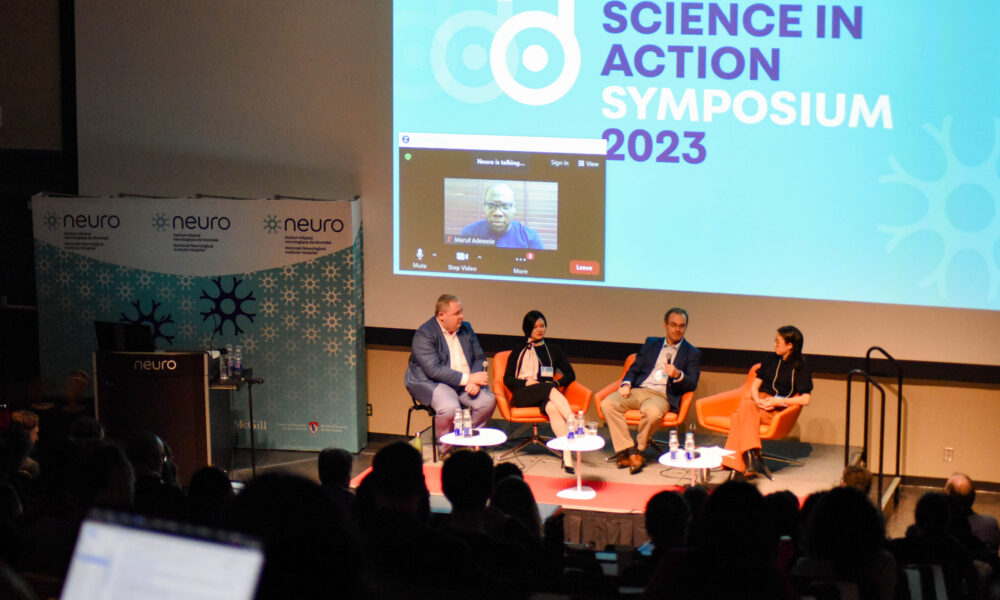
On Nov. 30, neuroscience and data-sharing experts came together for a day of insightful talks at The Neuro’s fifth annual Open Science in Action Symposium. Kicking off the event, Annabel Seyller, CEO of the Tanenbaum Open Science Institute (TOSI), emphasized the growing prevalence of open science across scientific institutions in Canada. 

“Open science is everywhere,” Seyller said. “I remind you that 2023 is the year of open science.”

She gave an overview of the day’s events before handing the microphone to Christopher Buddle, Associate Provost of Teaching and Academic Planning at McGill, who spoke about open science on the McGill campus—both among students and at institutions like The Neuro. Guy Rouleau, Director of The Neuro and co-founder of TOSI, expanded on these points and discussed the history of open science at McGill. 

“When TOSI was created in 2016, the idea was to crystallize open science practice at The Neuro, but also as a living lab for how to, at the institutional level, adopt open science practices,” Rouleau explained.

After these opening remarks, Vincent Larivière, inaugural UNESCO Chair in Open Science and professor of Information Science at Université de Montréal, delivered the keynote address. He spoke on a variety of issues surrounding scholarly publishing, including the difficulties of publishing open-access papers, changes brought about by the COVID-19 pandemic, and the pressures that predatory publishers place on scientists. There was also a panel discussion, moderated by Viviane Poupon, President of Brain Canada, covering the potential of open science to accelerate drug discovery. 

The afternoon spotlighted a number of different initiatives—many of which that The Neuro has sponsored—that aim to engage in and promote open science, spanning various areas, such as data sharing, open-source software, and science communication. 

Gabriel Pelletier, Open Science Data Manager at TOSI and the moderator of the data-sharing session, highlighted that while these initiatives are of critical importance, implementing them is not always straightforward. 

“Data sharing and knowledge sharing is key to accelerate the pace of discovery in neurological diseases and in any domain really, but also has considerable challenges,” Pelletier said in his introduction. “It’s not easy. It takes time, knowledge, and expertise.”

Nikhil Bhagwat, a computational neuroscientist at McGill, addressed these difficulties in his presentation on ParkCore, a tool for sharing data on Parkinson’s disease. “In thinking about open science in Parkinson’s disease, we have to first accept the fact [that] it’s very hard,” Bhagwat said. “We all need more data. But the key word here is we need more open and harmonized data.”

Bhagwat explained that it was not always as simple as just sharing collected data with another scientist: Researchers need to make sure they’re both using the same protocols and software, even the same variable names. 

“What we really want is to be able to get the data and be able to use it without having to play this game of twenty questions with whoever is sharing data,” Bhagwat said. 

ParkCore helps to ease this process by centralizing and standardizing data on Parkinson’s disease in one easily accessible repository. 

Open science practices also include open-source software, referring to software with publicly available source code. This means that anyone can freely download it, and even build their own additions. At the next panel, researchers shared different open-source softwares with a focus on neuroscience, including a Python library called Pynapple, which collects a set of tools for neurological analysis. 

The day closed with several projects for science communication, highlighting that open science means sharing knowledge not just with other researchers, but with patients and the public as well. Panelists included Cindy Hovington, host of the Curious Neuron podcast, and Stuart Trenholm, associate professor in McGill’s Department of Neurology, who is involved in an ongoing project to create an interactive neuroscience textbook called The Open Brain

From patients to students to researchers, all of these projects are committed to sharing data, knowledge, and methods to improve the scientific process for everyone. 

Student Life

Location, location, location: How to find your perfect neighbourhood

Looking for an apartment in Montreal is no easy feat for McGill students new to the city. The unrecognizable postal codes and streets mix together to form a jumble of numbers and letters. This challenge is magnified for students when the perceived perfect apartment often hinges solely on its proximity to the university. But, the area surrounding your future apartment is just as significant as its amenities. The atmosphere of the neighbourhood influences your daily life, so finding the perfect location can be different for everyone. 

Milton-Parc

If your top priority is proximity to campus, then Milton-Parc is the ideal choice. The allure of being within a five-minute walk to most McGill buildings is particularly enticing during the bone-chilling winter months, though this proximity does come at a cost—housing in the area can be relatively expensive compared to other areas in Montreal. 

Milton-Parc is a densely student-populated area, meaning that there are various student-centric cafés and businesses. However, this vibrant energy has a downside, as there may be heightened noise levels during student events such as Frosh Week. Yet, for most, this is outweighed by having all the essentials within a couple of blocks, allowing for time saving during peak exam season. 

Le Plateau-Mont-Royal 

Located roughly a 25-minute walk from campus, the Plateau offers the best of McGill at a slightly greater distance. The distance to and from campus allows you to enjoy a refreshing walk before you’re locked into a day of classes. You can also experience living outside of the McGill bubble. 

Home to some of the city’s oldest known food and drink institutions, the Plateau is home to an array of new coffee shops, boutiques, bakeries, and supermarkets, providing a blend of historical charm and modern conveniences. The lower Plateau’s artsy atmosphere renders it a desirable, albeit still relatively pricey, location to live.

Griffintown 

Griffintown is known amongst Montrealers as an up-and-coming district. Developers have recently begun the construction of many new residential buildings. While this creates many a modern living environment, it also contributes to the problem of gentrification. 

Located only a 15-minute metro ride to campus, it’s an easy walk to downtown and Old Port. Despite its prime location, Griffintown may not exude the same vibrant atmosphere as other neighbourhoods due to the impact of high development on the community. Nevertheless, it compensates with a different type of appeal, focusing on contemporary living and accessible pathways, making it a pragmatic choice for those seeking a balance between urban convenience and a quieter escape. 

Saint-Henri 

If you’re looking for a neighbourhood outside of the McGill bubble, then Saint-Henri is definitely one to consider. This area is packed with small parks and beautiful walking and bicycle paths that line the nearby canal, making it the ideal location for those who love taking walks close to home. 

Home to the year-round Atwater market, Saint-Henri offers the best of local and gourmet food and products. This neighbourhood, characterized by its mix of iconic Montreal institutions like the market and contemporary developments, captures the essence of Montreal’s dynamic urban landscape. 

The Village 

The Village, although slightly farther away from campus, is a neighbourhood that truly encapsulates Montreal’s dynamic and lively atmosphere. Via metro, you would have a convenient commute to campus in under 25 minutes. What sets the Village apart is its affordability, with rents more budget-friendly than neighbourhoods such as Milton-Parc. 

The Village harbours a predominantly young demographic, who fill the array of cafés, restaurants, shops, and bars located in the neighbourhood. The Village stands out by offering a lively community for those looking to embrace the city’s spirit beyond the campus boundaries.

Editorial, Opinion

2023 SSMU executive midterm reviews

The Tribune’s editorial board presents its midterm reviews of the Students’ Society of McGill University (SSMU) executives. Tribune editors researched and communicated with each executive before leading an editorial board discussion on the executives’ work and accomplishments. Editors with conflicts of interest abstained from discussing, writing, and editing relevant reviews.

President: Alexandre Ashkir

Ashkir ran on a platform focused on policy reform, increased accessibility of SSMU support and resources, and transparency. While Ashkir has little to point to in terms of achieving these goals, he says that this is due to his position requiring that he prioritize supporting all other executives. He also said that many of his goals, such as reforming SSMU policies, take longer than a semester to accomplish. Although he has yet to make policy changes, he is working with the Governance Reform Committee to create clearer and more institutionalized policies within SSMU. He aims to finish these projects by the end of the year or to set out a work plan for his successor. Ashkir has been able to slightly expand the SSMU Grocery Program, which his predecessor Risann Wright launched, and hopes to integrate it within a larger coalition of food accessibility programs on campus. One of Ashkir’s biggest accomplishments of the semester has been the steps taken toward increasing SSMU’s transparency. At the beginning of the year, he spearheaded a meeting with student media and created more accessible and reliable avenues for contact. He plans to increase transparency, hoping to regain student trust and engagement with SSMU. Overall, Ashkir has made good progress on his goals given the time constraints; however, as he goes forward, having more specific plans would be an asset to himself and his constituents.

VP Student Life: Nadia Dakdouki

Going into this position, Dakdouki sought to boost engagement with SSMU, increase clubs’ visibility, and ultimately improve students’ and student groups’ experiences interacting with the Society. Her biggest challenge so far has been initiating new projects while both she and SSMU have been overloaded with work. That said, she put together a very successful Activities Night, organized an Activities Night Lite, and created a Clubs Guidebook. She has also maintained good communication with students via office hours, event advertising, emails, and the Vice President (VP) Student Life Instagram. Additionally, Dakdouki is helping to develop a financial how-to guide for clubs, creating a SSMU insurance guide for students, and starting a student volunteer program at the SSMU daycare. In the winter semester, Dakdouki plans to run more club events and will bring back Mental Health Action Week. She is also looking into creating a relaxation area on campus, as well as new mental health services with Keep.meSAFE that would be tailored to students affected by the ongoing Israel-Palestine conflict. As was mentioned in her campaign, she hopes to increase in-class announcements and student group tabling. So far, Dakdouki has made strides in bolstering student groups while mental health and family care, which are also under her portfolio, seem to have been given less attention; this will be resolved if Dakdouki accomplishes what she has planned for this upcoming semester.

VP Finance: Amina Kudrati-Plummer

Following the resignation of former VP Finance Alice Fang in Aug. 2023, SSMU held a by-election resulting in the election of Kudrati-Plummer on Oct. 20 with 60.6 per cent of the vote. Kudrati-Plummer underwent two weeks of training and only officially assumed the position on Nov. 13. SSMU had to divide the responsibilities of the VP Finance position between the other executives prior to Nov. 13, meaning that Kudrati-Plummer is still consolidating her responsibilities in the role. Kudrati-Plummer has a clear vision for reforming SSMU’s internal accounting processes. Improving financial transparency within SSMU is her main goal, an endeavour she believes is crucial to restoring the student base’s faith in the governing body. She also hopes to develop cost-saving programs for students to alleviate financial stressors and re-evaluate the SSMU’s internal accounting process, specifically concerning tracking services and budgets. Regarding complaints from SSMU clubs about difficulties accessing their finances, Kudrati-Plummer explained that this is due to issues with the Royal Bank of Canada—SSMU’s bank—that SSMU cannot directly control. She further explained that this went unaddressed before she stepped into the position, as immediate tasks such as re-budgeting and SSMU’s financial audit needed to be prioritized. With improving the current banking system as her top priority, Kudrati-Plummer will hopefully be able to address this pressing issue next semester.  The Tribune sees these goals as critical, especially given the SSMU’s claims of “financial peril” that prompted the request for a 71 per cent base fee increase in the fall referendum. The Tribune hopes that Kudrati-Plummer will emphasize financial transparency and accessibility in the coming months.

VP External: Liam Gaither

Gaither’s main priority going into this position was to ensure that SSMU would be able to continue supporting groups on campus and aiding in student mobilization efforts. He cites the creation of the Community Solidarity Fund fee—a $1 opt-outable fee that feeds a discretionary fund for social justice-oriented individuals and groups—as External Affairs’ biggest accomplishment of the fall semester. To promote off-campus volunteering opportunities, Gaither revived the Community Engagement Day, which took place on Oct. 26 and featured around 30 organizations from the greater Montreal area. An important part of Gaither’s work has focused on mobilizing students against tuition hikes. On the week of Nov. 20, a successful petition calling for the cancellation of tuition increases for out-of-province students that he participated in writing gathered more than 30,000 signatures and was sent to the Quebec National Assembly. This work will carry into the coming months, with an emphasis on building a better sense of student solidarity on campus. The External Affairs department will also bring forward two policies next semester: A food security policy to make the issue more actionable by executives and a union solidarity policy to provide the department with an official mandate to work with unions on campus. However, initiatives aimed at creating links between organizations on campus have been lacking, and a focus on strengthening relations between groups would be an asset in mobilizing students.

VP University Affairs: Lalia Katchelewa

The VP University Affairs is responsible for facilitating relations between the SSMU and the McGill administration, supporting and furthering equity and student advocacy as well as fostering academic innovation in the library. During her campaign, Katchelewa emphasized advocating for food security, menstrual health, and supporting student advocacy. However, she has only been able to partially stick to these goals, mainly strengthening food security initiatives on campus. A significant hurdle Katchelewa has faced is the bureaucracy and power structure of the McGill administration. In the second part of her term, Katchelewa hopes to further press the administration to take action on several critical issues facing students—especially food insecurity. She aims to foster collaboration between faculties as well as other institutions by organizing an inter-faculties summit and cooperating with the Concordia Student Union. Similarly, Katchelewa would like to double down on student outreach. She emphasized the need to be more accessible and visible on campus and proposed tabling at football games to better engage with the community. She says that the “corporate aspect” of the SSMU, as she calls it, often conflicts with its union role, and that she has been working towards striking a just balance between both. As her portfolio encompasses crucial political components, such as sitting on the Indigenous Affairs Committee, the Francophone Affairs Committee, and the Black Affairs Committee, her lack of clear accomplishments and attention to these matters is concerning. The Tribune urges Katchelewa to increase transparency on the equity and advocacy initiatives and support she provides to students.

VP Sustainability and Operations: Hassanatou Koulibaly 

After serving as last year’s VP Student Life, Koulibaly returned to the SSMU executive team this year, taking on the newly-reinstated VP Sustainability and Operations role which has not been filled since 2017. She ran on a platform that promised a thorough and thoughtful reestablishment of the role’s portfolio, an expansion of MiniCourses, and ensuring clubs follow the SSMU sustainability mandate. Koulibaly returned to SSMU prepared; although she effectively trained herself in this renewed role, she has been responsive and proactive. Already, she has laid the groundwork for athletic insurance in the SSMU building, a Gerts ambassador program starting in the Winter term, and auditing SSMU spaces to ensure clubs can operate. While Koulibaly is clearly on top of the operations aspect of her role, she had less precise action plans for integrating sustainability into executives’ portfolios. Hopefully, now that the VP Finance role has been filled, Koulibaly can better estimate sustainable resource management and put equal emphasis on that aspect of her role. 

VP Internal: Jon Barlas

As part of the VP Internal mandate of community and communication, one of Barlas’ main priorities throughout his campaign was to increase the accessibility of SSMU events by breaking away from their traditional alcohol-centred parties. In line with this goal, he organized two highly successful dry events: A Friday the 13th movie night and a thrift flip. In addition, he has worked to increase SSMU’s accountability by holding weekly travelling office hours in the Arts Undergraduate Society, Management Undergraduate Society, and Engineering Undergraduate Society offices. This has allowed Barlas to meet executives and students alike and answer their questions about SSMU. Barlas has also worked to improve alumni relations, which he did not feel were well-handled by previous VP Internal Cat Williams, by sitting on the McGill Alumni-Student Engagement Council and working with the Scarlet Key Society. Overall, Barlas is performing well in his role. Going forward, he aims to continue planning accessible events in collaboration with interfaculty organizations and hopes to create a SSMU Wiki, inspired by the EUS Wiki, to share resources with students.

Read the latest issue

Read the latest issue