


Latest News

Campus Spotlight, Student Life

McGill students find the “us” in lettuce

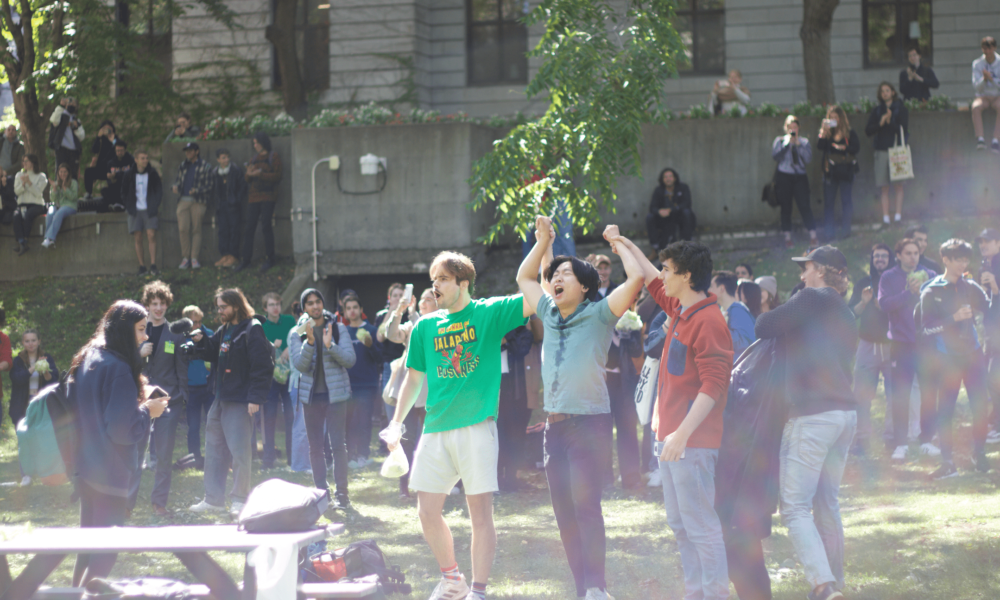
To the disbe-leaf of many passersby on Sept. 23, a circle of students formed––each with two heads: One human, one lettuce. This strange sight was none other than McGill’s second annual Lettuce Club meeting.

Once a year, Lettuce Club members meet with nothing but a 600-gram head of lettuce and an empty stomach. The rules of the game are very simple: Participants have 10 short (or long!) minutes to devour their head of lettuce to the best of their abilities. Although 10 minutes may not seem like enough time to eat an entire head, the real contenders tend to take much less.

To ease this laborious process, competitors can employ any strategy, from dousing the head in salad dressing to adding some seasoning and spices or condensing their lettuce with force—as long as they can prove that they have eaten the entire head of lettuce. The first to finish eating is crowned the Head of Lettuce and is responsible for organizing the next year’s gathering.

McGill’s first Lettuce Club meeting took place last year, organized by Arielle Lok, U3

Management, Bjørn Christensen, U3 Arts, and Joel Conway, U3 Management. In an interview with The McGill Tribune, Lok explained that in 2019, the founders were inspired by viral TikToks about Lettuce Clubs at different schools and thought, “let’s bring that to McGill!” The first-ever Lettuce Club was a huge success, attracting nearly 150 students.

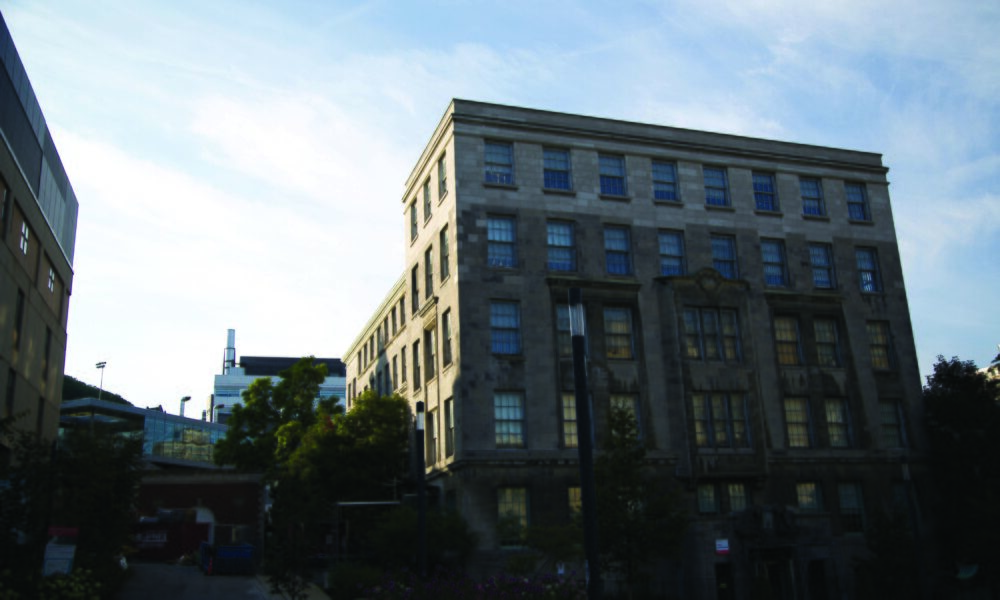
But the success of last year’s Lettuce Club was only the tip of the iceberg. This year, more than 200 people formed a circle around the grassy knoll outside Redpath Museum, ready to compete. Aslan LaCouvee, U3 Arts and Science and last year’s Head of Lettuce, entered the centre of the circle wearing the black cloak awarded to the winner.

“The question remains, who wants to be the Head of Lettuce?” Aslan shouted.

With that, the race was off. Participants dug their teeth into the leaves and chewed eagerly. Scraps of lettuce littered the ground as spectators cheered on their friends.

A mere minute after the race began, Eric Zhao, U1 Science, drew the attention of his fellow competitors, as he neared the end of his lettuce. As Zhao chewed vigorously, the crowd’s focus shifted to various other participants nearing the end of their lettuce cores. Finally, Zhao opened his mouth, revealing his lettuce was gone, and, with relief, yelped in victory. LaCouvee presented the victor with the cloak, crowning him as this year’s Head of Lettuce.

After the competition, Zhao disclosed his technique in an interview with the Tribune. 

“Most people get caught up in chewing. But I have two hands here––they aren’t doing anything! So, what if I hold my lettuce like this,” Zhao said, forming a claw-like grip on his imaginary lettuce, “and give the old lettuce some chew with my long fingernails so that when it gets in my mouth, it can be more of a slush.”

Zhao’s strategy was clearly effective as he managed to devour his lettuce in as little as a minute and 54 seconds.

Participants were left in awe by Zhao’s speed. 

One observer noted, “I’ve been alive 20 years and never seen something like that!”

While he, too, was impressed with this record time, Marlo Nash, U1 Science, was most interested in the team-building aspect of the competition. 

“You know there’s a competition [for the Head of Lettuce], but it’s about the collaborative aspects: The “us” in lettuce,” Nash said.

The ambience of the Lettuce Club gathering is certainly light-hearted, but many participants mentioned the sense of community brought about by the lettuce-eating competition.

“I’m here to be a part of the energy, be a part of something bigger than myself,” Jonas Lehar, U1 Science, told the Tribune.

Arielle Lok explained the mission of Lettuce Club: “To unite students, and address the (lettuce) core of the community.”


A previous version of this article incorrectly stated that Christensen presented Zhao with the cloak. In fact, LaCouvee presented him with the cloak. The Tribune regrets this error.
McGill, News

Revised McGill sexual violence policy allows survivors to know disciplinary results of their cases

Content Warning: Mention of sexual violence

Survivors who report allegations of sexual violence to McGill can now request information about the specific disciplinary or administrative action taken by the university against their aggressor.  Quebec’s Act respecting access to documents held by public bodies and the protection of personal information had previously prohibited higher education institutions, including McGill, from sharing such information to protect the accused person’s privacy. However, Bill 64, which the National Assembly passed in September 2021, mandates universities to share these details with survivors as of Sept. 22, 2022. 

McGill’s revised Policy against Sexual Violence captured these legal changes during its triennial review, held over the Winter 2022 and Summer 2022 terms. The updated Policy, which also included changes to reflect the university’s new internal resource for reporting—the Office for Mediation and Reporting (OMR)—was passed by the McGill Senate on Sept. 21. 

The change will only apply to survivors who file a report under the Policy after Sept. 22 and whose case results in a finding of sexual violence following the university’s investigation process, according to McGill media relations officer Frédérique Mazerolle.

Previously, survivors would only be told  their case ended—no further detail about disciplinary consequences would be disclosed unless the accused person gave their permission to do so. In an interview with The McGill Tribune, Stella*, a survivor who filed a report under the Policy in Fall 2020, explained that not knowing the specific disciplinary action imposed on an aggressor can take an extreme mental toll. 

“[Being reprimanded] could literally mean ‘oh, just rewatch the It Takes All of Us training’,” Stella said. “Then you think about all this trauma I have been through, the fact that it scares me to look at myself in the mirror, or that I am shaking or having nightmares every night. 

Is that all it’s worth? Just redoing a seminar on saying no and asking for consent? Or are they expelled? [….] If you do not know that, you are still going to be looking for them behind your shoulder constantly.”

Stella added that being left in the dark can also make it hard to feel safe while attending school.

“No matter what, you’re not going to fully recover,” Stella said. “They are changing your life forever and you want to know what the school [is] doing to protect you because you are a student and you chose to go to this institution to study, to get involved, not to experience this.” 

In an email to the Tribune, Émilie Marcotte, a sexual violence response advisor at the Office for Sexual Violence, Response, Support and Education (OSVRSE), believes transparency is crucial throughout the reporting process to ensure survivors feel safe when coming forward.  

“Rather than being left with uncertainty, knowing the disciplinary results will help finalize the reporting process for a survivor,” Marcotte wrote.  “Seeing the concrete outcomes that emerge from that initial act of reporting provides further accountability and can help the survivor in regaining a sense of agency.” 

Rachael Diotte-Lyles, advocacy branch representative at the Sexual Assault Centre of the McGill Students’ Society (SACOMSS), believes that the policy change creates a safer campus environment for survivors and that it could make survivors more likely to report instances of sexual violence. 

“It was difficult for survivors to justify going through [the reporting] process and reliving traumatic memories when, even if it was determined that sexual violence occurred, they would remain in the dark about the disciplinary results,” Diotte-Lyles wrote in an email to the Tribune. “Through this change […] the University is taking steps toward making survivors a priority.”

*Stella’s name has been changed to preserve their anonymity. 

Those wishing to report an instance of sexual violence at McGill can contact OMR at [email protected]. Those in need of counselling can reach out to OSVRSE at [email protected]  514 398 3954 or SACOMSS at [email protected].

Hockey, Sports

Nick Suzuki’s captaincy transcends Quebec language politics

On Sept. 12, the Montreal Canadiens announced the appointment of 23-year-old Nick Suzuki as the 31st captain in franchise history. The standout centre from London, Ontario, joins a decorated list of Habs captains, including hockey legends Maurice Richard and Jean Beliveau. Chosen over his more veteran teammates like Brendan Gallagher,  Suzuki’s age highlights the team’s commitment to a strong young core. The selection also makes Suzuki the youngest captain in franchise history and positions him at the forefront of the changing face of hockey.

As one of the NHL’s founding teams and a member of the Original Six, the Montreal Canadiens provide a beacon of unity for the francophone community within the hockey world. Les Canadiens de Montréal have long been tied to the province’s cultural identity as even the team’s nickname, the Habs or Les Habitants, refers to French settlers in the Quebec region. 

As seen with the recent passing of the controversial Bill 96, Quebec’s administration has further ingrained language laws as a political priority. Since the departure of the Nordiques in 1996, many fans see the Canadiens as the symbolic core of Quebec’s identity in the sports world. As a result, the election of Suzuki, a non-bilingual Ontarian, to Quebec’s highly prized NHL team has been highly controversial. It has been through both congratulations and thinly-veiled criticism of Suzuki’s lack of French-speaking ability that provincial politicians have extended the age-old debate about bilingualism to their hockey team.

With the 2022 Quebec general election coming up on Oct. 3 and candidates on the campaign trail, many leaders addressed the news during their press conferences. Incumbent premier François Legault from Coalition Avenir Québéc not-so-jokingly suggested that Suzuki work on his French. Leaders of the Parti Québécois, Quebec Liberal Party, and Québec solidaire all pressed Suzuki to up his French game, proving the issue to be a sentiment that cuts across party lines.

Regardless of linguistic outcry, a Suzuki captaincy represents a positive step forward for Japanese representation within hockey. With only seven active NHLers of Asian descent in the 2021-2022 season, Suzuki’s new position breaks barriers in the predominantly white sport. In 2020, a group of young Japanese hockey players on the Japan Selects came to Quebec to see Suzuki in action. Their coach, Taro Kurokawa, emphasized Suzuki’s impact on the youngsters, calling Suzuki a “big source of pride” for the Japanese community.

Suzuki understands the magnitude of his presence in hockey and has stressed his desire to be a role model and to help kids reach their NHL dreams in any way he can. While hockey is not yet considered a major sport in Japan, it’s made leaps and bounds over the past decade, with the women’s team qualifying for the past three Olympics and youth hockey programs growing across the country. Suzuki’s new role within the Canadiens organization is diversifying the league and creating a path for other kids of Asian heritage to play at the highest level. 

Hockey culture is characterized by a desire to remain insulated from broader social and political issues. Despite this, Suzuki’s lack of bilingualism has catapulted him into the centre of a highly polarized political debate that he is slowly but surely navigating. Although  Suzuki is still young, he seems poised to ascend to the next step in his career with his newly appointed captaincy. He simultaneously acknowledged the validity of both politicians and Quebeckers’ perspectives on the French language, respectfully addressing his lack of fluency and his desire to improve. Additionally, as the Canadiens’ Hockey Is For Everyone ambassador, Suzuki plays an important role in the drive to foster a more inclusive environment within the sport. 

Only time will tell whether Suzuki’s captaincy will be the change the Habs need to be successful in the 2022-23 season, but his ability to address contentious political issues like language head-on  leaves many looking forward to the young star’s future.

Science & Technology

34th edition of Soup and Science delivers lots of science, but no soup

The 34th edition of Soup and Science, an event for prospective undergraduate researchers and curious students organized by McGill’s Faculty of Science, made such a comeback that the in-person registration was full. During the week of Sept. 19, The McGill Tribune attended two fascinating talks about the medical uses of Viagra and the transformation of sensory input into behaviour. 

Viagra: An affordable treatment for asphyxiated newborns 

While Viagra, scientifically known as sildenafil, is most known for its use as a treatment for erectile dysfunction in men, it has also proven to be an effective treatment in newborns with high blood pressure in their lungs. 

Dr. Pia Wintermark, a neonatologist and an associate professor in McGill’s Department of Pediatrics, discovered along with her team that sildenafil treatment may decrease the effects of brain injury in newborns suffering from oxygen deprivation or asphyxiation. Using a rat model of birth asphyxia, they demonstrated that sildenafil acts by creating new neurons and decreasing inflammation in the brain. Currently, Wintermark and her team are conducting a clinical trial in Uganda where access to total body cooling—the standard treatment for asphyxiated newborns—is limited. 

During her talk, Wintermark also addressed some of the questions that many undergraduate students interested in research may have asked themselves. To get started, students should find a topic they are passionate about and a lab in that respective field. They should then send an email to the principal investigator to express their interest, while keeping in mind that researchers have very busy schedules. According to Wintermark, motivated undergraduate students stand out by being enthusiastic about the work being done in a prospective lab. 

“Never stop at the first obstacle. [You have to] cope with [any potential setbacks] and find solutions,” Wintermark noted. “Be ready for some work.”

Cracking the (neural) code: Understanding how the brain perceives and reacts to the environment 

Maurice Chacron, a professor in McGill’s Department of Physiology, studies how information from the environment is processed in the brain to ultimately generate behaviour.

He began his talk by claiming that cracking the neural code—the neuronal instructions that give rise to behaviour—is a greater challenge than trying to crack The Da Vinci Code Cryptex, a locked object that stores secret messages.

The brain perceives and interprets sensory input from the environment to produce an output that acts on this environment. Together, these millions of information transfers comprise the neural code. Each individual’s internal state, influenced by our emotions and physical health, affects perception, making the decoding of the neural code an even more complex undertaking. 

“Our state of mind influences our perception and reactions to our environment,” Chacron said in his talk. 

Chacron used population coding strategies to investigate how the perception of sensory information engenders behaviour. This technique of representing stimuli through the combined activities of neurons is appropriate for the study of behavioural responses, since an enormous population of neurons is responsible for something as complex as behaviour.

Chacron says that trying to understand the transformation of sensory input into actions is like trying to see and identify an entire painting in the dark with a tiny flashlight. 

“Machine learning tools will help us understand the brain but will not get us [all the way] there,” Chacron said.
Even though his lab uses computational modelling, a key characteristic of their methodology is their multi-disciplinary approach that combines recordings of electrical activity in neurons with studying behaviour in weakly electric fish and macaque monkeys, in addition to computational analysis.

Along Party Lines, News

Along Party Lines: Quebec’s major parties on housing and healthcare

This week on Along Party Lines, The McGill Tribune examines where Quebec’s major political parties stand on housing and healthcare ahead of the provincial election on Oct. 3.

Housing in Quebec

Over the past several years, Quebec has faced a housing shortage compounded by skyrocketing rents and asking prices, limited subsidized housing, and low vacancy rates. Some politicians have proposed measures to combat the shortage, including eliminating the welcome tax—a fee home buyers must pay to municipalities—to increase affordability, and creating a vacancy tax to encourage owners to rent out property.

Healthcare in Quebec

The COVID-19 pandemic showcased the province’s healthcare system failings, including long wait times in emergency rooms and waitlists for surgeries due to understaffed hospitals and low bed availability. The shortage of doctors and nurses has forced those already on staff to work mandatory overtime and has even led to hospital closures

Coalition Avenir Québec (CAQ)

Premier François Legault, the CAQ’s leader, has promised to build 11,700 new units of social housing and to subsidize 7,200 units if re-elected. The CAQ’s platform does not contain any policies addressing the vacancy rate or welcome tax.

In response to low hospital bed availability, the CAQ has proposed using home hospitalizations, where patients are treated virtually, as an approach for certain types of care. The party supports a healthcare system that uses a mixture of private and public providers, and has suggested creating private “mini hospitals” for frontline care. Legault has promised to recruit an additional 660 doctors and 5,000 other healthcare workers over the next four years.

Liberal Party of Quebec (PLQ)

The PLQ plans to provide more affordable housing by building 50,000 units of social housing over a 10-year period. Party leader Dominique Anglade has promised to remove the welcome tax for home buyers and to impose a vacancy tax for non-resident owners. 

To combat hospital wait times, the party plans to purchase 4,000 additional hospital beds to increase hospital capacity. The PLQ has also proposed increasing the number of students in nursing and medical programs and collaborating with private providers to decrease the backlog of patients awaiting surgery.

Conservative Party of Quebec (PCQ)

The PCQ does not support subsidized social housing and, instead, promises to offer government allowances to increase affordability. The party’s platform has no policies on the welcome or vacancy tax. 

Éric Duhaime, the PCQ’s leader, supports competition between the private and public healthcare sectors to reduce wait times. The PCQ plans to launch a pilot project of a completely private hospital and wants to allow citizens to purchase private health insurance as a supplement to public insurance. The party promises to raise the number of admissions to Quebec medical schools from 300 to 500 per year.

Québec Solidaire (QS)

QS has promised to build a total of 50,000 social housing units if elected. QS spokesperson Gabriel Nadeau-Dubois plans to convert new buildings, such as offices, into community housing, and promotes alternative types of homeownership, including housing cooperatives. QS’s platform also includes a policy to create a 0.5 per cent to one per cent tax for vacant units.

QS plans to increase the involvement of Local Community Service Centres (CLSCs) for minor health concerns to alleviate the strain on hospitals. The party also proposes hiring 900 more psychologists and 1,000 other mental healthcare workers in public clinics and hospitals.

Parti Québécois (PQ)

The PQ, led by Paul St-Pierre Plamondon, supports the construction of subsidized housing, such as housing cooperatives. The party promises to tighten regulations on real estate speculation, but its platform does not contain specific policies that address this, the welcome tax, or the vacancy tax.The party is opposed to private healthcare organizations, and instead advocates for universal healthcare. If elected, it would also raise the number of admissions to healthcare programs in the province and use CLSCs to treat non-severe medical emergencies.

A previous version of this article incorrectly stated that high vacancy rates were contributing to Quebec’s housing shortage. In reality, low vacancy rates for residential units are associated with rising rents and therefore the housing shortage, while high vacancy rates are present among commercial units. The Tribune regrets this error.

McGill Recommendations, Out on the Town, Student Life

 A student’s guide to Montreal nightlife

Whether it be a Sunday evening or a Friday night, the streets of St. Laurent and Crescent are filled with crowds of people queued up to get into some of Montreal’s most famous clubs and bars. When living in a city known for its nightlife, it can sometimes be tricky to pick the best place to go to for a night out. To help you plan your nights in advance, the Tribune has put together a list of clubs that are a must-try for McGillians. 

1. Café Campus

Located at the intersection of St. Dominique and Prince Arthur—just off of hectic St. Laurent Boulevard—this nightclub is notoriously popular amongst McGill students. Boasting a two-story dance floor and multiple bars, this is definitely the place you want to be to show off those freshly-learned moves and get shwasted under the glitzy red lights. 

With Retro Tuesdays, Thursdays 2000, and X-Large Fridays and Saturdays, there is a theme for everyone to enjoy. The tickets, at $16 including taxes and fees, can be bought online and the price is the same every night. The drinks are a bit expensive, but they’re worth it to experience their famous retro nights at least once. 

2. Muzique

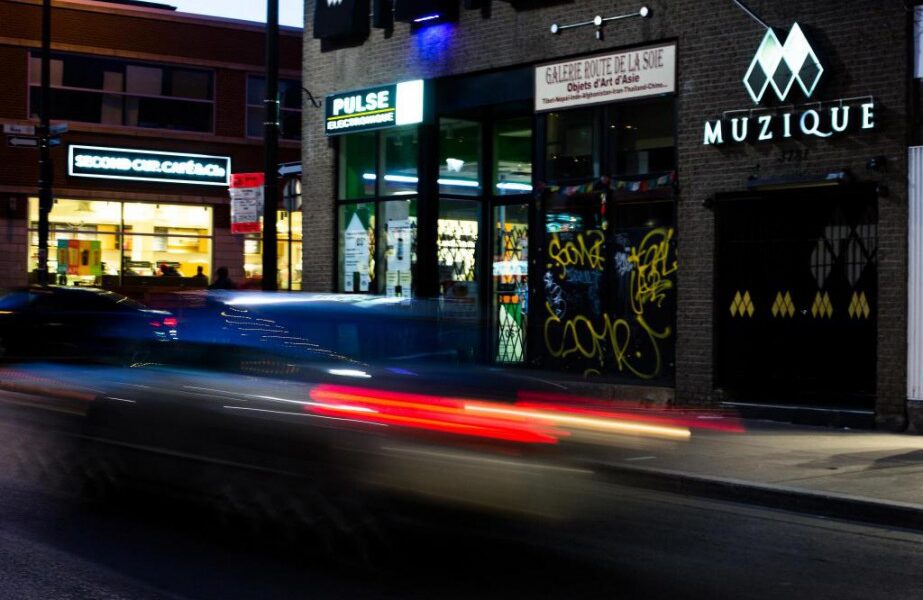
Muzique is another popular dance club, located at 3781 St. Laurent Boulevard, which you can’t miss due to the long queues outside it every weekend. It has two big rooms for dancing and lounging, and a rooftop where you can get a glimpse of the cross on Mount Royal—but drinks cost $1 more for the terrace view. It tends to get crowded on Friday and Saturday nights, so if you’re going with a group, it might be worthwhile to reserve a table and score some extra space for yourself. 

You will find a diverse range of music to dance to, as the DJs draw from all kinds of genres and places around the world. They offer a coat check and, although the drinks are already not too pricey, there is also a special discount for women before midnight. If you’re interested in attending one of the events they host, consider going to their 13th anniversary event on Oct. 4 where Fedde Le Grand will be performing. 

3. Mad Hatter

For a more chill night out, head to the Mad Hatter Pub, at 1240 Crescent Street. This pub offers a wide range of drinks as well as some delicious Canadian cuisine for when hunger takes over. Although this is more of a sit-down place, the music can reach high volumes, prompting people to have their own small and impromptu dance parties. 

Mad Hatter is a fun place to go to with a group of friends as it has some pool, foosball, and ping-pong tables that can bring out your competitive side. While the prices are reasonable and it’s not too heavy on the pockets, it is currently offering a “Jack’s 777 special” on Wednesday nights, which means you can order a special Jack cocktail, a Jack burger with fries, or two shots of Jack for $7 each. 

4. TRH Bar

With a skating bowl, a terrace, and a bar, this place hosts an interesting mixture of people that you must experience at least once. Located at 3699 St Laurent Boulevard, TRH––pronounced “trash”––often has a queue on weekends. Although it is known as a skater’s bar and those with skateboards get to skip the line, non-skaters can have just as much fun here. 

The music tends towards hip-hop and electro and it has limited spaces to sit, so you’re made to stand and vibe with the tunes. Often you’ll find some experienced skaters showing off their entertaining moves in the bowl, guaranteed to keep you entertained for a while. It’s really popular for serving PBRs so if that’s your taste, this will be the perfect fit!

Baseball, Sports

Albert Pujols and Aaron Judge are making history without chasing it

The last half-decade of big league baseball has been riddled with sweeping rulebook changes, suspensions, and blockbuster trades that have kept the sport in constant flux. Amidst the chaos, one of baseball’s purest elements—the home run—has convincingly held its place at the core of the sport. The 2019 season alone saw four teams shatter the previous single-season home run record of 267, with the Minnesota Twins leading the way at 307. Now, three seasons later, Albert Pujols and Aaron Judge are close to inscribing their own names into the long ball history books. 

Pujols, now in his 22nd and final season, sat just two home runs shy of 700 heading into the Sept. 23 matchup against the Los Angeles Dodgers. With one bomb in the second inning and another in the fourth, Pujols joined Hank Aaron, Babe Ruth, and Barry Bonds in Major League Baseball’s highly exclusive 700 Home Run Club

Judge, not to be overshadowed by the greatness of his elder statesmen, sits at 60 homers and needs just one more to tie Roger Maris’ single-season record with the Yankees. If Judge reaches the magic number 61, this would put him seventh on the all-time dinger list and first among players with a clean performance-enhancing drug record. These historic seasons have not been in vain either, as both Pujols’ St. Louis Cardinals and Judge’s New York Yankees sit atop their respective divisions with less than two weeks of regular-season baseball remaining.

In a league with a 146-year history, it can be easy to get lost in the prestige of the record books, but the reality is that these historic pursuits by Pujols and Judge are unfolding in front of our very eyes with legitimate implications heading into October. As tempting as it is to fixate on the record-breaking numbers themselves, the nightly performances that have defined this season for Pujols and Judge deserve their own close attention. Pujols’ 695th career homer was a two-run, pinch-hit blast that broke a 0-0 stalemate in the bottom of the eighth against the Chicago Cubs. Judge’s 60th homer was part of a five-run ninth inning that gave the Yankees their 89th win of the season and allowed them to regain a comfortable lead in a highly competitive American League East division. Pujols and the Cards are eyeing a return to the glory of their 2011 World Series win, while Judge and the Yankees seem dead set on ring number 28.

Regardless of what takes place between now and game one of the playoffs, the 2022 MLB season has been historic. Two generational talents—one well into his prime and eyeing a triple crown, the other a clear-cut hall of famer on an impressive farewell tour—are moving towards the mammoths that came before them. Every game has become a spectacle, every at-bat a chance to earn immortality in baseball’s record books. And yet, Pujols and Judge don’t seem to be as enamoured with the historical context as the rest of us. Despite announcing that 2022 would be his final season, Pujols himself made it clear that he’s not chasing anything at this point in his career. After all, he’s a two-time World Series champ, a three-time National League MVP, and a six-time Silver Slugger award recipient who quite literally has nothing left to prove. For Judge, the individual accolades are no doubt sweet, but as a Yankee, winning will always be the ultimate end. 

In an era spoiled with so much talent, it is easy for baseball fans to overlook the gravity of the two stars’ remarkable athletic feats. Numbers and record books aside, what Albert Pujols and Aaron Judge have accomplished and continue to accomplish is worthy of our praise and attention. As Judge continues his superstar ascent and Pujols marches into October for one final run at a ring, we should all pay close attention to the fleeting moments of baseball history that may lie ahead.

Commentary, Opinion

Ushering in a new future for McGill’s museums

Museums: A quintessential aspect of family vacations, school trips, and artsy dates. For centuries, they have offered visitors the chance to explore conceptual, social, scientific and artistic heritages. But museums hold more weight than most realize; they are inherently political and consistently perpetuate racism. Non-Western cultures are frequently misrepresented in exhibitions, and artifacts that were looted through colonial practices remain proudly on display. To create a space where non-Western cultures are respected, museums must be openly accessible, and institutions like McGill must embrace their role in sharing underserved historical narratives..   

Although museums often showcase foreign cultures and underrepresented aspects of history in an attempt to make them more widely available, the institutions themselves are all too inaccessible. Due to class and educational disparities, many people, particularly people of colour, lack access to the cultural and historical resources that museums can provide. This inaccessibility perpetuates the mythicization of various cultures and transforms museums into white spaces where people of colour no longer feel welcome, internalizing the concept of othering.  

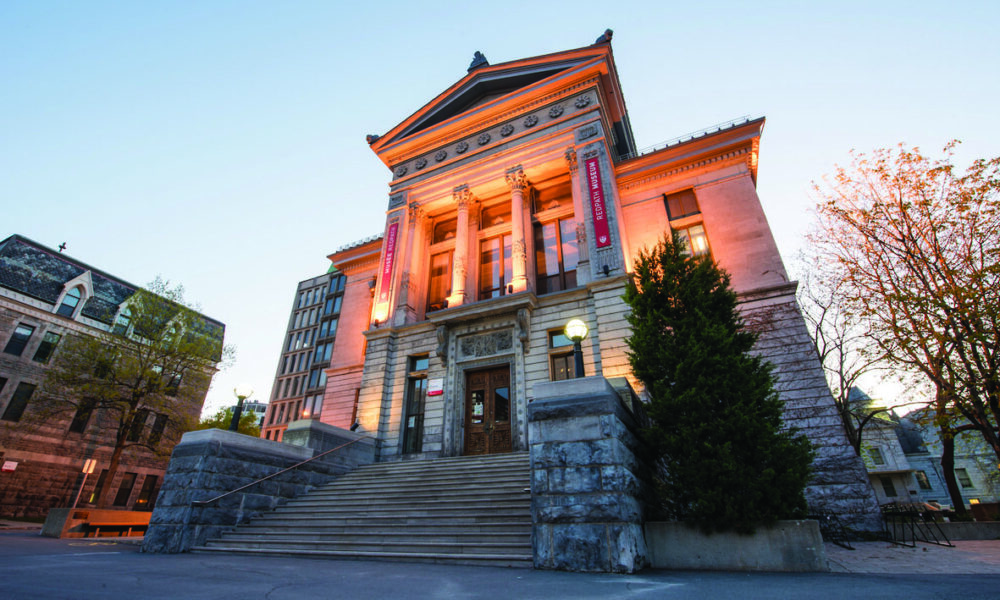
McGill’s Redpath Museum holds 17,000 archaeological and ethnological artifacts. Approximately 2,500 of these objects are from the African continent and are said to have been collected since the beginning of the 20th century, when British imperialism was in full swing. One cannot help but wonder about the origins of their acquisition, and what practices of colonial violence may have taken place in order for them to be present on McGill campus today. Considering the recent debate over whether the display of Egyptian mummies in Western museums is culturally insensitive or not, it is time for McGill to reconsider the presence of these artifacts in the Redpath Museum. 

Historically, many countries outside the Western world have had their histories stolen from them. Since formal colonialism came to an end, a widespread practice of concealing its atrocities from the public consciousness has developed, and museums have contributed to this cultural erasure. Further, following the death of Queen Elizabeth II, many aspects of the Crown’s colonial history are being revisited. Calls are growing in South Africa for Britain’s royal family to return the world’s largest known clear-cut diamond, mined by the South African colonial authorities and handed over to the British monarchy in 1905. Many diamonds and other precious gems and artifacts that the French and British Empires looted are displayed in museums as a proud representation of a dark colonial past. 

Neocolonialism can be combatted by making history more accessible. Western museums that hold stolen artifacts should be returning them to their countries of origin. Not only will this empower cultures that have suffered and continue to suffer at the hands of colonialism, but it would offer those most affected by colonial erasure to expand on their own personal histories. Further, McGill should be using the spaces dedicated to preserving history to educate students about Canada’s shameful colonial past that is currently being upheld in museums across the country. 

Many remain unaware that the majority of the McCord Museum’s collections are owned by McGill and that the museum has a contractual agreement to manage McGill’s Canadian History Collections. It would be a great step forward for McGill to have this museum expand on the aspects of history that students may not be informed about. The institution should be providing students and Montrealers—particularly those who have been impacted by colonialism, such as racialized people—with better access.
It is important that spaces dedicated to preserving history are transparent about all parts of the story, even those that may not be the most comfortable. There are many parts of history that have been concealed, like the fact that James McGill was a slaveholder, and it is high time that this type of historical information be made widely accessible. Universities play a central role in discovering and teaching history, and McGill must take its role more seriously while also disseminating non-white-washed history to all those looking to learn. 

Off the Board, Opinion

Greek life, behind closed doors

“Welcome to the club. You’re, like, one of the few pretty girls at McGill. Use it wisely.” No, that’s not a quote from a Mean Girls production at McGill. That’s a genuine thought expressed to me by a sorority girl at my first—and only—frat party. Following that linguistic beauty and feminist wonder of a statement, she asked me who I found cute so she could introduce me to them. No less than 15 minutes later, the guy I had pointed out had his tongue down her throat. That’s when I was forced to confront a notion that I always knew but somehow allowed myself to be blinded from in the pursuit of free beer and a party: I fucking hate Greek life.

I can’t say that my experience got much better throughout the evening. We’ve all seen the movies. We all know the stereotypes. I definitely wasn’t walking into this party expecting McGill’s best and brightest, but I thought “hey, it’s Canada. It can’t be that bad.” I was wrong. This party was riddled with flags so red, even the most colour-blind of bulls would have gone ballistic.

I was invited to the party by a friend who was rushing the frat. The theme: CEOs and office hoes —a classic. As an outsider, I can only describe the rush party as a souped-up peacocking of upper frat and sorority members trying to show off for their rushees. It was like a networking event for drunken first graders trying to seem like the coolest kids on the playground—the people they knew, the connections they had, the people who wanted them or wanted to be them. I beat a guy in beer pong twice, and, let me tell you, it was clear that I had committed sacrilege.

After that guy “let me win” (yes, he said that), I went looking for the free beer I was promised. Brothers kept steering me towards the jungle juice which, in all honesty, felt a little weird. I’m not implying there were roofies in there, I just know how easy it is to make a velvet hammer of a jungle juice: 90 per cent alcohol that tastes like 100 per cent juice but produces 150 times the bad decisions. No thanks, I’ll opt for drinking warm PBRs in the basement packed with sweaty, jumping 20-year-olds.

If those prior impressions of Greek life hadn’t already turned me off from frat houses, this next one definitely did. For whatever reason, my friends were going upstairs, so I went with them. That’s where I saw it—bedroom doors that could be padlocked from the outside. Although it wasn’t clear exactly what purpose they served, I knew it wasn’t for anything above board. 

So, I never went to another frat party again. I didn’t really think too much about it until the Delta Kappa Epsilon (DKE) Roofie story began to spread by word of mouth and surfaced on the McGill subreddit. For those unfamiliar, three girls were allegedly slipped the date-rape drug Rohypnol at a DKE frat house party last October. No statements were made, but other frats like Sigma Chi closed off their own Halloween parties to outsiders, making it clear they only wanted people in attendance who would protect their own. Say what you will about frats and sororities, but their ability to bury skeletons and pawn off accountability is unmatched. 

A week after the story was posted, I witnessed their cult-like attempts at vindication firsthand. I asked a sorority girl about the incident, and she immediately went on the defensive for DKE. Later, to probe a little further, I asked her about a frat guy I saw for a short period of time. She told me she had “heard things” about him, but it wasn’t her information to share. The secrecy and insular nature had struck again.

Like I said, I fucking hate Greek life.

Montreal, News

Students claim negligence at newly constructed housing complex

On the first day of her lease at the new Le Mildoré apartment complex, McGill student Setareh Setayesh was dismayed to find most of the building still under construction. The unit she and her roommates had signed for was not ready yet, and they were placed in a temporary unit without some of the promised amenities. Setayesh told The McGill Tribune that there was also dust, debris, and construction equipment throughout the building. 

Owned by University Apartments Canada and located on Peel, the building was supposed to be completed in May 2022, but construction was delayed and was unfinished come Sept. 1, when many residents’ leases started. 

Setayesh, U2 Science, explained that despite anticipating a delay in the completion of the building, the management team had reassured her that her unit would be ready on time.

“Three days before our allotted move-in date, my roommates and I received an email stating that our unit was, in fact, not ready, and that we would be placed in a temporary unit until Sept. 18 at the latest,” Setayesh wrote in an email to the Tribune. “The morning of [Sept.] 18, my roommate obtained a number from some construction workers to contact the building management, and he informed us that the room had not yet been inspected or cleaned and so our move-in would be delayed to [Sept.] 23.”

During construction, Le Mildoré was heavily advertised to McGill and Concordia students, with Concordia renting 22 apartments to use as student residences. Madelyne Mackintosh, U2 Science and a Mildoré resident, feels the owners took advantage of the relative lack of resources and knowledge students have of their housing rights.

“Lease terms began on Sept. 1 and the building is [still] wrought with issues, from the minor to the dangerously severe,” Mackintosh wrote in an email to the Tribune. “Yet, the corporation is now failing to meet their legal obligations, leaving those students in unethical and sometimes dangerous living situations, because they know we lack the time, money, and resources to ensure that they are penalized for their behaviour.”

Andrew Barker, leasing manager at the complex, expressed that the company was upset at the inconvenience that the construction delays had posed to the tenants. Yet, as they did not want students to be left without a home at the start of the semester, they decided to have students move into the completed units but to restrict floors and areas that remained unfinished. 

“The building has been certified safe by the architects and engineers who have signed and stamped the occupancy permit,” Barker wrote in an email to the Tribune. “It is very important for us that our tenants live in a building that lives up to their expectations, and we’re getting there. The contractor, for example, has a full-time team of four people triaging and assigning issues to the right tradespeople.”

Mackintosh and Setayesh, however, do not believe the building was safe when tenants began moving in. Mackintosh pointed to an instance where an electrical outlet allegedly shocked a resident, and despite immediately reporting the incident to management, they did not hear back until a week later.Both are part of a group of students living in the building who went to the Régie du logement to learn how to file notices; they hope that taking formal action will pressure the building management to take residents’ concerns more seriously and to address issues swiftly.

Read the latest issue

Read the latest issue