


Latest News

Off the Board, Opinion

Made with love

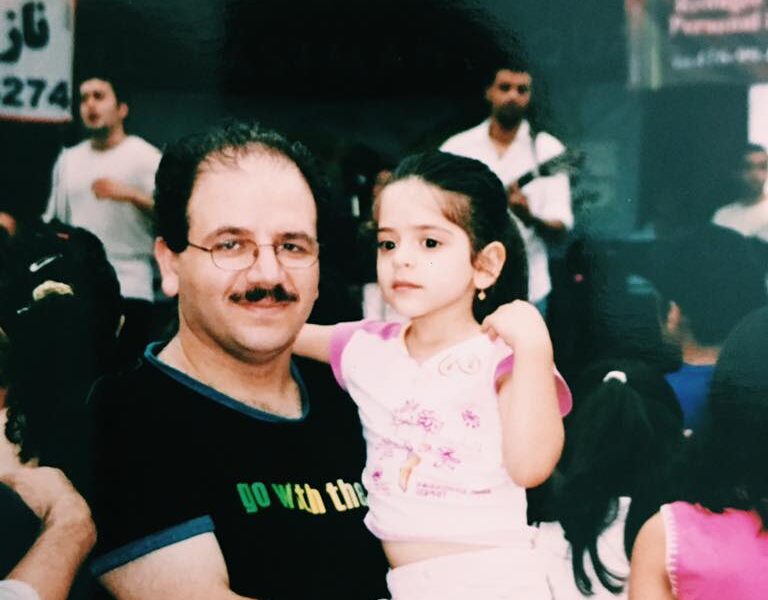
Growing up, I never had chicken nuggets or frozen pizza for dinner. Instead, there was a fresh, home-cooked Persian meal in front of me each night––and looking back, I was extremely unappreciative of it. As I have gotten older, I have grown to appreciate that the love of somebody labouring for twelve hours to make your favourite dish is not a feeling that everybody gets to experience, at least not on a regular basis. As silly as it may sound, understanding the love languages of those around you is vital to healthy relationships. It was through this newfound appreciation for the many different ways of showing affection that I began to value all the little things my dad did for me growing up—even if it just started with a stew.

When I was a kid I was a picky eater and somebody who did not understand that different cultures come with different foods. I truly thought that my parents were villains for not letting me have mozzarella sticks for dinner like many of my peers did. When I was served an intricate Persian meal, I would promptly complain and ask for spaghetti. But this never stopped my family from showing their love in the way they do best, and that is how Persian spaghetti entered our home. A combination of Canadian and Persian food that had spaghetti and meat sauce but also incorporated potato tahdig—an addition that my sister and I would fight over—it became a dish my dad made often. 

My dad is the epitome of what you would call “a man of few words.” You can tell him a 20-minute-long story, and while he will pay careful attention the whole time, there is a good chance that the only response you will get is a nod. When I was younger this would frustrate me; all I wanted was some kind of conversation. But as I have grown older, I have learned to appreciate the way that he shows his love. To put it in terms that my father would not fully understand: His love language is definitely ‘acts of service,’ and cooking allows him to express his love for our family. 

A lot changed as I grew up, but the quality and the love that went into the food I ate remained consistent. Even when our family shrank from four members to three after my parents’ divorce, and then three to two when my sister went to university, my dad would spend hours cooking. I did not understand why he spent so much time in the kitchen after a long day at work when it was just us two. Drawing on what I saw from my peers around me, at Thanksgiving and Christmas feasts, I thought that me and my dad at the dinner table, re-watching Gilmore Girls, was not exactly the right occasion for sabzi polo. But my dad does not need an audience. He just needs one person that he loves at the table, and he is happy to spend 10 hours over the stove, making sure that everything is perfect. 

Although it sometimes saddens me that I failed to fully appreciate what it meant when my dad would pull out estamboli on a random Thursday night when I lived with him, I know that to him, seeing me hastily finish the food on my plate was more than enough. On the train to my dads, my sister and I talk over what we want to eat at home. I know her go-to is ghormeh sabzi, an herb stew, and mine is always fesenjoon, a pomegranate and walnut stew that takes all day to make. When we get into my dad’s car, we both know that his first question will be, “what dishes do you two want this weekend?”

McGill, News

McGill reinstates Winter 2022 exchanges

On Oct. 22, just 17 days after cancelling all student exchanges for the Winter 2022 term, McGill announced that exchanges would be reinstated. This development came a day after Global Affairs Canada lifted the non-essential travel advisory, which McGill based their travel rules on amidst the COVID-19 pandemic. Although the return of exchange programs was met with student enthusiasm, the backtracking was frustrating for some who had made alternate plans following the initial cancellation. 

McGill Abroad, the office that coordinates exchanges, contacted students on Oct. 22, asking them to confirm whether they were still interested in participating in their planned programs during the upcoming winter semester. Students were asked to make their decision by Oct. 27 and were told that they would receive confirmation about whether their exchange will go forth during the week of Nov. 1, once McGill Abroad coordinates with their partner institution. 

In an email to The McGill Tribune, Frédérique Mazerolle, a McGill media relations officer, explained the implications of Canada’s updated travel advisory, noting that McGill is trying its best to coordinate the exchanges, but that some may not work. 

“With the removal of the global travel advisory, McGill will be able to return to pre-pandemic travel conditions, allowing for freer movement of students, faculty and staff,” Mazerolle wrote. “Although we cannot guarantee that it will be possible, McGill is working with students and partner universities with the aim of making it possible for students to proceed with their exchanges.”

Many students were excited by McGill’s announcement, including Juliette Debray, U3 Engineering and co-creator of a petition that called for the reinstatement of Winter 2022 exchanges. While Debray was happy to hear about the reversal, she also acknowledged the negative impacts of McGill’s “hasty” decision to cancel them in the first place.  

“Obviously, I’m really happy,” Debray said. “But, I know I am lucky in the sense that the only decision I made in between was [changing flights]. I know people that signed leases [in Montreal] for their winter semester and so now will have to deal with that if they […] go on [an] exchange [….] McGill said they were not going to change their mind [about winter exchanges] and then they did.”

Debray also has a theory that other universities, such as the University of British Columbia, timed their announcements on Winter 2022 exchanges under the assumption that Global Affairs Canada was going to adjust their travel advisory. Debray suggested McGill should have done the same.

Some students, like Max Garcia, U2 Arts and the other co-creator of the petition, were worried about meeting the deadlines set by their host university and about obtaining proper immigration documents in time. The application deadline for Garcia’s intended host university, Sciences Po, in France, had already passed when McGill back-tracked on their cancellation. 

“The office contacted me and all the other students who had planned to go to Sciences Po as we missed the application deadline [due to the cancellation],” Garcia said in an interview with the Tribune. “It is a quick turnaround, so I hope we can all get our visa applications through.” 

Debray and Garcia’s petition garnered over 800 signatures from students frustrated by McGill’s initial cancellation. Garcia believes it may have played a role in McGill’s decision to reinstate exchanges. 

“I think [the petition] had a real impact in mobilizing students to express their frustration with the administration’s decision,” Garcia said. “I was really happy along with everyone else [about the reinstation]. I am just glad it all ended well and we are able to go abroad.” 

McGill, Montreal, News

Kahentinetha demands a suspension to New Vic Project, calling for further investigation into the site’s history

Kahentinetha, a Kanien’kehá:ka kahnistensera (Mohawk Mother) of the Bear Clan and founder of Mohawk Nation News, is demanding the suspension of McGill’s New Vic project. In a brief posted to the Mohawk Nation News website, Kahentinetha called on McGill to acknowledge Indigenous sovereignty and to allow an investigation team—comprised of a surveyor, geologist, search dog, all guided by GeoView Pro software—to search for unmarked graves she suspects may be on the project site.

In the Mohawk Nation News post, Kahentinetha argued that because the Royal Victoria Hospital site sits on unceded Kanien’kehá:ka territory, the kaia’nere:kowa (The Great Law of Peace), pre-colonial Mohawk law,  applies. Under this law, the Kanien’kehá:ka kahnistensera are caretakers of the land, and all decisions regarding it must be made with their consent. Additionally, Kahentinetha claimed that the Canadian government held money from the Iroquois Trust Fund, loaned it to McGill Universityin 1847, and never paid it back. 

According to a McGill media relations officer Frédérique Mazerolle, McGill’s Indigenous Initiatives Unit and the Indigenous-owned consulting firm Acosys aimed to include Indigenous peoples in producing the project’s design.

“There have been several exchanges, including information sessions and round table discussions with Indigenous education organizations, Mohawk alumni, and Elders,” Mazerolle wrote in an email to The McGill Tribune

In an interview with the Tribune, Kahentinetha argued that the land should be treated as an archeological site until further investigations are completed.

“[Rumours of unmarked graves on the property] are becoming more and more serious, so we would like that investigated,” Kahentinetha said. “And certainly there are our people buried up there in pre-colonial times, and we want that investigated as well. Nothing can proceed until that is done [….] If there’s going to be any investigation, we want to be involved with that. We want it done to our satisfaction.”

Kahentinetha believes McGill’s exchanges with Indigenous peoples should go beyond discussions with select community representatives, and should instead look to gain the consent of each member of the community, according to structures of Indigenous law.

“I do not think any one of [the Indigenous groups and representatives consulted] lives by the Great Peace,” Kahentinetha said. “We do not want consultation. You have to get our permission, and our permission we get from the Great Law [….] Each one of us has to have a say in whatever the decision is. Each one of us. Nobody speaks for us.”

In the 1950s and 60s, Dr. Donald Ewen Cameron experimented with torture techniques at the Allan Memorial Institute, a former psychiatric hospital next to the old Royal Victoria building. One Mohawk Nation News article features an interview with Lana Ponting, a survivor of these experiments, who says, “I am convinced that there are bodies buried in the property in the interview [….] I was really concerned about Indigenous peoples. I firmly believe that some of them were in the Allan.”

Kahentinetha, too, wants to send a forensic and archeological team to search for the bodies of potential Indigenous and non-Indigenous victims of Cameron’s experiments.

Public consultation on the New Vic project is ongoing. The rotisken’raketeh (Men’s Council Fire) will present Kahentinetha’s brief to the Office de consultation publique de Montréal (OCPM) on Nov. 10.

Mazerolle did not specify whether McGill would change the direction of the project to investigate human remains, pointing to prior studies conducted onsite.

“McGill commissioned a study on the archeological potential of the Royal Victoria Hospital site in 2016,” Mazerolle wrote. “According to this study, it is unlikely that Indigenous remains will be found on the New Vic Project site. However, McGill remains committed to collaborating with the government and First Nations communities regarding potential vestiges. Should such vestiges be found, it will be made public immediately, the work will be suspended, and an archaeological officer of the Minister of Culture and Communications will be alerted (as stated in the Cultural Heritage Act.1).”

While the study Mazerolle references determined that pre-colonial Indigenous settlement on the project site was unlikely, it also states there is no way to confidently know whether it was a burial site, unless human remains are found.

McGill plans to begin construction on the New Vic in 2023.

McGill, News

McGill students frustrated with university’s frequent internet issues

Since October 2017, McGill has been rolling out its Network and Information Security Upgrade initiative. These upgrades seek to improve network infrastructure by installing new equipment and access ethernet cables throughout McGill’s buildings and creating wireless local area networks (WLANs), among other projects.

Despite these efforts, students and faculty have experienced regular connection issues. The most recent network failure on Oct. 12, which caused campus wide internet disruptions, prompted IT Services to reboot McGill’s firewalls, which the university claimed successfully remedied the issues. 

Some McGill students attest that these frequent connection issues are disruptive to their learning and parts of their everyday life. Without stable internet connection, students have trouble accessing their lectures and other class material on myCourses and are cut off from using social media to communicate with classmates, family, and friends. 

Ciara Balhi, U1 Arts, said she is often left with no choice but to connect to the guest wifi and has had to give up attending her online lectures on campus since her Zoom meetings regularly freeze.

“Cafés are definitely a safer bet,” Balhi said in an interview with The McGill Tribune. “When I think I definitely have to watch lectures [live], I go to a café to be sure that the wifi will work [.…] I have to pay for it, instead of just going to the library which is free, as it should be.” 

The university’s IT Services recommends that students avoid busy areas when connected to McGill’s wifi in order to prevent videos from freezing or being choppy. However, for students living in residence, this recommendation is not always easy to follow.

Robert MacLeod, U1 Engineering, shared Balhi’s concerns regarding McGill’s wifi, adding that he frequently has to reprioritize his tasks because he cannot rely on his residence’s wifi. “I did have one case where [the wifi] just disconnected and I tried to [re]connect […] for a solid 10 minutes,” Macleod said. “Luckily, I wasn’t doing anything particularly important at the time. But, had I been in a midterm, that’s one fifth of the entire time that I have to do it that is gone [since most of my midterms are only 50 minutes long].”

The spotty wifi has posed an additional challenge for international students, many of whom rely on video call apps such as FaceTime and WhatsApp as their primary methods of contacting their families. Maisie Wynd Smith, U1 Arts and an international student, depends on McGill’s internet to contact her family at home. In an interview with the Tribune, Smith explained that for her, irregular wifi can mean isolation from her family.

“Before I had a SIM card, I would rely on the wifi. When my wifi was not working, I could not contact my parents,” Smith said. “It is just a large problem across the board […] and I just don’t see why [the wifi] is such a hard issue to fix [for McGill].”   

Frédérique Mazerolle, a McGill media relations officer, stated in an email to the Tribune that the IT Services team has been working diligently to ensure a sustained internet access this Fall. 

“We continue to monitor issues as they arise and have implemented a number of changes over the past few weeks to help address these issues and improve service,” Mazerolle said. “[In the meantime] we encourage all users to contact the IT Service Desk to report issues with any McGill IT Service.”

McGill, Montreal, News

Divest McGill protests RBC’s investment in fossil fuels

Members of Divest McGill, along with other McGill students, joined local climate action organizations such as Extinction Rebellion Quebec and Greenpeace Quebec on Oct. 29 in front of the Royal Bank of Canada (RBC) office at 1 Place Ville Marie, protesting the bank’s investments in fossil fuels. 

In front of the building, protestors used their outfits, signs, banners, and shouts to signal their discontent over the bank’s investment. Many showed up in costume, dressed as investment bankers, pipeline workers, and even the RBC lion. Others poured black paint onto the sidewalk in front of the bank, to symbolize oil spilling out of the pipeline. 

Louis Ramirez, a national organizer with the Banks Campaign of the Sunrise Project—a project that supports social movements that are working toward transitioning from fossil fuels to renewable energy—spoke at the protest. Ramirez translated and delivered a speech written by Emily Hardie, U0 Arts and Divest member, about their shared grievances against RBC. Ramirez explained the importance of directing climate action toward banks in an interview with The McGill Tribune.

Divest McGill members held their banners high as they walked to RBC, drawing honks of support from cars driving through downtown. (Brian Schatteman / The McGill Tribune)

“Capital is almost as responsible as anyone else for the climate crisis and for [the] colonial crises we are facing today,” Ramirez said. “Among these institutions, RBC is the worst.”

RBC is Canada’s number one bank financing fossil fuels and number five in the world, according to the Banking on Climate Chaos 2021 report. It has invested approximately $208-billion dollars in the fossil fuel industry since the signing of the 2015 Paris Climate Agreement. While other banks also partake in fossil fuel investment, Divest members, including Sophie O’Reilly, U3 Arts, believe that going after the largest investor in Canada will send a powerful message.

“Calling on RBC to divest from fossil fuels will set an example [for] other banks,” O’Reilly said. “It’s one of the biggest, so [RBC divesting] will revoke the social license to continue investing in the fossil fuel industry. Other banks will follow their lead, and potentially, [so will] other organizations, such as universities.”

The protestors took up a large space in front of RBC, creating an imposing presence with their chanting. (Anoushka Oke / The McGill Tribune)

Protestors emphasized the impact these investments have on Indigenous communities. RBC invests heavily in TC Energy, a company that is currently building a pipeline that runs through the Wet’suwet’en nation without their consent. In her speech, Hardie stood in solidarity with the Wet’suwet’en and urged attendees to join their struggle against the pipeline. 

“In planning this event, we are turning up as allies of a different nation, the Wet’suwet’en, who are fighting against a pipeline that threatens to ruin their homeland,” Hardie said. “With their permission, we are rallying behind their message, ‘RBC is killing me,’ which is no metaphor, as the land threatened by RBC’s investments is their very basis of survival.”

Divest McGill members and other students met at the Y-intersection on campus ahead of the protest.  After listening to several speeches from Divest members, students made their way toward RBC, chanting slogans like “RBC get off it, injustice lines your pockets, you’re making dirty profits, divest from all that’s toxic,” as they marched.

Protestors dipped fake money bags in black paint to represent the capital invested in oil and other fossil fuels. (Anoushka Oke / The McGill Tribune)

At the Y-intersection, Mikael Branch, U3 Arts and Divest member, emphasized that the protest was an important step not only in safeguarding the environment, but in protecting Indigenous sovereignty and livelihoods.

“We encourage [you], most importantly, to learn from and listen directly to the voices of Wet’suwet’en leaders, such as members from the Gidimt’en clan,” Branch said. “This is the true meaning of solidarity and reconciliation. Spread the word. Share the hashtag #RBCiskillingme. Let people know about the atrocities being committed today against the Wet’suwet’en Nation. Now is the time. We the people, united, can make a difference.”

Sports

Equal access to recreational facilities is vital

A recent Montreal-based CBC study found a direct correlation between a borough’s average income and the number of sports and recreation facilities in the area.  This inequity leaves youth who are unable to pay for private sports facilities or gyms with little opportunity to get involved with their communities in an active way. Equal access to athletic services is an essential step to providing youth in lower-income boroughs with better opportunities. Reducing the distribution gap of sports and recreation facilities throughout Montreal is imperative to an increased quality of life for youth. 

In Montreal, the economic disparities between different boroughs are massive. Côte-des-Neiges–Notre-Dame-de-Grâce, one of the lowest income areas in Montreal, also has the highest number of children, with about 27,000 kids under the age of 14. Despite this, the region only has 13.2 recreational facilities per 10,000 inhabitants. To put things into perspective, one of the high-income neighbourhoods, Île-Bizard–Sainte-Geneviève, boasts 53 facilities per 10,000 inhabitants. The areas that are most in need of access to public recreation centres are those that have the least—and this opportunity gap only widens as children grow older.

Access to community sports services is fundamental to youth development and is even more vital in low-income boroughs. Participation in sports comes with a plethora of benefits for young people, from better test scores to increased graduation rates to happier home lives, to decreased drug and tobacco use in high school. All of these benefits are less about the direct impacts of, say, soccer to a young person, but are more about the positive externalities that accompany athletic involvement. Playing on a sports team, or even participating in a fitness class at a community centre, builds skills that are pivotal in a child’s development, such as teamwork. This supportive space also allows young people to integrate and meet one another organically, regardless of racial or economic differences. These are vital social and interpersonal skills that can heavily improve quality of life as these young people transition into adulthood. Community-based activities promote positive growth and can prevent vulnerable youth from falling into criminal or illegal behaviour during adolescence. 

Access to sports facilities and involvement opportunities have a chance at changing Montreal’s crime trajectory. Even the United National Office on Drugs and Crime has acknowledged that access to sports is an effective method of crime prevention. Physical activity in supportive social contexts, such as those fostered in community facilities, can act as safe spaces for vulnerable youth and can provide healthy ways to pass time. 

While police in Montreal are increasingly imposing invasive crime prevention measures, such as security cameras, communities should look toward structural change for meaningful long-term effects. Policing does not reduce crime—social reform does. Instead of enabling further policing of youth in susceptible regions, there need to be more resources that support young people’s growth in all Montreal regions, but especially low-income ones. 
Children should not be penalized because of the financial situations they are born into. Deprivation of adequate sporting and recreational facilities directly hinder the development of valuable life skills. With the upcoming election, it is important to call on city officials to commit to enacting meaningful change on this front, such as reallocating funding toward public recreational facilities. Policing low-income areas without addressing root causes will not result in long-term improvement. Montreal youth deserve the opportunity to thrive in athletics and in society, and it is up to the government to provide it.

McGill, Montreal, News

SSMU Legislative Council discusses New Vic Project and approves motion condemning Bill 2

The Students’ Society of McGill University (SSMU) Legislative Council convened on Oct. 28 to hear from Dean of Science Bruce Lennox, who provided a midpoint update on the New Vic project and answered questions regarding the project’s accessibility, sustainability, and community consultations. During the question period, councillors harkened back to the quality of the first botched Activities Night of Fall 2021, and pressed on the repeated absence of SSMU president Darshan Daryanani. Councillors also voted on referendum questions and a motion to condemn Bill 2—a bill that proposes to add sex and gender as separate categories to birth certificates, and would also require people to undergo gender-affirming surgery to officiate a sex change on their birth certificate. 

Lennox, as academic lead of the New Vic project, provided a project timeline and mock-ups of what the interiors will look like. Lennox also shared some insights gathered from consultations with Acosys Consulting Services, an Indigenous consultancy group.

“What has come out of these [many] discussions since January is a series of potential [Indigenous] representations [on the New Vic site],” Lennox explained. “[The New Vic site may include] everything from sculpture, landscaping, garden design, interior artwork, to actual interior shaping of spaces that have their origins in Indigenous culture.” 

During the question period, council members inquired about Daryanani’s absences and questioned how the society can run smoothly without a president. Vice-president (VP) Finance, Éric Sader, who has taken over Daryanani’s role as signatory on SSMU meeting minutes, stated that the president is not currently active in his role.

“The president is on leave at this time and I would ask everyone to respect his privacy,” Sader said. “And I can confirm the society is functioning quite well.”

Next, VP Student Life, Karla Heisele Cubilla, acknowledged the shortcomings of the first rendition of SSMU’s activities night, but looked forward to the upcoming activities night 2.0 running from Nov. 1 to 3. 

“The reason why we did not do an in-person fair event for the first edition is because this was planned in June,” Heisele Cubilla said. “There were no vaccine passports. No venue would take more than 150 people, so it was a big struggle. For the second edition, we are doing an in-person event […] for three days, and we are also doing a hybrid option which is via Zoom in Redlands, so we are doing our best.”

Further motions regarding SSMU referral service fees, including the Motion Regarding the MUSTBUS Fee-Levy, the Motion Regarding CKUT Existence, and the Motion Regarding QPIRG Existence, all passed. During the debate period for each motion, Medicine Representative Benson Wan proposed an amendment that would require groups requesting fee increases to provide financial reports.

“Councillor Wan, your dedication to budget transparency,” Ashkir started, “I hope it is noted in the minutes and in any article that is written about this.” 

Moment of the Meeting

Speaker of the Legislative Council Alexandre Ashkir noted that almost 50 per cent of SSMU councillors did not attend the mandatory anti-violence training and explained that follow-ups will be scheduled to ensure those who missed it had valid reasons. 

Soundbite 

“It would call on the Quebec government to remove the provisions of Bill 2 that infringe on the autonomy of trans, intersex, and non-binary people in Quebec [….] If this motion passes, it will show the trans and intersex and non-binary community on campus SSMU’s determination in supporting them. As such I urge all of you to vote ‘yes’ on this motion and condemn the transphobic bill proposed by the Quebec government.” –Arts Representative Yara Coussa on the Motion Regarding Condemnation of Bill 2

A previous version of this article incorrectly stated that almost 50 per cent of SSMU workers did not attend the mandatory anti-violence training. In fact, it was 50 per cent of SSMU councillors. The Tribune regrets this error.

Commentary, Opinion

Pandemic prison conditions emphasize need for reform

Throughout the pandemic, prisons have faced a reckoning, and Montreal’s Bordeaux prison is no exception. The prison has seen some of civilians’ worst fears play out, from multiple COVID-19 outbreaks, to inadequate resources, and more recently, to more than 1,000 inmates locked in their cells for over 24 hours while staff conducted an institution-wide search. These recent events, along with similar happenings in other prisons around the world, have re-energized calls for prison reform and restorative justice

The discourse was revitalized in the wake of the summer 2020 protests, which saw the Black Lives Matter movement take to the world stage following the police murder of George Floyd. The movement calls upon civilians and policymakers alike to rethink, and even do away with, the current criminal justice system in an effort to revitalize communities. The crisis at Bordeaux prison calls for renewed discussions in the Montreal context and also presents an opportunity for McGill students to take part in the debate. Although prison conditions may seem irrelevant or out of the control of many McGill students, the community must not turn its back on Bordeaux. It is the responsibility of all those living in Montreal and Canada to take a stance on the injustices festering in the prison system, given that these institutions are funded by tax dollars and have long-lasting impacts on the lives of marginalized youth. 

One of the most common arguments in favour of prison reform is that the current system is rife with human rights abuses with little to no accountability mechanisms. Throughout the pandemic, many Bordeaux prisoners’ basic human rights were disregarded due to the inadequate allocation of resources. With minimal access to showers, books, phones, or visits, those behind bars faced inhumane periods of isolation and solitude. Incarcerated people and employees alike protested the conditions, with over 30 engaging in a hunger strike last February to protest a lengthy  14-day confinement measure. In another instance, prison workers called on the government to provide adequate vaccination resources to the prison following a series of outbreaks. The blatant violation of human rights in these cases serve as a stark reminder of the necessity of prison reform. According to the United Nations’ recommendations for criminal justice and prison reform, prison authorities have the responsibility to ensure that the treatment of incarcerated people is in line with the law and respects their human rights. At the end of the day, it is imperative to guarantee incarcerated people, many of whom are jailed for non-violent offenses, the rights with which they were born.

In addition to assuring human rights, prison reform can support communities and promote equity and anti-oppression. In Canada, marginalized communities, most notably Indigenous individuals, are disproportionately incarcerated as a result of long histories of systemic discrimination in legal, political, and social spheres. Since systemic inequalities extend to all parts of the criminal justice system, including policing, sentencing, and prosecution, marginalized communities are often overrepresented in prisons. Meaningful prison reform must be accompanied by the adoption of anti-oppressive policies within the criminal justice system, ideally with an emphasis on revitalizing the communities that have been disproportionately affected. 

Conversations regarding prison reform should not be taboo: Students can take the lead in calling for change in an arena where older generations have often been hesitant to make strides toward justice. Students at McGill and beyond can do this by educating themselves on the issue by engaging with racialized scholars’ work on prison reform and abolition, contacting their local members of the National Assembly and parliament, and starting discussions about what prison reform could look like in the context of their own communities. Ultimately, it is only through continued dialogue about criminal justice that meaningful reform can begin.

Research Briefs, Science & Technology

The ebb and flow of fish biomass over the decades

The oceans once held what humans considered to be a limitless supply of fish—populations were so abundant that it was nearly inconceivable that the waters would ever run out. That viewpoint was challenged in the ‘80s and ‘90s as overfishing caused fish stocks in the North Atlantic to rapidly collapse

According to a recent study published in Science Advances led by Eric Galbraith, a professor in the Department of Earth and Planetary Sciences at McGill, the number of fish in the world’s oceans has plummeted in recent years, reducing the rate at which nutrients are cycled. The study aimed to quantify the amount of economically viable fish biomass in the ocean and the effects that changes in the biomass would have on ocean ecosystems.

“I think what was really unique about our [study] is [that] we were able to constrain it, at least, by using satellite data,” David A. Carozza, a research associate at UQAM and co-author of the study, said in an interview with The McGill Tribune. “At least we know that our model represented peak [fish] harvest [….] It was a different approach, but still of a comparable magnitude to other studies.”

The researchers used fishery data to estimate the historical biomass of fish, molluscs, and crustaceans at different time periods. They found that pre-industrial biomass hovered around 3.3 billion tons, but that it had dropped by approximately 47 per cent by the 1990s.

 “The scale that we worked with was large marine ecosystems, mostly coastal ones, around peak harvest,” Carozza said.“And using that information, we were able to […] literally backtrack into the past so we know that the model worked into the present day.”

Fish biomass today is slowly increasing as it recovers from the global overfishing crisis of the ‘90s. This recovery process, however, is extremely fragile: Although fishing is far more regulated now, the severe reduction of fish biomass means that population levels are more sensitive to perturbations from fishing activities.

“On the policy side, there’s been a lot of imbalance between different countries. Larger fisheries are able to travel farther out in the ocean where there’s less oversight,” Carozza explained. “Although there are some promising statistics, I’m still concerned about the state of fisheries globally.”

The study’s model elucidates how changes in fish biomass affect deep water respiration and carbon levels at the ocean’s surface through carbon sequestration.

“If you were to add fecal pellets, you [would] reduce oxygen content since bacteria use oxygen in this respiration process,” Carozza said. “We observed the opposite, where when fecal pellets are reduced, deep water respiration is also reduced.”  

Fish contribute to carbon sequestration in a fascinating way. Abundant phytoplankton in the ocean creates a large draw on carbon from the atmosphere. Phytoplankton is consumed by larger organisms, and this consumption continues up the food chain until the carbon content reaches fish. The excrement that fish produce then drops to the ocean floor. This process is very efficient, with pre-industrial fish populations accounting for 10 per cent of organically sequestered carbon.

“There’s no point in counting phytoplankton, they don’t have a part in [sequestering carbon in the deep ocean],” Carozza said. “And they are quite small, very little [carbon] is exported. Even smaller fish are able to release fecal matter that can escape the mixed layer of the ocean, where that matter would otherwise reside for hundreds of thousands of years.” 

Although there are other factors that cause fish populations to decrease, the study found overfishing to be the predominant driver. 

“For drivers other than catch, the ecosystem-level impacts, over a variety of marine ecosystems, were simply not known and could not be integrated into our modelling framework,” Carozza said.

The study stresses the importance of fish biomass not only for human consumption, but also for its role in sustaining ocean chemistry and regulating carbon sequestration. It also highlights the importance of computer models in broadening our understanding of ocean processes and mitigating the human impact on the planet.

Arts & Entertainment, Pop Rhetoric

Halloween movies: When holiday culture meets the horror film genre

Randy Meeks from the cult classic Scream once said, “There are certain rules that one must abide by in order to successfully survive a horror movie.” In Meek’s words: “You can never have sex, you can never drink or do drugs, and never (ever, under any circumstances) say ‘I’ll be right back!’” These survival tips almost become common knowledge during the Halloween season, when horror films abound.  

In this respect, the Halloween film is not its own genre. It is necessarily connected to the greater world of horror. Halloween movies became popular not because they present a unique category in film, but because they became attributed to a cultural fascination with normative violence. 

One of the earliest Halloween horror movies is the aptly titled 1978 Halloween, directed by John Carpenter. This cult classic follows the story of Michael Myers, who escapes from a mental hospital 15 years after murdering his sister on Halloween and returns to his small town to kill again. 

The movie’s intrigue lies not in its most outlandish moments, but rather in its ability to distort reality in a terrifyingly realistic way. Myers is not only a fictional representation of a man at a loss for humanity, he is a killer in the ordinary world; he could be the viewer’s neighbour, their teacher, or their local grocery store clerk. 

What Halloween shows us is that the “Halloween movie” is not bound to the supernatural—quite the contrary. What is most alluring about movies like Halloween is their imitation of reality and perversion of the ordinary in the most twisted, ridiculous, unbelievable, and ghastly ways. 

The 1992 film adaptation of Bram Stoker’s iconic novel Dracula, directed by Francis Ford Coppola, can serve as further evidence. It’s been suggested that Stoker’s Dracula was based on Vlad the Impaler, a real-life 15th-century Romanian king. Dracula, like Myers, is a physical representation of our darkest fears: A person stripped of all humanity, now on the hunt for blood—more of an empty void than a monster.    

Horror films that lean toward the realistic can evoke sympathy for the monster. Mary Shelley’s famous Frankenstein, adapted to film in 1931, is an example of this; the viewer is drawn in because they witness a monster who, deep down, still has a heart. 

The aforementioned films, Halloween, Dracula, and Frankenstein, air yearly around Halloween. All three are labeled as either horror or thriller, but not as “Halloween.” This is because the so-called Halloween movie is not defined by the film industry, but is instead a projection of popular demand for horror.  


The final nail in the coffin suggests that the “Halloween movie” is best animated through the audience’s reaction. A scary movie is not a “Halloween movie” unless its fans come to associate the film with the holiday. The ordinary alongside the gruesome, however terrifying to admit, is inexplicably fascinating. After all, the spirit of Halloween, through its many permutations, originates in a weakened veil between the worlds of the living and the worlds of the dead—Halloween movies simply transport this magic into the power of film. 

Read the latest issue

Read the latest issue