


Latest News

Hockey, Sports

Vegas Golden Knights unveil a full house in hand

The Vegas Golden Knights have started their inaugural NHL season 4-1, boosted by surprisingly passionate fans. This sounds like something you would hear in an alternate universe—one where the late, villainous Harold Ballard was an honest businessman, where Wayne Gretzky was never traded, and where the Colorado Avalanche defeated the Detroit Red Wings to win last year’s Stanley Cup. But it is, in fact, reality.

When the NHL announced over a year ago that it would expand to Las Vegas, the hockey world didn’t expect the team to succeed. In a smaller city with most people more concerned with having cards in their hands than hockey tickets, it seemed unlikely that the smallest of the top North American sporting leagues would be able to survive. However, the Golden Knights have hit the ground running and show promise to provide sustainability in the long run.

Las Vegas christened the T-Mobile Arena in their third game to a sell-out crowd, while enjoying impressive fan support at their two prior games in Dallas and Arizona. They won their first three games convincingly—an unprecedented feat for a brand-new team made even more surprising when considering the roster was composed largely of young, undeveloped players. By virtually any measure, the franchise’s launch passed with flying colours.

Such success for a hockey team in an unestablished sports market would mean a lot for the future of NHL expansion. If Vegas continues to see this level of support, it will encourage the league to branch out even further to other untapped hockey markets. Fans could see a collection of expansion franchises enter the NHL within the next decade. Such a period would be reminiscent of the 1990s, when teams like the Florida Panthers and Carolina Hurricanes came into existence.

The immediate candidates for expansion are already apparent. For several years now, rumours have circulated not only about Las Vegas, but also about Seattle landing a franchise to establish a rivalry with the Vancouver Canucks, and the Nordiques returning to Quebec City. Quebec City bid on a team at the same time as Vegas, but concerns including doubts about the Canadian dollar’s relative weakness as well as maintaining the geographic balance of the league ultimately led the NHL to reject the bid. Seattle, meanwhile, just needs an NHL-suitable arena—which is already in the planning stages of development—in order to have the infrastructure to support a new team. If Vegas continues to profit, then it could just be a matter of time before Quebec and Seattle get their own clubs.

Beyond the obvious front-runners, there are other contenders for the creation of a new NHL franchise. Just days after the Golden Knights began their inaugural season, Tilman Fertitta—new owner of the NBA’s Houston Rockets—announced that he was looking into getting an NHL team in Houston, the fourth-largest city in the United States. Additionally, Portland and Kansas City have arenas capable of hosting an NHL team, but the league previously feared that these cities lacked the necessary fan support needed for a new franchise. With the strong start in Las Vegas, the NHL may be more optimistic with these unconventional locations.

Time will tell whether or not the Golden Knights expansion will pan out, but the early signs are promising. If it does, the hockey world could see rapid expansion of the professional game over the next 10 years. With 31 clubs across the United States and Canada, the NHL could boast the most franchises of any major North American sports league, and begin to rival the popularity of the NBA, NFL, and MLB. So, to all the hockey fans from the cities where having a home NHL franchise seems like a pipe dream, don’t give up. If the early success of Vegas is any indication, the wait could be much shorter than expected.

Commentary, Opinion

Don’t tell celebrities to “stay out of politics”

Many actors and actresses have recently been criticized for being too political in award acceptance speeches. Some celebrities explicitly avoid sharing their political opinions so as not to alienate portions of their fan base. As Mark Wahlberg said, “Both Republicans and Democrats buy movie tickets.” However, all democratic citizens have the right to participate in the public political sphere. To tell someone to “stay out of politics” simply because of their job is downright undemocratic and poisonous to civil discourse.

There are a few exceptions: People whose careers depend on their being unaffiliated with vested interest groups, such as non-partisan public servants and judges, are usually required by convention, and rightly so, to remain neutral.

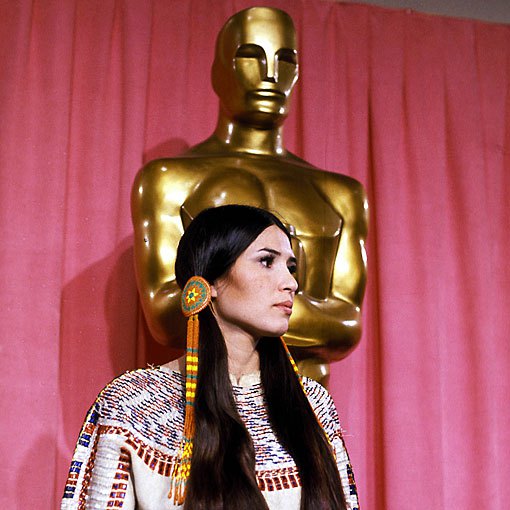
That leaves everyone else, including famous people, free to share their political opinions as they see fit. Celebrities often take advantage of their fame to broadcast their political ideologies or engage in activism, though not without controversy. One early example of the politicized acceptance speech—or rather, rejection speech—was that of Marlon Brando at the 1973 Oscars, more than 40 years before the #OscarsSoWhite debate. He sent Sacheen Littlefeather, a Native American rights activist and actress, in his place to reject the award and present a speech about the harmful effects of misrepresenting Native Americans in the media. Littlefeather was blacklisted in Hollywood at the behest of the FBI. Despite orchestrating this, Brando faced little backlash compared to Littlefeather. The institutional response from both the United States government and Hollywood was to condemn Littlefeather for using her public status to bring a controversial political issue to light. This kind of political commentary was unprecedented in the realm of entertainment, especially at the Oscars—which receives a broadcast audience of roughly 85 million viewers today.


The criticism aimed at actors, musicians, and athletes for speaking their minds would be better focused on their arguments and opinions, so as to promote discourse and debate. Yet, critics cry for abstention, not discussion.

The primary argument behind the call to “stay out of politics” is that celebrities are out-of-touch with average citizens and have a greater audience than most people. This is highly ironic, considering that many politicians come from upper-middle socioeconomic classes, and have similarly poor claims to speak for the average citizen. The criticism aimed at actors, musicians, and athletes for speaking their minds would be better focused on their arguments and opinions, so as to promote discourse and debate. Yet, critics cry for abstention, not discussion. While reaching a greater audience may be seen as an unfair advantage, that doesn’t mean they can’t use it, just as any citizen uses the resources available to them to make their voice heard.

Urging celebrities to stay out of politics also implies that political issues are too complicated or nuanced a field for most, and are best left for the government to sort out on its own. This is completely absurd, as democracy is grounded in the idea that representatives in government work for their constituents and support the policies that their constituents call for. The public sphere is the only place for political discussion to occur, whether electronically or face-to-face. The government cannot properly promote peace, order, and good government without this communication; therefore, it is vital that all citizens are encouraged to participate in the political realm.

Talking about politics is not a privilege reserved for politicians—it is the right and imperative of every individual, famous or not. So whether they are Ryan Gosling or a McGill undergraduate student, all individuals have the right to use their platform to engage in politics.


Sydney King is a U1 Political Science major. She is perpetually debating dropping out and going to culinary school.


News, SSMU

SSMU Legislative Council in deadlock over AVEQ membership

On Oct. 12, the Students’ Society of McGill University (SSMU) Legislative Council held its third meeting of the Fall semester. The majority of the evening was consumed by an extensive debate on SSMU’s potential referendum to join the Association for the Voice of Education in Quebec (AVEQ), a body that represents university student unions around the province to the government.

In the Winter 2016 Referendum, the McGill student body voted against a non-opt-outable fee of $3.50 to become an AVEQ member. At the council meeting, VP External Connor Spencer brought forward a motion to reopen the issue for the Fall 2017 Referendum, prompting intense debate.

A major concern raised in the discussion is AVEQ’s one-school-one-vote principle. McGill’s large population means that it would be contributing more in student fees than other AVEQ members. However, McGill could still be outvoted by the other members. Education Representative Josephine Wright O’Manique, U4 Education, demonstrated strong opposition to joining for this reason.

“AVEQ has had years to attract membership, and has only gathered support from three schools,” O’Manique said. “Asking McGill undergraduates who already pay enough student fees and tuition to pay more to fund an organization with no value for them is unfair to the students we represent.”

Spencer, in turn, highlighted that the one-school-one-vote policy is based on principles of equality for all members. She cited the collapse of the Fédération Étudiante Universitaire du Québec (FEUQ), which broke down in 2015 because its members with smaller student bodies had fewer representatives.

“AVEQ tried to address [representation] by enacting the one-school-one-vote policy,” Spencer said. “Even though McGill will be paying more money, it is eventually for the better to allow provincial representation.”

Medicine Representative Andre Lametti brought up the concern that a new referendum disregards the opinions of students, given that a majority of voters were against affiliating with AVEQ in the Winter 2016 Referendum. However, Spencer argued that only 18 per cent of SSMU’s membership voted in the earlier referendum, of which 25 per cent abstained. Further, she cited turnover of students in the past two years as justification for a new referendum.

Councillors also questioned the fact that AVEQ is the only association SSMU has considered joining when alternatives exist, such as the Association pour une solidarité syndicale étudiante (ASSE), the Fédération étudiante collégiale du Québec (FECQ), and Union étudiante du Québec (UÉQ). Spencer clarified that the decision to observe AVEQ is based on reports passed down from the 2015-2016 SSMU VP External Emily Boytinck.

“Following the collapse of the Fédération étudiante universitaire du Québec (FEUQ) in 2015, two groups were created, AVEQ and the UÉQ,” Spencer said. “Emily observed both groups and reported back to the Council [….] The Council subsequently decided to put only AVEQ on the ballot for the Winter 2016 Referendum [….] Following the Referendum result, the Council mandated the VP External to keep observing AVEQ.’’

A member from the gallery, Joshua Chin, who served as Medicine Representative from 2014 to 2016 and Senate representative from 2016 to 2017, questioned the legitimacy of Boytinck’s reports and of AVEQ itself. First, he claimed that La Fédération Étudiante de L’Université de Sherbrooke (FÉUS) ceased affiliation with AVEQ due to ethics concerns and a lack of transparency. Second, he mentioned that on Sept. 26, 2015 the Assembly for National Student Association, now known as AVEQ, allegedly voted to appoint Boytinck to the future Board of Directors of the AVEQ, thus creating a potential conflict of interest.

Science Representative Mana Moshkforoush, who was mandated by the Science Undergraduate Society (SUS) to support holding a new referenda, questioned whether Spencer is also biased toward AVEQ when holding information sessions.

“The decision of the (SUS) to vote ‘yes’ was based on a presentation by AVEQ, and the VP External,” Moshkforoush said. “However, students have never heard of the concern [on representation] raised right now by the councillors [before voting].”

Chief Electoral Officer Alex Nehrbass later confirmed that Spencer’s actions are in accordance with SSMU’s  bylaws and that she has not engaged in an active AVEQ campaign. However, due to the remaining concerns regarding AVEQ, Council postponed the vote to its next meeting on Oct. 19 to consider alternative student associations’ presentations before making a final decision.

Student Life

Which is mightier: The pen or the keyboard?

The debate over whether or not students should be allowed to use laptops during lectures is a heated one that has sparked controversy at McGill for years. There are cases for both sides; a number of studies vilify laptops as distractions inhibiting students from fully processing information, yet, many students feel that laptop bans deprive them of an important learning and note-taking tool.

The increasing presence of technology in students’ day-to-day lives is met with more laptops and tablets in lectures. A study conducted by Winona State University in 2008 showed that out of all students who owned a laptop, 64.3 per cent of them brought their computer to lecture. Within that selection of students, each individual spent an average of 17 minutes out of the 75-minute lectures doing things unrelated to the class, such as checking social media accounts and playing games. How McGill professors approach this issue varies: Some professors find ways to actively incorporate the internet into their lectures, while others impose outright bans on any form of technology in the classroom.

Among some of the more commonly cited reasons in favour of laptop use are the faster speed at which students can take notes, increased ability to participate in class, and provision of new opportunities to engage with material.

However, some studies show that using a laptop to take notes instead of handwriting them results in lower marks. For example, researchers at Cornell University studied the effects of multitasking in the classroom and split students up into two groups—one of which used laptops in lecture and one of which did not. The study found that the students who used laptops scored significantly worse on a quiz handed out immediately after the lecture than the group of students who refrained from using laptops altogether. The results of this study were, in large part, due to the fact that many students used their computers to visit sites unrelated to the subject of their class; the laptops created a distraction.

In large part, the case for banning laptops has scientific roots—but whether or not it’s the professor’s jurisdiction to enforce such a ban is more controversial. For students with learning disabilities, the implications of laptop bans can be particularly discouraging.

“For some students who face specific barriers such as those related to a visual impairment or a learning disability, the use of a laptop in class may be critical for them to capture accurate notes related to the lecture,” Teri Phillips, director of McGill’s Office for Students with Disabilities, wrote in an email to The McGill Tribune. “While those students who have a documented disability requiring the use of a laptop in class can request an accommodation letter to do so, this presents the issue that their anonymity is no longer protected.”

Though the use of laptops in lecture can be polarizing, it is possible to compromise. Communications course lecturer François Mouillot strikes a middle ground when approaching technology in his classroom: Instead of banning laptop use completely, Mouillot asks students who use computers to sit on the right side of the room, and those who handwrite to sit on the left.

“[Separating the class] was about riffing off of the idea that screens are kind of like second-hand smoke,” Mouillot said. “[I want] to give a space for people who do not necessarily want to have to deal with the pollution of screens [and] I want […] students to think about how they engage with technology.”  

Mouillot’s approach—vertically splitting the class—is one of two ways to compromise with technology. Many professors at McGill separate their class based on laptop-use, sending those with computers to the back and those with pens to the front. By limiting mobility, this can divide the room in more than a physical sense.

Learning is not one-size-fits-all. While handwriting notes may work for some students, laptops are the clear choice for others. But before banning laptops from lectures, it’s worth considering the educational opportunities professors might be taking away from their students.

Out on the Town, Student Life

Make the most of The Montreal Museum of Fine Arts: This season’s popular exhibits

Less than a kilometre away from McGill's Downtown Campus, the Montreal Museum of Fine Arts (MMFA) makes for the perfect study break or weekend adventure. With more than a million visitors per year, and over 40,000 works in total, across five buildings, the MMFA is one of the most prominent art museums in Canada. The world-class museum is full of modern and diverse exhibitions, but its huge collection of works can seem daunting. The McGill Tribune narrowed the list down to some of this season’s most popular exhibitions worth a visit or two. From museum rookie to seasoned art lover, there is something for everyone at the MMFA.

La Balade pour la Paix: An Open-Air Museum

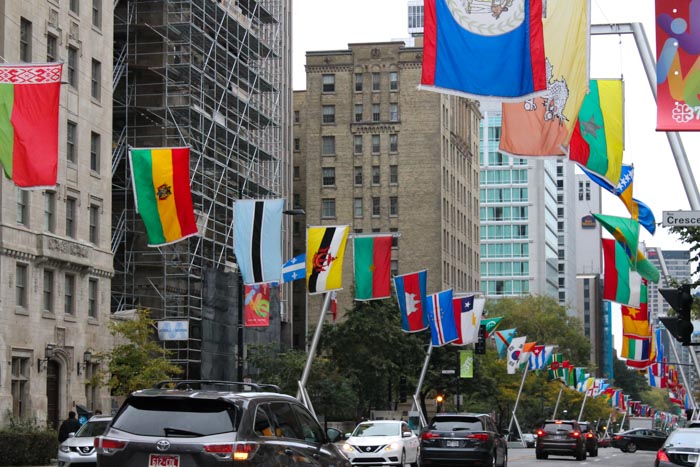
As part of Montreal’s 375th anniversary, the MMFA—in collaboration with McGill University—created a public art exhibition comprised of sculpture, photographs, and 200 different national flags. The open-air project is on rue Sherbrooke, running from Boulevard Robert-Bourassa to Rue Bishop. It also celebrates the 50th anniversary of Expo 67 and the 150th anniversary of Canadian Confederation. The exhibition marks these three important milestones in Montreal’s history, and all the works relate to values of peace, openness, and tolerance.  

(Jasmine Acharya / The McGill Tribune)

‘Love is Love’ exhibition

A current highlight within the museum is the “Love is Love” exhibition by Jean-Paul Gaultier. The final stop of “The Fashion World of Jean Paul Gaultier”’s five-year tour—as seen by two million visitors around North America—this exhibition of haute-couture bridal gowns is wonderfully eccentric and radically inclusive. Gaultier celebrates LGBTQ, intercultural, and interracial unions of all kinds by displaying modern, nuanced takes on wedding garb. The message is overwhelmingly one of peace and inclusion. The exhibition celebrates progress made through the ages, from the early 20th century up until the legalization of same-sex marriage in the United States.

(Jasmine Acharya / The McGill Tribune)

Pavilion for Peace

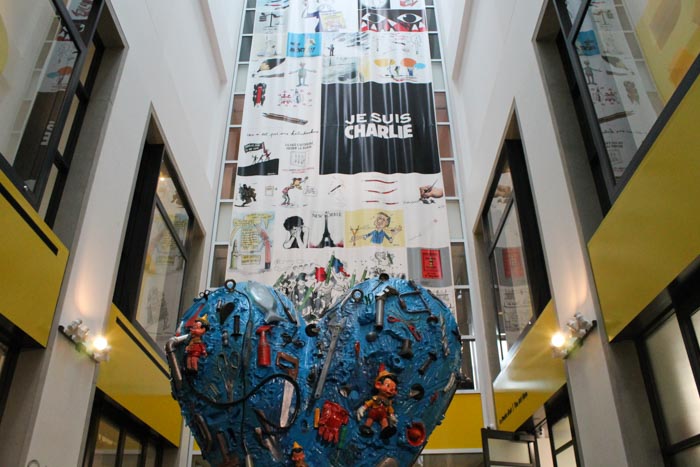
This permanent installation is part of the MMFA’s “Year of Peace.” Upon entering, visitors are met by a “je suis Charlie” wall hanging before being welcomed into a peaceful walk through a comprehensive consortium of artists including Monet, Picasso, and Cézanne. Though the pavilion is full of older pieces, there are contemporary touches throughout: A gallery of Early Classical works comes alive with projections and audio of a forest on the ceiling. Another feature, also part of the Year of Peace, is the “Tree of Peace,” where visitors can complete the sentence, “peace is the art of…” on a museum-sponsored website, which later posts the responses on social media platforms.

(Jasmine Archarya / The McGill Tribune)

“Mnemosyne: When Contemporary Art and the Art of the Past Meet”

Though renowned for its international collection, the MMFA also showcases the work of 14 Canadian artists in this exhibition. Among its various visual spectacles, an attention-grabbing piece features a toppling breakfast table and spilled milk suspended in time among a series of holographic images and sculptures. The striking pieces draw attention to the fundamental complexity behind all craft, aiming to showcase the history of art.

(Jasmine Acharya / The McGill Tribune)

“In-Between Worlds”

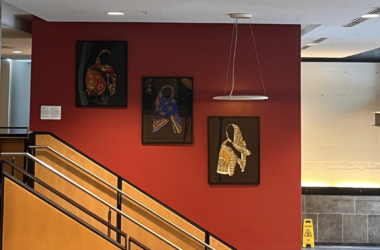
The Meryl McMaster exhibition, “In-Between Worlds,” is also closer to home, showcasing the Ottawa-born artist’s work as an Indigenous artist. Her photographs depict her dual heritage: Plains Cree and Euro-Canadian. She photographs herself in natural settings surrounded by cultural artifacts and accessories, creating a stark, beautiful, contrast of colors. The exhibition itself engages with the modern question of First Nations identity within the contemporary world. Using images filled with such contrast, McMaster quite literally depicts the reconciliation of contradicting identities that many Indigenous people face when embracing both their heritage and modern society.

(Jasmine Acharya / The McGill Tribune)
gallery

ABCs of Science, Science & Technology

How peppers both produce and prevent pain

Scorching heat, exasperated breathing, and trickles of sweat aren’t necessarily the result of a lengthy stay in a sauna or running on a hot day. They can instead result from a bite of spicy food. The chemical capsaicin causes the spicy sensation that some hate and others love. This compound is primarily found in the white membrane of peppers—not the seeds—and is responsible for a chili’s characteristically punchy flavour.

While the domestication and consumption of chilies traces back 6,000 years to the Caribbean, recent discoveries have been able to transform this pain-inducing compound into a pain-reliever.

To understand the healing properties of this strange fruit, it’s essential to know how and why it evolved its ‘heat.’ The spiciness of the outer flesh provides a defence against predators and fungi, which would otherwise prevent chili growth and reproduction, while the non-spicy taste of its seeds allow birds to feast on and disperse them, unharmed.

Humans have also taken a liking to the fruit—with 463 million pounds of hot peppers grown per year in the United States alone. North Americans’ appetite for spice has skyrocketed in the past two decades, with the consumption of chilies doubling and hot sauce dethroning ketchup as the top-selling condiment of 2016.

The chili craze can be attributed to capsaicin, which literally causes pain in the mouths of millions.

Capsaicin creates a burning sensation by activating the body’s pain receptors, or nociceptors. The nociceptors send a signal to the brain and cue the experience of pain in response to a variety of different stimuli, such as extreme cold, heat, or pressure. Each one of these intense sensory activators prompts the same neuron to send pain signals to the brain. Although they stimulate the same neuron, each sensation activates a different specialized pathway on the neuron.    

Discovered in the last 20 years, TRPV1 is the receptor specifically set off by high levels of heat. While it is mainly activated by temperatures above 40°C, capsaicin also activates TRPV1.

The activation of TRPV1 by capsaicin, while also providing the gift of spice, serves a medicinal use.

There are many receptors similar to TRPV1 on nociceptors. Any one of these specialized pathways can cause the feeling of pain, and blocking one pathway still allows for many other mechanisms to activate a neuron signal. Initially, researchers attempted to block or “antagonize” the TRPV1 receptor from firing in order to reduce inflammation and pain sensitivity, but they recently discovered an even more effective treatment.

Instead of blocking TRPV1, scientists continually activate TRPV1 by applying low amounts of capsaicin to the skin for a long period of time. As a result, the nociceptor becomes temporarily deactivated, which eliminates all kinds of pain. Reza Sharif-Naeini, an assistant professor in the Department of Physiology at McGill, explained how this seemingly paradoxical technique works.  

“The first time you apply it, it will be painful […] but eventually, the nociceptors [become desensitized],” Sharif-Naeini said. “[So] now, even if they get excited, nothing will be released.”

Therefore, no feeling of pain can penetrate the targeted area.

Sharif-Naeini went on to explain that the full desensitization process can take up to a week, but that it can be very effective for people with arthritis or psoriasis. In regards to the duration of the treatment, Sharif-Naeini said that a capsaicin patch allows for eight to 12 weeks of pain relief.

Capsaicin patches and topical ointments are now available both over-the-counter and by prescription, providing a location-specific and affordable treatment.

The humble chili’s key ingredient has once again transcended its origins as an irritating pest repellant. While this compound’s initial discovery brought pungent flavour into the masochistic mouths of adventurous eaters, recent applications are repurposing it from inducing pain to relieving it. Peppers’ capacities for pain and pleasure—like Yin and Yang—seem to be opposites, but are, in fact, inseparable.

Art, Arts & Entertainment

‘Once Upon a Time… The Western’ is a gorgeous trip into a false history

Once Upon a Time… The Western is a multi-media exhibition at the Montreal Museum of Fine Arts (MMFA) in collaboration with the Denver Art Museum, that opened on Oct. 14 and will last until Feb. 4. The exhibition explores the Western genre—more specifically, the ways in which media has historically engaged viewers in a dialogue about Westerns, and how that dialogue has continued to shape our perception of the North American West today. According to the principal curators and organizers of the show, Mary-Dailey Desmarais, Thomas Brent Smith, and Nathalie Bondil, the exhibition seeks to bring together two seemingly unrelated cities, through Montreal’s extensive cultural emphasis on film and Denver’s presence at the heart of the American West.

Once Upon a Time features work from prominent artists such as Franz Kline and Paul McCarthy, as well as film clips featuring beloved Western characters like Jesse James, Geronimo, and Billy the Kid. Through cinematography, paintings, statues, and artifacts, the exhibition takes the traditional image of the West, complete with gun toting, horse-riding cowboys, and forces contemporary viewers to look beyond culturally instilled stereotypes. Museum-goers are confronted with a series of film clips and artistic visuals that push them to understand their conceptions of western life and to build upon them within the framework conveyed by the exhibition.

As Desmarais describes, within the context of an increasingly violent modern life, the exhibit is also indicative of the power of images, which present a new form of honest and artistically-rendered reality compared to that portrayed by contemporary media. Once Upon a Time also tackles North American historical identity, drawing on themes of liberty, justice, and valour and mapping these attributes across the United States and into Canada and Quebec.

While many consider the western story composed of simply the quintessential “cowboys vs Indians” narrative, rife with dusty bar fights and duels at daybreak, the exhibition also sheds light on thematic elements that are overlooked, yet remain highly relevant to the western time period. In the wake of World War I and the culturally pervasive reaches of the Vietnam War, western films and art were mobilized to express distaste against growing levels of institutionally-accepted violence. The exhibition also addresses the issues of female portrayal in the western and artistic world, ‘blaxploitation,’ whereby black characters are cast, typically in film, with heavy emphasis on cultural stereotypes, and the complex relationship between white society and Native Americans or First Nations Peoples.  

Wandering through the exhibition, it is evident that the curatorial team not only carefully considered the content for the show, but also the means of presenting the work. With the dim lighting and gunshots emanating from the various screens scattered throughout the interconnected rooms, viewers are confronted with an ominous and somewhat reverent atmosphere before even examining the content of the work. The pieces in the exhibition deviate from the more traditional understanding of western art, usually characterized by seemingly interminable portraits of desert landscapes, and instead provide portraits, scenes from iconic western films, and even a room of stuffed and melancholy skinned bison. The tumult of interracial conflict and struggle for survival is captured in the brush strokes and camera lenses of the numerous artists and directors. For Montrealers finding themselves with nothing to on a weekend afternoon, Once Upon a Time… The Western is a transcendent gallery experience that leaves viewers questioning the thematic intricacies of their favourite John Wayne films and the historic influences that led to them running naked through the house as children with nothing but cowboy boots on.

Off the Board, Opinion

The world is larger than English

Like many others at McGill, I come from a background of multiple languages. My father grew up in Wolfsburg, Germany—a relatively small country town, about an hour away from Berlin. After 20 years of living in a rainy climate, he decided to venture south in search of sun and a happier version of himself. He landed in Padua, northern Italy, where, 15 years later, he met my mother and they had my brother. My mother grew up in Berkeley, CA, and moved to Italy after receiving her Master’s degree in French. As a result, language has been a ruling component of my upbringing.

Prioritizing language education, whether in school or independently, has a significant impact on traveling and living experiences, as well as development. Learning multiple languages shows the complementary, rather than conflictual, nature of different countries, languages, and cultures. This helps deconstruct barriers to both political and cultural engagement.

Montreal’s own bilingual nature supports the values of multilingualism and multiculturalism, as it maintains both anglophone and francophone cultures. Being able to communicate effectively in more than one language opens the mind and allows people to access new cultures, transcending language barriers that often prevent us from seeing beyond what we know. Often, no direct translations exist between one language and another as a result of differing sentence structures, idiomatic expressions, and the vocabulary words themselves. A scholar studying two works in their original languages has deeper insights than others studying translations. Politicians working on international policy—or domestic policy in a bilingual country such as Canada, for that matter—can show cultural respect and create better policies speaking in the native language of those they represent.

Multilingualism has value above and beyond its services to culture. For example, according to speech-language pathologist Lauren Lowry, children who grow up bilingually have proven to be more creative, better at planning, and more capable of solving complex problems than monolinguals. The effects of aging are even diminished in bilinguals. By supporting a bilingual culture, Montreal’s future citizens reap these benefits.


Learning multiple languages shows the complementary, rather than conflictual, nature of different countries, languages, and cultures.

Growing up, I’ve heard numerous people tell me that they don’t need to learn any more languages, because English is one of the most popular and can be used around the globe. However, this limits the places where anglophones can travel in a meaningful way, and leads to the colonialist notion that English, and English-speaking European and North American countries, are superior to other countries and their ways of life. In most American states, there are no language requirements in high school, according to their respective graduation requirements, whereas all schools in Germany and Canada require taking at least one language other than their mother tongue, and many require two.

Although I was lucky to understand the importance of language from a young age, with English, German, French, and Italian swirling around my house, that doesn’t mean that those who were not given the same opportunity shouldn’t try. My favourite YouTubers, Damon and Jo, have a travel blog all about traveling as young adults—how to travel when you’re broke, what the life of a traveler is like, why becoming involved in language and culture is vital to traveling, and, of course, how to learn languages without paying for expensive classes and books.

We have all the resources we need to find the value of linguistic diversity—we just need to use them.


Izze Siemann is the Science and Technology Editor at the McGill Tribune. She likes to chuckle and chortle.


Arts & Entertainment, Music

A very ‘Strange Peace’: An evening with Metz

On Oct. 8, La Sala Rossa hosted a trifecta of blisteringly loud acts. After spending an evening with METZ and other deafeningly-loud performances concert goers were left with one question—will my ears ever stop ringing?  

The first band to take the stage was called DEAF, which should have been an indicator of the noise level to be expected. Their set was tight, fast, and energetic, a perfect opening act. Hardly taking a moment’s pause, DEAF ripped through a short set of hypnotic, feedback-based rockers before deferring the stage to Sigil, the night’s second performance. Playing a slightly longer yet equally ferocious set, they continued to build momentum.   

It was clear that most audience members came to see the night’s headliners: Toronto-based noise rock trio, METZ. Crowds began to stream in towards the end of Sigil’s set, and by the time METZ took the stage, the venue was mostly filled. The cramped conditions could be attributed to the large mosh pit that formed tightly against the stage, pushing people together around the perimeter of the room. It’s understandable that most people would come for the top-billed act, but those who skipped out on the night’s first two bands missed a great hour of music.  

METZ started their set with several songs off their new album, Strange Peace. METZ’s first two albums were built around tight, driving synchronicity between the band’s three members. Guitar, bass, and drums thrashed together in songs that frequently oscillated between excitement and aggression. While Strange Peace certainly does not lack either of the aforementioned characteristics, things seem a little less frantic this time around. The songs have longer segments, working rapid-fire punk music into extensive pieces.   

When heard live, their new songs are spectacular. METZ have a certain energy that is best experienced from three feet in front of the stage rather than through a pair of headphones. Taking the stage with no introduction, they played several songs before singer Alex Edkins even addressed the crowd. Even then, whatever he said was often lost behind an incessant reverb. The focus was always on the music and the atmosphere it created: Minimal lighting, little interaction with the crowd, and a constant barrage of noise. It was a disorienting experience; songs often seemed to have neither a beginning nor an end, bleeding into each other in a long form thrash jam.  

Despite the comparable levels of intensity across the night’s three acts, METZ elicited far and away the strongest response from the crowd. Whereas most of the audience stood almost uncomfortably still during the first hour or so of the night, the environment completely changed once the headliners arrived onstage. Renowned for the rowdiness of their shows, METZ has seen itself and its audiences injured due to the physical nature of their live sets. Although this was both a very lively and intense concert, it certainly wasn’t friendly. However, there was a sense of commonality that bound the experience. As soon as someone was pushed to the ground—about once every 30 seconds—there were five people there to help them up. Although this was an unrelenting show, it was not in any way an intimidating one. It was everything a punk show should be: Fast, fun, and a bonding experience of violent catharsis for everyone involved.


Alexandra Allaire / McGill Tribune
Commentary, Opinion

Sorry, Justin, there’s a new kid in town

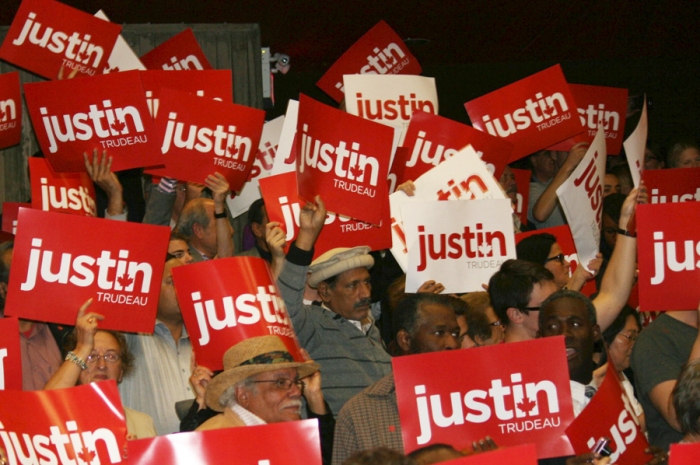
Oh, the impermanence of young love. Not long ago, Canada’s youth naively fawned over Justin Trudeau. But, as flings meet their bitter ends, so too do they begin anew. Canadians have moved on to a new flame—newly-elected, uber-chic New Democratic Party (NDP) leader Jagmeet Singh. Compared to Trudeau, his suits are sharper, his hair longer and more luscious, and—most importantly—he hasn’t had the chance to disappoint Canadians yet.

The first sparks flew when Singh's compassionate handling of a heckler at a campaign rally in Brampton, Ontario received international attention. The incident came at the perfect time, just weeks before the NDP leadership vote on Oct. 1. Furthermore, Singh is the first non-white leader of a major Canadian political party. However, the celebration of this ‘first’—although a step forward—made little distinction between the positivity of the event and Singh himself. In aggregate, the starry-eyed coverage that followed no doubt contributed to his landslide victory.

But, all young relationships have potentially ugly sides. Singh’s swift rise and the accompanying fanfare prove yet again that support is increasingly won by personality, more so than policy. This imbalance corrodes democracy. Image-focused campaigns benefit party leaders at the expense of every other political actor—including the voter. Image campaigns like Trudeau’s and Singh’s have had particular success with young people, who are the most plugged-in to social media and its ability to amplify public personas. The trend towards image campaigning and corresponding personality politics shows no sign of slowing down as millennials born between 1981 and 2000 become the largest segment of the electorate. If young people don’t demand to be campaigned to in a more substantial, policy-focused way, we risk lowering the quality of our political discourse.

While personal image has always been important in political campaigns, Trudeau took it to new heights in the 2015 election. The guiding principle? Sunny ways—a blend of forward-looking optimism and ambitious reforms to tackle social injustice. This brand paid off, well, handsomely. For months, newly-elected Trudeau bathed in fawning coverage that focused more on his sex appeal than his politics. Canadian political scientist Donald J. Savoie presciently observes this effect in his 2010 book, Power: Where is it?.

“Increasingly, the objective of all parties at election time is to sell their leaders to the media, rather than their ideas, policies, or party,” Savoie writes.


These aren’t your parents’ politicians—they look more like the cute guy at the gym or the debate union champ than the slack-suited legislators of yore.

This is as true of Singh as it is of Trudeau. Both source their popularity, especially with youth, from personal appeal and mastery of media moments, be they Singh’s appeals for “love and courage” in Brampton, or Trudeau’s feats of athleticism. These aren’t your parents’ politicians—they look more like the cute guy at the gym or the debate union champ than the slack-suited legislators of yore. While media moments are an old concept, they’ve redoubled in importance with the rise of social media. Short, context-free clips are shared repeatedly.

Still, society cannot blame the media entirely for softball coverage of politicians. Outlets produce content they think consumers want to read; therefore, when the media treats politicians like celebrities, citizens ask for fluff. This creates a cycle in which Canadians sell themselves short of the issues-driven coverage they deserve.

Personality politics also have consequences within parties. When elections are won and lost on leaders’ images, party caucuses are hard-pressed to cross their chiefs. Most voters see the exercise as picking a prime minister rather than a favourite local candidate. Consequently, local MPs depend on their party leader for their own re-election. For any given Member of Parliament, publically criticizing their leader is a lose-lose situation: Either their criticisms fail to move the public and anger their boss, or they succeed in moving public opinion against their party leader—which, given how voters make decisions, threatens the MP’s own job security. In times of majority government, this means that there are virtually no parliamentary checks on the prime minister’s power.

Just like the bad boy your mother warned you about, engaging in personality politics is tempting. We would all like to be led by someone we identify with, or that we’d simply like to share a drink with. But, if citizens base their votes on these feelings, they incentivize politicians and media coverage to focus on image over policy. This moves political discussions away from solutions and toward distractions. Given the younger generation’s pitiful voter-turnout rates, some might consider any political engagement a cause for celebration. But, Canadians must think critically about the way they engage with politics. Making politicians into celebrities gives them inappropriate influence in government and puts our democratic health at risk.


Keating is a U0 in the Faculty of Arts planning to study political science. He’s often found reading the news and grumbling in his bathrobe.


Read the latest issue

Read the latest issue